✓ Optimized warehouses can reduce operating costs by up to 30%.
✓ Improved inventory accuracy can lead to a 10-15% reduction in carrying costs.
✓ Automation can increase throughput by 2x-3x in picking operations.
✓ Effective warehouse layout design can cut travel time by 20-30%.
How It Works
1
Analyze Current Operations
Begin by conducting a comprehensive audit of your existing warehouse processes, layout, and technology. Identify bottlenecks, inefficiencies, and areas for improvement in workflows and resource allocation.
2
Strategize & Plan Solutions
Based on your analysis, develop a tailored optimization strategy incorporating best practices, technology, and process redesign. Prioritize initiatives that offer the greatest impact on efficiency and cost reduction.
3
Implement & Integrate
Execute your optimization plan, deploying new technologies like WMS or automation, redesigning layouts, and training staff on new processes. Ensure seamless integration with existing systems to maintain operational continuity.
4
Monitor, Evaluate & Refine
Continuously track key performance indicators (KPIs) to measure the effectiveness of your optimizations. Use data-driven insights to make ongoing adjustments and further refine your warehouse logistics strategies for sustained improvement.
The Imperative of Warehouse Logistics Optimization in Modern Supply Chains
Photo: Centre for Ageing Better / Pexels
In today's fast-paced global economy, the efficiency of your warehouse is no longer just an operational detail; it's a critical determinant of your overall business success. Customers expect faster delivery, greater accuracy, and competitive pricing, placing immense pressure on supply chains. This is where robust warehouse logistics optimization becomes not just beneficial, but absolutely essential. It's about more than just moving goods; it's about strategically designing, managing, and executing every aspect of your warehouse operations to achieve maximum efficiency, cost-effectiveness, and customer satisfaction. A well-optimized warehouse acts as the pulsating heart of your supply chain, ensuring a smooth flow from inbound receipts to outbound shipments, minimizing waste, and maximizing throughput. Without it, companies face inflated operational costs, delayed deliveries, increased errors, and ultimately, a significant erosion of competitive advantage.
At its core, warehouse logistics optimization encompasses a holistic approach to improving every facet of warehouse functionality. This includes everything from the physical layout and storage systems to inventory management, picking strategies, labor utilization, and the integration of advanced technologies. The goal is to create a lean, agile, and resilient operation that can adapt to fluctuating market demands and unforeseen disruptions. Consider the impact of e-commerce: it has fundamentally reshaped consumer expectations, pushing the need for same-day or next-day delivery. This rapid fulfillment requirement necessitates a warehouse that can process orders with incredible speed and accuracy, often handling a much higher volume of smaller, more frequent orders compared to traditional B2B models. Companies that fail to optimize risk being left behind, struggling with bottlenecks, high labor costs, and dissatisfied customers.
Furthermore, the rising cost of labor and real estate in many regions, particularly in the US, makes efficient space utilization and labor productivity non-negotiable. Every square foot of warehouse space and every hour of labor must be used to its fullest potential. This often involves re-evaluating traditional methods and embracing innovative solutions. For instance, intelligent slotting of inventory can drastically reduce travel times for pickers, while automation can handle repetitive tasks, freeing up human workers for more complex, value-added activities. The continuous pursuit of excellence in warehouse logistics optimization is not a one-time project but an ongoing commitment to improvement. It requires a data-driven mindset, a willingness to invest in technology, and a culture that embraces change and innovation. Ultimately, optimizing your warehouse logistics translates directly into a healthier bottom line, a stronger market position, and a more sustainable business model in the long run. Understanding the broader context of logistics is key to appreciating the central role of warehouse efficiency.
Key Pillars of Effective Warehouse Logistics Optimization
Photo: Tiger Lily / Pexels
Achieving true warehouse logistics optimization relies on a multi-faceted approach, focusing on several critical pillars that collectively contribute to enhanced performance. The first and perhaps most foundational pillar is an optimized warehouse layout and space utilization. This involves strategic planning of storage areas, picking zones, staging areas, and shipping/receiving docks to minimize travel time, reduce congestion, and improve overall flow. Techniques like ABC analysis for inventory slotting, where fast-moving items are placed in easily accessible locations, can dramatically cut down on picking times. Vertical space utilization, through high-density storage systems like pallet racking or automated storage and retrieval systems (AS/RS), also plays a crucial role in maximizing cubic capacity, especially in areas with high real estate costs. A well-designed layout is the blueprint for all other efficiencies.
The second pillar is advanced inventory management. This goes beyond simply knowing what you have; it's about knowing where it is, how much you need, and when you need to replenish it. Implementing a robust Warehouse Management System (WMS) is often central to this, providing real-time visibility into inventory levels, locations, and movements. This enables more accurate forecasting, reduces stockouts and overstocking, and minimizes obsolete inventory. Cycle counting, rather than annual physical inventories, can also improve accuracy with less disruption. Effective inventory management directly impacts carrying costs, order fulfillment rates, and overall cash flow. Mismanagement here can cascade into significant operational problems throughout the supply chain.
The third essential pillar is the optimization of picking and packing processes. These are often the most labor-intensive and error-prone activities in a warehouse. Strategies include batch picking, zone picking, wave picking, and cluster picking, each designed to minimize picker travel and maximize efficiency for different order profiles. Technologies like pick-to-light, voice picking, and robotic picking systems can further accelerate these processes and drastically reduce human error. Efficient packing, including right-sizing packaging and automating labeling, also contributes to faster throughput and reduced shipping costs. The goal is to get the right product to the right customer, in the right condition, at the lowest possible cost.
Finally, the strategic integration of technology and automation forms a critical fourth pillar. Modern warehouse logistics optimization is almost inseparable from technological advancements. This includes not only WMS but also Enterprise Resource Planning (ERP) systems, Transportation Management Systems (TMS), and various forms of material handling equipment (MHE) and robotics. Automation can range from simple conveyor systems to complex autonomous mobile robots (AMRs) and automated guided vehicles (AGVs). These technologies reduce reliance on manual labor for repetitive tasks, improve safety, increase accuracy, and enable 24/7 operations, scaling capacity without proportional increases in human resources. The data generated by these systems also provides invaluable insights for continuous process improvement, making technology an enabler for all other optimization efforts.
Leveraging Technology and Data for Superior Warehouse Performance
Photo: Tiger Lily / Pexels
The digital transformation has profoundly impacted warehouse operations, making technology and data analysis indispensable for achieving superior warehouse logistics optimization. At the forefront of this transformation is the Warehouse Management System (WMS). A modern WMS is far more than just an inventory tracker; it’s a sophisticated software suite that orchestrates and optimizes every aspect of warehouse operations, from receiving and putaway to picking, packing, and shipping. It provides real-time visibility into inventory levels and locations, guides material handling equipment, optimizes task assignments for human workers, and integrates seamlessly with other enterprise systems like ERP and TMS. By automating decision-making and providing actionable insights, a WMS can significantly reduce operational costs, improve inventory accuracy, and accelerate order fulfillment cycles. The ability to track every item's journey through the warehouse means better traceability, reduced errors, and enhanced customer service, which are all vital aspects of modern logistics.
Beyond WMS, the advent of automation and robotics is revolutionizing physical processes within the warehouse. Autonomous Mobile Robots (AMRs) and Automated Guided Vehicles (AGVs) are increasingly used for transporting goods, reducing manual labor and increasing throughput. Robotic picking systems, equipped with advanced vision and gripping technologies, can handle a wide variety of products, further enhancing efficiency and accuracy in order fulfillment. Automated Storage and Retrieval Systems (AS/RS) maximize storage density and speed up retrieval times, particularly for high-volume SKUs. These technologies not only reduce labor costs but also improve safety by taking over repetitive and sometimes hazardous tasks. The scalability of these automated solutions means warehouses can quickly adapt to surges in demand without extensive hiring or training.
Data analytics and business intelligence (BI) tools are also critical components of a data-driven optimization strategy. Every action within a modern warehouse generates data – from scan events and travel paths to pick rates and error counts. By collecting, analyzing, and interpreting this vast amount of data, warehouses can identify hidden inefficiencies, predict future demand patterns, and proactively address potential bottlenecks. Predictive analytics can inform inventory replenishment strategies, optimize labor scheduling, and even forecast equipment maintenance needs. For instance, analyzing picker travel paths can reveal opportunities for layout redesign, while examining order fulfillment times can pinpoint process gaps. This continuous feedback loop, powered by data, enables ongoing refinement and improvement, ensuring that optimization efforts are not just one-off projects but an integral part of daily operations. The insights derived from data allow warehouse managers to move from reactive problem-solving to proactive strategic planning, cementing a culture of continuous improvement and ensuring long-term success in warehouse logistics optimization.
Common Pitfalls to Avoid and Best Practices for Sustainable Optimization
Photo: Tiger Lily / Pexels
While the benefits of warehouse logistics optimization are clear, navigating the implementation process can be fraught with challenges. Avoiding common pitfalls is as crucial as embracing best practices for sustainable success.
**Common Pitfalls to Avoid:**
* **Lack of Clear Objectives:** Starting an optimization project without well-defined goals (e.g., reduce picking errors by X%, increase throughput by Y%) can lead to scope creep, wasted resources, and an inability to measure success. Define specific, measurable, achievable, relevant, and time-bound (SMART) objectives upfront.
* **Underestimating Change Management:** Implementing new systems or processes often requires significant changes in employee roles and routines. Failing to involve staff early, provide adequate training, and communicate the benefits can lead to resistance, low adoption rates, and ultimately, project failure. A robust change management plan is essential.
* **Ignoring Data:** Making decisions based on gut feelings rather than empirical data is a recipe for inefficiency. Without proper data collection and analysis, you cannot accurately identify bottlenecks, measure improvements, or justify investments.
* **Over-Automating or Under-Automating:** Investing in advanced robotics when simpler solutions suffice, or conversely, sticking to manual processes when automation would provide significant ROI, are both costly mistakes. The right level of automation must align with your specific operational needs, volume, and budget.
* **Lack of Integration:** Implementing new systems that don't seamlessly integrate with existing ones (e.g., WMS not talking to ERP or TMS) creates data silos, manual data entry, and inefficiencies that undermine the entire optimization effort.
**Best Practices for Sustainable Optimization:**
* **Start Small, Scale Up:** Instead of a massive overhaul, consider pilot projects or phased implementations. This allows you to test solutions, learn from mistakes, and demonstrate success before a full-scale rollout, minimizing risk and maximizing buy-in.
* **Embrace Continuous Improvement (Kaizen):** Warehouse logistics optimization is not a one-time event. Foster a culture of continuous evaluation, feedback, and refinement. Regularly review KPIs, solicit employee input, and adapt to changing market conditions and technological advancements.
* **Invest in Employee Training and Empowerment:** Your workforce is your greatest asset. Provide comprehensive training on new technologies and processes. Empower employees to identify inefficiencies and suggest improvements, as they are often closest to the operational challenges.
* **Leverage Cross-Functional Teams:** Optimization impacts various departments. Form cross-functional teams involving operations, IT, finance, and even sales/customer service to ensure all perspectives are considered and solutions are holistic.
* **Partner with Expertise:** If in-house expertise is limited, consider partnering with logistics consultants or technology providers who specialize in warehouse optimization. Their experience can accelerate the process and help avoid common pitfalls.
By diligently addressing these pitfalls and adopting these best practices, businesses can achieve not just temporary gains but truly sustainable warehouse logistics optimization that drives long-term competitive advantage.
Comparison
Feature
WMS (Best Option)
Spreadsheets (Alternative 1)
Basic ERP Module (Alternative 2)
Real-time Inventory Visibility
Excellent
Poor
Good
Picking Path Optimization
Excellent
✗
Limited
Labor Management Tools
Excellent
✗
Basic
Scalability
High
Low
Medium
Integration with Automation
High
✗
Limited
Cost Efficiency (Long-term)
High
Low (hidden costs)
Medium
What Readers Say
★★★★★
"Implementing a new WMS as part of our warehouse logistics optimization strategy was a game-changer. Our inventory accuracy jumped from 85% to 99.5%, and we cut picking errors by over 70% in just six months."
Sarah Chen · Dallas, TX
★★★★★
"The guidance on optimizing our warehouse layout dramatically reduced our picker travel time. We've seen a 25% increase in daily order fulfillment capacity without adding staff, a direct result of effective warehouse logistics optimization."
Mark Johnson · Atlanta, GA
★★★★★
"Our investment in automated guided vehicles for material transport has paid off immensely. We reduced manual handling by 40% and improved safety, showcasing the power of strategic warehouse logistics optimization."
Emily Rodriguez · Chicago, IL
★★★★★
"While the initial setup for our new inventory slotting system was challenging, the long-term benefits for our warehouse logistics optimization are undeniable. Our team is now much more efficient, though the learning curve was steep."
David Lee · Los Angeles, CA
★★★★★
"As a small e-commerce business, we thought warehouse logistics optimization was only for big players. But even small changes, like better cartonization and streamlined packing, have made a huge difference in our shipping costs and customer satisfaction."
Jessica Brown · Miami, FL
Frequently Asked Questions
What is the primary goal of warehouse logistics optimization?
The primary goal of warehouse logistics optimization is to maximize efficiency, reduce operational costs, and improve customer satisfaction by streamlining all processes within a warehouse. This includes everything from inventory management and storage to picking, packing, and shipping, aiming for faster throughput and fewer errors.
Is warehouse logistics optimization only for large companies?
Absolutely not. While large enterprises often have complex systems, even small to medium-sized businesses can significantly benefit from warehouse logistics optimization. The principles apply universally, and even minor adjustments to layout or process can yield substantial improvements in efficiency and cost savings for operations of any size.
How can I start optimizing my warehouse logistics?
Begin by conducting a thorough audit of your current operations to identify bottlenecks and inefficiencies. Prioritize areas for improvement, then research and implement solutions like a WMS, better inventory slotting, or process automation. Start with pilot projects and continuously monitor KPIs to refine your strategy.
What is the typical ROI for warehouse logistics optimization efforts?
The ROI for warehouse logistics optimization can vary widely depending on the initial state of the warehouse and the scope of improvements. However, companies often report significant returns through reduced labor costs (10-30%), improved inventory accuracy (leading to 10-15% cost reduction), and increased throughput (up to 50% or more with automation).
How does warehouse logistics optimization compare to general supply chain management?
Warehouse logistics optimization is a critical component of overall supply chain management. While supply chain management encompasses the entire flow of goods from raw materials to end consumers, warehouse optimization specifically focuses on maximizing efficiency within the warehouse facility itself, which is a key node in the broader supply chain.
Who within an organization should be involved in warehouse logistics optimization?
Successful warehouse logistics optimization requires a cross-functional effort. Key stakeholders typically include warehouse managers, operations directors, IT personnel, inventory managers, supply chain strategists, and even finance and customer service representatives, ensuring a holistic approach and buy-in across the organization.
What are the risks if I don't optimize my warehouse logistics?
Failing to optimize warehouse logistics can lead to numerous risks including inflated operating costs, increased order fulfillment errors, delayed shipments, higher rates of damaged goods, inefficient labor utilization, and ultimately, dissatisfied customers and a loss of competitive edge in the market.
What future trends will impact warehouse logistics optimization?
Future trends impacting warehouse logistics optimization include increased adoption of AI and machine learning for predictive analytics and decision-making, greater use of advanced robotics (e.g., collaborative robots), the expansion of IoT for real-time asset tracking, and a stronger focus on sustainability and green logistics practices.
Ready to transform your operations and gain a significant competitive edge? Explore how targeted warehouse logistics optimization can reduce your costs, enhance your efficiency, and elevate your customer satisfaction starting today.

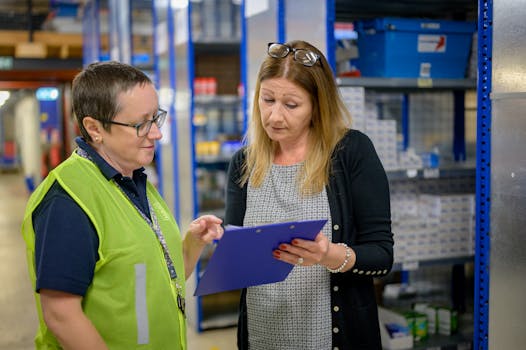 Photo: Centre for Ageing Better / Pexels
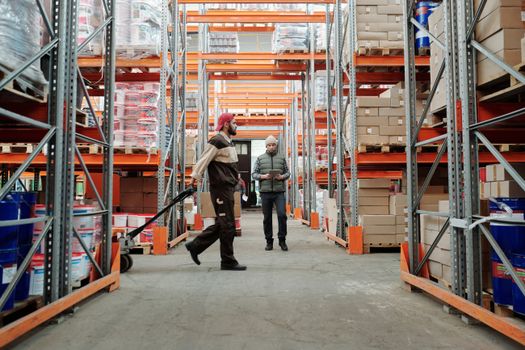 Photo: Tiger Lily / Pexels
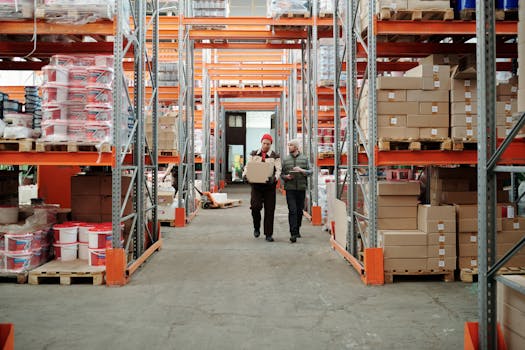 Photo: Tiger Lily / Pexels
 Photo: Tiger Lily / Pexels