
Top Logistics Companies in USA: Your Supply Chain Solution
logistics companies in usa

Top Logistics Companies in USA: Your Supply Chain Solution

Unlock unparalleled efficiency and cost savings for your business with leading US logistics partners.

Find Your Logistics Partner

Key Takeaways

  • ✓ The US logistics market is valued at over $1.6 trillion, representing a significant portion of the national GDP.
  • ✓ Third-Party Logistics (3PL) providers handle over 80% of Fortune 500 companies' logistics needs.
  • ✓ E-commerce growth has dramatically increased demand for robust last-mile delivery and fulfillment services.
  • ✓ Technology adoption, including AI and automation, is rapidly transforming the logistics landscape in the USA.

How It Works

1
Assess Your Needs

Identify your specific logistical requirements, including shipping volume, geographical reach, and specialized services. This initial assessment forms the foundation for selecting the right partner.

2
Research & Shortlist Providers

Explore reputable logistics companies in the USA, focusing on those with proven expertise in your industry and service areas. Create a shortlist based on capabilities and reputation.

3
Request Proposals & Evaluate

Solicit detailed proposals from your shortlisted providers, outlining costs, service level agreements, and technological integration. Compare their offerings against your established criteria.

4
Implement & Optimize

Integrate your chosen logistics partner into your supply chain operations and continuously monitor performance. Leverage their expertise to identify areas for ongoing optimization and improvement.

Understanding the Landscape of US Logistics Providers

High-angle view of freight trains and tracks in Poznań, Poland. Photo: Marcin Jozwiak / Pexels
The United States boasts one of the most complex and sophisticated logistics markets globally. This vast ecosystem is powered by a diverse array of companies, ranging from multinational giants to highly specialized niche providers. At its core, logistics in the USA encompasses the entire process of planning, implementing, and controlling the efficient, effective forward and reverse flow and storage of goods, services, and related information between the point of origin and the point of consumption to meet customers' requirements. This includes everything from transportation (trucking, rail, air, ocean), warehousing, inventory management, packaging, and material handling, to information integration and security. The sheer scale of the US economy, coupled with its geographical expanse and diverse industrial base, necessitates a robust and adaptable logistics infrastructure. Businesses operating within or looking to expand into the US market must navigate this intricate landscape to ensure their supply chains are not just operational, but optimally efficient and resilient. The choice of a logistics partner can significantly impact a company's bottom line, customer satisfaction, and overall market competitiveness. Several factors contribute to the complexity and dynamism of the US logistics sector. Regulatory environments, including those governing transportation, customs, and labor, play a crucial role. Infrastructure, such as highways, ports, airports, and rail networks, forms the backbone of these operations. Technological advancements, from advanced tracking systems and warehouse automation to AI-driven predictive analytics, are constantly reshaping how logistics services are delivered. Moreover, evolving consumer expectations, particularly the demand for faster and more transparent delivery, push companies to innovate and adapt. Third-Party Logistics (3PL) providers have emerged as critical players, offering integrated services that allow businesses to outsource their complex logistics functions. These 3PLs leverage their expertise, infrastructure, and technology to provide scalable and cost-effective solutions, freeing businesses to focus on their core competencies. The decision to partner with a 3PL often hinges on factors like cost reduction, access to expertise, improved service levels, and the ability to scale operations rapidly. Understanding these foundational elements is the first step toward strategically engaging with logistics companies in the USA and harnessing their capabilities for competitive advantage.

Key Services Offered by Leading Logistics Companies in USA
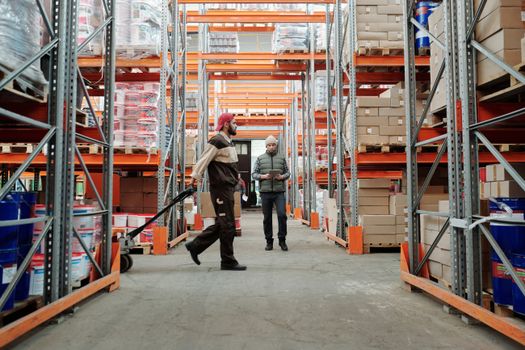
Two workers manage inventory in a spacious warehouse aisle. Photo: Tiger Lily / Pexels
Leading logistics companies in the USA offer a comprehensive suite of services designed to meet the varied demands of modern supply chains. These services are often modular, allowing businesses to select solutions that precisely fit their needs, or integrated into a full-service package. At the forefront is freight transportation, which includes full truckload (FTL), less-than-truckload (LTL), intermodal (combining rail and truck), air freight, and ocean freight. Each mode offers distinct advantages in terms of speed, cost, and capacity, making the selection process critical for optimizing transit times and budgets. For instance, air freight is ideal for urgent, high-value shipments, while ocean freight provides a cost-effective solution for large volume international movements. Trucking remains the backbone of domestic US logistics, with extensive networks covering every corner of the country. Beyond transportation, warehousing and distribution are fundamental services. This involves secure storage facilities, inventory management, order fulfillment (pick, pack, and ship), cross-docking, and value-added services like kitting, labeling, and light assembly. Modern warehouses are often equipped with advanced automation and warehouse management systems (WMS) to maximize efficiency and accuracy. E-commerce fulfillment, in particular, has become a specialized area, requiring rapid processing, returns management (reverse logistics), and direct-to-consumer shipping capabilities. Supply chain consulting is another valuable offering, where logistics experts analyze a company's existing supply chain, identify inefficiencies, and recommend strategic improvements. This can involve network design, technology implementation, or process optimization. Furthermore, customs brokerage and compliance services are crucial for businesses engaged in international trade, ensuring adherence to complex import/export regulations and facilitating smooth cross-border movement of goods. Many top-tier logistics companies also provide advanced technological solutions, including real-time tracking, predictive analytics, and integration with enterprise resource planning (ERP) systems, offering unparalleled visibility and control over the entire supply chain. This holistic approach ensures that businesses can streamline operations, reduce costs, and enhance their overall competitive posture in the market.

Choosing the Right Logistics Partner: What to Consider
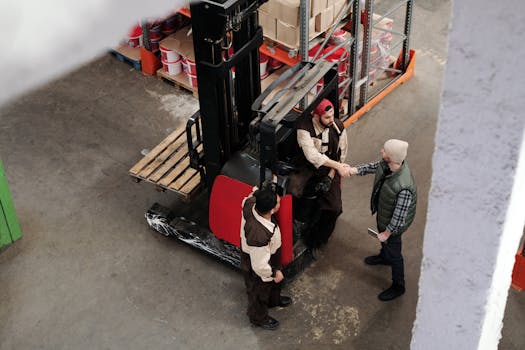
Three warehouse workers in conversation and handshake next to a forklift in an industrial setting. Photo: Tiger Lily / Pexels
Selecting the appropriate logistics partner among the many logistics companies in USA is a strategic decision that can significantly impact your business's operational efficiency, customer satisfaction, and financial performance. The process requires careful consideration of several key factors beyond just price. Firstly, assess their service capabilities and specialization. Does the provider offer the specific types of transportation, warehousing, and value-added services you require? If you deal with temperature-sensitive goods, do they have refrigerated transport and cold storage? If you have complex international shipping needs, do they possess robust customs brokerage expertise and a global network? A mismatch in capabilities can lead to costly delays and operational bottlenecks. Secondly, technology integration is paramount in today's digital landscape. Look for partners who offer advanced tracking systems, real-time visibility platforms, and seamless integration with your existing ERP or e-commerce systems. This ensures data accuracy, reduces manual errors, and provides actionable insights into your supply chain performance. The ability to access critical data and communicate effectively with your logistics provider is a cornerstone of a successful partnership. Another critical aspect is their reputation and financial stability. Research client testimonials, industry awards, and case studies. A financially stable partner is less likely to experience operational disruptions, ensuring continuity of service. Furthermore, evaluate their customer service and communication protocols. A responsive and proactive partner who offers dedicated account management can be invaluable in resolving issues quickly and maintaining a smooth workflow. Scalability is also a significant consideration; as your business grows or experiences seasonal fluctuations, your logistics partner should be able to adapt and scale their services accordingly without compromising quality. Compliance and risk management are also vital. Ensure the logistics provider adheres to all relevant industry regulations, safety standards, and environmental policies. They should also have robust insurance coverage and disaster recovery plans. Finally, consider their geographical reach and network. If you operate nationally or internationally, a partner with an extensive network can offer greater flexibility and efficiency. A comprehensive understanding of these factors will enable you to make an informed decision and forge a long-term, mutually beneficial partnership with a leading logistics provider that truly understands and supports your business objectives.

Navigating Challenges and Optimizing Logistics Operations in the USA
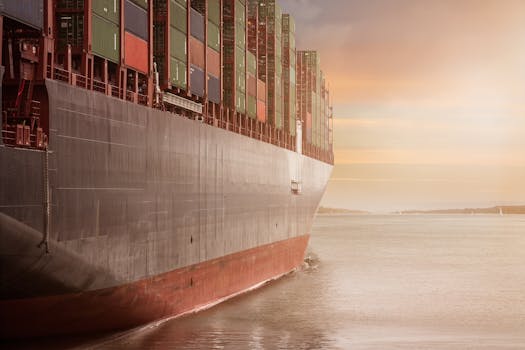
A colossal cargo ship loaded with containers navigates through calm waters against a vibrant sunset sky. Photo: Pixabay / Pexels
The US logistics sector, while advanced, faces its share of challenges that businesses and their logistics partners must navigate. One of the most persistent issues is the driver shortage, which impacts trucking capacity and can lead to increased transportation costs and longer transit times. Fuel price volatility is another significant external factor that directly affects operational expenses. Infrastructure limitations, particularly in congested urban areas and aging road networks, can also cause delays and inefficiencies. Furthermore, the increasing complexity of global supply chains, coupled with geopolitical events and trade policy changes, adds layers of risk and uncertainty. E-commerce boom, while a growth driver, has also intensified demands on last-mile delivery, requiring sophisticated routing, faster fulfillment, and robust reverse logistics capabilities. To optimize logistics operations in this environment, businesses should adopt several strategies. Diversifying transportation modes, for instance, by utilizing intermodal shipping where feasible, can mitigate reliance on trucking and potentially reduce costs. Investing in advanced supply chain technology, such as AI-powered route optimization, predictive analytics for inventory management, and blockchain for enhanced transparency, can significantly improve efficiency and resilience. Collaborating closely with logistics companies to leverage their expertise in network design and optimization is crucial. Embracing sustainable logistics practices, including optimizing routes to reduce emissions and using eco-friendly packaging, not only benefits the environment but can also enhance brand reputation and sometimes lead to cost savings. Proactive risk management, including contingency planning for disruptions, is essential for maintaining supply chain continuity. Lastly, continuous performance monitoring and data analysis allow businesses to identify areas for improvement and adapt their strategies to changing market conditions, ensuring their logistics operations remain agile and competitive.

Comparison

FeatureSmall Business FocusE-commerce SpecialistEnterprise SolutionInternational Trade
Typical Client SizeSMB, StartupsOnline RetailersLarge CorporationsImporters/Exporters
Core ServicesLTL, WarehousingFulfillment, Last-MileFull 3PL, ConsultingFreight Forwarding, Customs
Technology IntegrationBasic WMS, TrackingAdvanced API, Returns PortalERP, AI, IoTCustoms Software, Global Tracking
Cost StructurePer-service, Volume-basedPer-order, Storage feesCustom contractsPer-shipment, Duty management
ScalabilityModerateHigh for seasonal peaksVery HighHigh for global expansion
Key BenefitCost-effective entrySpeed & Customer ExperienceComprehensive OptimizationCompliance & Reach

What Readers Say

"Partnering with one of the top logistics companies in USA transformed our e-commerce business. Their fulfillment speed and accuracy have significantly boosted our customer satisfaction rates, and their real-time tracking is a game-changer."

Sarah J. · Austin, TX

"We struggled with complex LTL shipments until we found a fantastic logistics partner. They provided exceptional service, streamlined our supply chain, and offered competitive pricing. Highly recommend their expertise in the US market."

Mark D. · Chicago, IL

"Our manufacturing company saw a 15% reduction in shipping costs within the first year of working with a leading logistics company. Their proactive communication and robust network across the USA made all the difference."

Jessica L. · Los Angeles, CA

"While most services have been excellent, there were a couple of minor delays during peak season. However, their account manager was always responsive and helped mitigate any issues quickly. Overall, a very reliable logistics company in the USA."

David R. · Miami, FL

"As a small business, we needed scalable warehousing and distribution. The logistics company we chose provided tailored solutions that grew with us, offering incredible flexibility and support for our evolving needs in the competitive US market."

Emily P. · New York, NY

Frequently Asked Questions

What is a 3PL and why should I use logistics companies in USA that offer 3PL services?

A 3PL (Third-Party Logistics) provider offers outsourced logistics services, including transportation, warehousing, and distribution. Using a 3PL in the USA allows businesses to leverage specialized expertise, reduce operational costs, access advanced technology, and scale operations without significant capital investment, ultimately improving supply chain efficiency.

How can I ensure my goods are safe with logistics companies in USA?

To ensure goods safety, look for logistics companies with robust security measures (e.g., surveillance, access control), comprehensive insurance coverage, and strong track records of minimal claims. Always review their safety protocols and ask about their damage prevention strategies.

How do I choose the best logistics company for my small business in the USA?

For a small business, prioritize logistics companies that offer flexible, scalable services, transparent pricing, and strong customer support. Look for providers specializing in small-to-medium business solutions, good technology integration, and a clear understanding of your specific industry needs.

What are the typical costs associated with logistics companies in USA?

Logistics costs vary widely based on service type (e.g., freight, warehousing, fulfillment), volume, distance, and specific requirements. Common cost components include freight charges, storage fees, handling fees, fuel surcharges, and potentially value-added service fees. Request detailed quotes to compare.

Are logistics companies in USA better than managing my own supply chain?

For many businesses, especially those without extensive logistics infrastructure or expertise, outsourcing to logistics companies in the USA is often more efficient and cost-effective. They offer economies of scale, specialized technology, and a network that can be difficult and expensive to replicate in-house.

Who should use logistics companies in USA for their operations?

Businesses of all sizes, from e-commerce startups to large manufacturers, can benefit from logistics companies in USA. Anyone looking to optimize their supply chain, reduce shipping costs, improve delivery times, expand market reach, or free up internal resources for core competencies should consider a logistics partner.

What are the risks of choosing the wrong logistics partner in the USA?

Choosing the wrong logistics partner can lead to increased costs, delayed deliveries, damaged goods, poor customer satisfaction, and reputational damage. It's crucial to perform thorough due diligence and select a partner whose capabilities, reliability, and values align with your business.

How is technology changing the landscape for logistics companies in USA?

Technology is rapidly transforming US logistics with advancements like AI-driven route optimization, autonomous vehicles, warehouse robotics, IoT for real-time tracking, and blockchain for supply chain transparency. These innovations are leading to greater efficiency, reduced errors, and enhanced predictive capabilities.

Optimizing your supply chain starts with the right partner. Explore leading logistics companies in USA today to streamline operations, reduce costs, and deliver exceptional service to your customers. Make an informed decision that drives your business forward.

Topics: logistics companies in usasupply chain management usafreight forwarding usa3pl providers usawarehouse and distribution usa
Leo List

IE Escorts NO Escorts US Escorts NZ Escorts AU Escorts
Brampton weed
Adultwork EstrelaBet Vai de Bet R7 Bet Betão Galera Bet Rainbet Bet9ja Shop SportyBet BetKing Sisal Loto Foot Hollywoodbets YesPlay Odibets RushBet Jugabet BetWarrior BetCity MSport betPawa Fortebet