Mastering Your Supply Chain with Third Party Logistics Providers
Unlock unparalleled efficiency and cost savings by partnering with expert 3PLs to optimize your entire logistics operation.
Optimize My LogisticsKey Takeaways
- ✓ 3PLs handle 65% of all logistics functions for US businesses.
- ✓ Partnering with a 3PL can reduce logistics costs by 10-30%.
- ✓ The 3PL market in the US is projected to exceed $1.2 trillion by 2027.
- ✓ 90% of Fortune 500 companies utilize 3PL services for competitive advantage.
How It Works
A 3PL assesses your current supply chain, identifies inefficiencies, and designs a tailored strategy. This includes optimizing transportation, warehousing, and inventory management.
The 3PL integrates its systems with yours, often using advanced WMS and TMS technologies. They then implement the agreed-upon solutions, from warehousing setup to freight scheduling.
The 3PL actively manages daily logistics, including order fulfillment, shipping, returns, and inventory. They provide real-time tracking and reporting to ensure transparency.
Regular performance reviews are conducted to track KPIs and identify areas for further improvement. The 3PL continuously optimizes processes to enhance efficiency and reduce costs over time.
Understanding the Core Value of Third Party Logistics Providers
 Photo: Tiger Lily / Pexels
The Strategic Advantages: Why Businesses Partner with 3PLs
 Photo: Pixabay / Pexels
Choosing the Right Third Party Logistics Providers for Your Business
 Photo: Tiger Lily / Pexels
Common Pitfalls and Best Practices When Engaging 3PLs
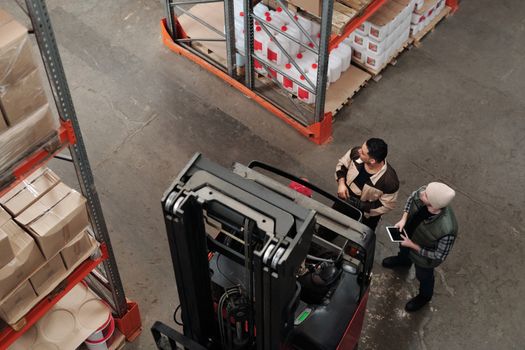 Photo: Tiger Lily / Pexels
Comparison
| Feature | Dedicated In-House Logistics | Single-Service Provider (e.g., freight only) | Full-Service 3PL Partner |
|---|---|---|---|
| Initial Capital Investment | Very High (warehouses, fleet, tech) | Low (for specific service) | Very Low (leverage 3PL assets) |
| Scalability & Flexibility | Limited & Slow | Moderate (within service) | High & Rapid |
| Access to Advanced Tech | Requires large investment | Basic for specific service | Integrated WMS/TMS, AI, Robotics |
| Cost Efficiency | High fixed costs, less optimized | Cost-effective for single task | Optimized for entire supply chain |
| Core Business Focus | Diverted to logistics | Still manages other logistics | Allows full focus on core business |
| Risk Mitigation | High internal risk (disruptions) | Limited | Diversified, expert management |
What Readers Say
"Partnering with our 3PL was a game-changer for our e-commerce startup. They handled all our fulfillment, allowing us to focus on product development and marketing without the headache of shipping. Our delivery times improved dramatically."
Sarah J. · Austin, TX"As a manufacturer, managing our outbound logistics was complex and costly. Our third party logistics provider streamlined our entire distribution network, saving us significant money on freight and warehousing. Their expertise is invaluable."
Mark D. · Chicago, IL"Our previous in-house logistics often led to inventory discrepancies and delayed shipments. Since switching to a 3PL, our order accuracy is at 99.8% and customer complaints about delivery have virtually disappeared. This directly boosted our customer retention."
Emily R. · Miami, FL"While the initial integration had a few minor hiccups, our 3PL quickly resolved them and has since provided exceptional service. Their real-time tracking and dedicated account manager have made our supply chain much more transparent and manageable. Definitely a net positive."
David S. · Los Angeles, CA"We're a small, but rapidly growing, subscription box company. Our 3PL handles everything from receiving our products to kitting and final delivery. This partnership has been essential for our ability to scale quickly without massive overheads."
Jessica L. · Seattle, WAFrequently Asked Questions
What exactly do third party logistics providers do?
Third party logistics providers (3PLs) offer outsourced logistics and supply chain management services. This can include warehousing, transportation (freight forwarding, trucking), inventory management, order fulfillment, packaging, cross-docking, and reverse logistics. Essentially, they handle the movement and storage of goods on behalf of another company, allowing that company to focus on its core business activities.
Is outsourcing my logistics to a 3PL safe for my business?
Yes, outsourcing to a reputable 3PL is generally very safe and can even reduce risks. 3PLs invest heavily in security measures for warehouses, insurance for goods in transit, and compliance with industry regulations. They also diversify risk by having multiple carriers and facilities, ensuring business continuity even during disruptions. Choosing a financially stable 3PL with strong references is key to a secure partnership.
How do I integrate my existing systems with a third party logistics provider?
Most modern 3PLs offer robust integration capabilities, primarily through Application Programming Interfaces (APIs) or Electronic Data Interchange (EDI). These allow your Enterprise Resource Planning (ERP) system, e-commerce platform, or Order Management System (OMS) to communicate seamlessly with the 3PL's Warehouse Management System (WMS) and Transportation Management System (TMS). This enables real-time data exchange for orders, inventory, and shipping updates, minimizing manual effort and errors.
What is the typical cost structure for working with third party logistics providers?
3PL pricing models vary but commonly include a combination of fees: warehousing (storage, handling, pick-and-pack), transportation (freight rates, fuel surcharges), and value-added services (kitting, returns processing). Some 3PLs use a cost-plus model, while others offer bundled pricing or per-unit fees. It's crucial to get a detailed breakdown of all potential costs and understand what's included and excluded to avoid surprises.
How do 3PLs compare to having an in-house logistics team?
3PLs offer distinct advantages over in-house teams, particularly in terms of scalability, cost efficiency, and access to advanced technology and expertise. An in-house team requires significant capital investment in infrastructure and staff, and struggles with fluctuating demand. 3PLs leverage economies of scale and their extensive networks to provide more flexible and often more cost-effective solutions, allowing businesses to reallocate internal resources to core operations.
Who should consider using third party logistics providers?
Any business facing logistical challenges, regardless of size, can benefit. This includes e-commerce companies experiencing rapid growth, manufacturers needing efficient distribution, retailers looking to optimize their supply chain, or businesses expanding into new markets. If you're struggling with high shipping costs, limited warehouse space, inventory management issues, or simply want to focus on your core competencies, a 3PL is a strong consideration.
What are the risks associated with using a 3PL?
While generally beneficial, risks include potential loss of direct control over logistics, dependency on the 3PL's performance, and the need for careful contract management to avoid hidden costs. Mitigate these by choosing a reputable 3PL with strong communication, clear SLAs, robust reporting, and by maintaining a collaborative, partnership-oriented relationship. Regular performance reviews are also essential.
What future trends will impact third party logistics providers?
Future trends include increased adoption of automation and robotics in warehouses, greater use of AI and machine learning for demand forecasting and route optimization, enhanced sustainability practices (e.g., green logistics, electric vehicles), and the continued rise of e-commerce driving demand for faster, more personalized fulfillment. 3PLs will continue to innovate to meet these evolving demands, offering more integrated and tech-driven solutions.
Ready to transform your supply chain and unlock new levels of efficiency and growth? Partnering with expert third party logistics providers can be the strategic move your business needs to thrive in today's dynamic market. Don't let logistics challenges hold you back; explore your options and secure your competitive edge today.