
Navigating the Logistics Challenges in E-commerce
Unlock the secrets to overcoming complex e-commerce logistics hurdles and achieving seamless operations for your business.
Optimize Your Logistics NowKey Takeaways
- ✓ E-commerce growth magnifies logistics complexities, impacting profitability and customer satisfaction.
- ✓ Last-mile delivery represents over 50% of total shipping costs in e-commerce.
- ✓ Inefficient inventory management can lead to significant capital tie-up and lost sales.
- ✓ Returns management is a critical, often overlooked, aspect of e-commerce logistics.
How It Works
Identify bottlenecks in your existing supply chain, from sourcing to delivery. Pinpoint areas causing delays, cost overruns, or customer dissatisfaction.
Research and implement appropriate technologies like WMS, TMS, and automation. Develop strategies for inventory optimization, carrier diversification, and returns processing.
Roll out new systems and processes, ensuring staff training and clear communication. Continuously monitor key performance indicators (KPIs) and make data-driven adjustments for efficiency.
Build a scalable logistics infrastructure that can handle fluctuating demand and business expansion. Regularly review market trends and customer feedback to maintain a competitive edge.
Understanding the Core E-commerce Logistics Complexities
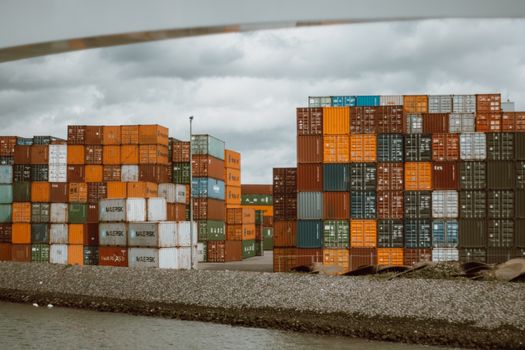 Photo: Julia Fuchs / Pexels
Tackling Last-Mile Delivery and Returns Management
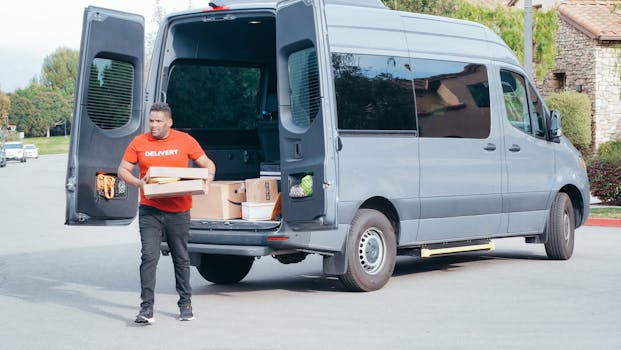 Photo: Kindel Media / Pexels
Leveraging Technology and Partnerships for Supply Chain Optimization
 Photo: Peter Xie / Pexels
Common Pitfalls and Best Practices in E-commerce Fulfillment
 Photo: Kampus Production / Pexels
Comparison
| Feature | In-house Logistics | Small 3PL | Large 3PL | Drop-shipping |
|---|---|---|---|---|
| Control & Customization | High | Medium | Medium | Low |
| Scalability | Low-Medium | Medium-High | High | High |
| Cost Efficiency (Volume) | Low (Fixed Costs) | Medium | High | Variable |
| Technology & Automation | Requires Investment | Standard | Advanced | None (Supplier) |
| Expertise & Resources | Internal Only | Specialized | Extensive | Supplier-Dependent |
| Time to Market | Longer Setup | Moderate Setup | Faster Setup | Instant |
What Readers Say
"Before we understood the logistics challenges in e-commerce, our shipping costs were out of control. This guide helped us identify bottlenecks and streamline our fulfillment process, saving us thousands monthly."
Sarah J. · Austin, TX"The insights on last-mile delivery were invaluable. We optimized our local delivery routes based on these principles, leading to faster service and happier customers. A must-read for any e-commerce business."
Mark D. · Miami, FL"We struggled with returns management until we applied the strategies outlined here. Our processing time for returns dropped by 30%, significantly reducing our operational overhead and improving customer loyalty."
Emily R. · Chicago, IL"While comprehensive, some of the advanced technology solutions felt a bit out of reach for a startup like ours initially. However, the core principles on inventory and carrier diversification were incredibly helpful and actionable."
David L. · Seattle, WA"As a growing online boutique, we needed a clear roadmap for scaling our logistics. This article provided exactly that, offering practical advice on 3PL partnerships that has been instrumental in our expansion."
Jessica M. · Denver, COFrequently Asked Questions
What are the biggest logistics challenges in e-commerce today?
The biggest challenges include managing the high cost and complexity of last-mile delivery, maintaining accurate and optimized inventory levels across multiple channels, efficiently handling product returns (reverse logistics), and meeting ever-increasing customer expectations for fast and free shipping. Each of these demands strategic planning and often significant technological investment to overcome.
How can e-commerce businesses reduce last-mile delivery costs?
To reduce last-mile costs, businesses can implement route optimization software, utilize local delivery partnerships, explore micro-fulfillment centers, leverage parcel locker networks, and consider diversifying their carrier base to negotiate better rates. Consolidating shipments and encouraging customers to use slower, cheaper shipping options can also help.
What is the role of technology in solving e-commerce logistics challenges?
Technology is central to solving e-commerce logistics challenges. It enables automation in warehouses (WMS), optimizes shipping routes (TMS), provides real-time inventory visibility, improves demand forecasting with AI, and enhances customer communication through tracking and notifications. These tools create efficiency, reduce errors, and provide a competitive edge.
Is it better to handle fulfillment in-house or use a 3PL for e-commerce?
The choice between in-house fulfillment and a 3PL depends on business size, order volume, and strategic goals. In-house offers more control but requires significant investment and expertise. A 3PL provides scalability, access to advanced technology, and reduced operational costs, making it ideal for growing businesses that want to focus on core competencies.
How do returns affect e-commerce logistics, and how can they be managed?
Returns (reverse logistics) significantly impact profitability and customer satisfaction. They require additional processes for receiving, inspecting, restocking, or disposing of products, incurring costs. Effective management involves clear returns policies, streamlined authorization processes, efficient return centers, and potentially outsourcing to specialized reverse logistics providers to minimize losses and improve efficiency.
Who should prioritize addressing e-commerce logistics challenges?
Every e-commerce business, regardless of size, should prioritize addressing logistics challenges. For startups, it's crucial for establishing a reliable foundation and positive customer experience. For growing businesses, optimizing logistics is key to scaling efficiently and maintaining profitability. Even established enterprises must continuously adapt to evolving customer expectations and market dynamics.
What are the risks of ignoring logistics challenges in e-commerce?
Ignoring logistics challenges can lead to a multitude of risks, including increased operational costs, delayed or failed deliveries, high customer churn due to poor service, negative brand reputation, inventory inaccuracies leading to lost sales, and ultimately, a significant impact on profitability and long-term business viability in a competitive market.
What are the future trends in e-commerce logistics?
Future trends include increased automation and robotics in warehouses, wider adoption of AI and machine learning for predictive analytics and route optimization, the rise of sustainable logistics practices, more diverse last-mile delivery methods (drones, autonomous vehicles), and the growing importance of hyper-personalization in delivery options and communication.
Don't let the complex logistics challenges in e-commerce hinder your business growth. By implementing the strategies and insights shared in this guide, you can optimize your operations, delight your customers, and secure a competitive edge. Start transforming your e-commerce logistics today for a more efficient and profitable tomorrow.