Mastering Last Mile Delivery Logistics Solutions for US Businesses
last mile delivery logistics solutions

Mastering Last Mile Delivery Logistics Solutions for US Businesses

Unlock efficiency, reduce costs, and enhance customer satisfaction with cutting-edge last mile delivery strategies tailored for the US market.

Optimize Your Deliveries Now

Key Takeaways

  • ✓ Last mile delivery can account for over 50% of total shipping costs.
  • ✓ Customer expectations for fast, flexible, and transparent delivery are at an all-time high.
  • ✓ Failed first-attempt deliveries are a major source of inefficiency and customer dissatisfaction.
  • ✓ Technology adoption, including AI and IoT, is crucial for optimizing last mile operations.

How It Works

1
Order Placement & Processing

Customers place orders, which are then routed to the nearest fulfillment center. Real-time inventory checks and order consolidation occur at this stage.

2
Route Optimization & Dispatch

Advanced algorithms analyze delivery addresses, traffic, and driver availability to create the most efficient routes. Orders are then dispatched to drivers with optimized schedules.

3
In-Transit & Customer Communication

Parcels are transported, often with real-time tracking updates provided to both the customer and the business. Customers receive notifications regarding estimated arrival times and potential delays.

4
Final Delivery & Proof of Delivery

The package reaches its final destination, with proof of delivery (e.g., signature, photo) captured. Post-delivery feedback mechanisms are often integrated to assess customer satisfaction.

Understanding the Last Mile Challenge in US Logistics
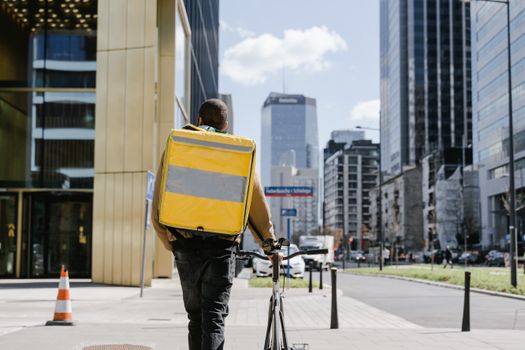
Bicycle courier with large yellow thermal bag delivering food in Warsaw downtown. Photo: MART PRODUCTION / Pexels
The 'last mile' in logistics refers to the final leg of a product's journey from a distribution center or hub to its end customer. While it sounds simple, this stage is arguably the most complex, costly, and crucial part of the entire supply chain, especially within the vast and diverse landscape of the United States. For businesses operating in the US, mastering last mile delivery logistics solutions isn't just about getting a package from point A to point B; it's about navigating urban congestion, rural sprawl, varying customer expectations, and the ever-present pressure of speed and cost-efficiency. This segment alone can account for more than 50% of the total shipping cost, a staggering figure that underscores its financial impact on businesses of all sizes. The unique challenges of the US market further exacerbate this complexity. We have densely populated metropolitan areas where traffic, parking, and building access are constant headaches, juxtaposed with vast rural regions where delivery points are few and far between, leading to extended travel times and higher fuel consumption. Additionally, the sheer volume of online orders, fueled by the e-commerce boom, has placed unprecedented strain on existing delivery infrastructures. Customers today expect not just fast delivery, but also flexible options like same-day, next-day, scheduled deliveries, and even in-store pickup or locker delivery. This demand for choice and convenience pushes businesses to adopt more sophisticated and agile last mile strategies. A significant hurdle is the optimization of delivery routes. Without intelligent routing software, drivers can spend excessive time on the road, consuming more fuel and missing delivery windows. Furthermore, failed first-attempt deliveries are a major drain on resources, necessitating re-delivery attempts that double the cost and frustrate customers. Imagine a driver attempting to deliver a package to a commercial address after hours, or to a residential address when no one is home – these scenarios are common and costly. Security concerns, especially for high-value items or deliveries in certain urban areas, also add another layer of complexity, requiring secure delivery protocols and proof of delivery mechanisms. Moreover, the environmental impact of last mile logistics is gaining increasing scrutiny. With a growing number of delivery vehicles on the road, businesses are under pressure to adopt sustainable practices, such as electric vehicles or optimized routing to reduce carbon emissions. Regulatory compliance, particularly regarding driver hours, vehicle maintenance, and urban delivery restrictions, also requires careful management. The confluence of these factors makes the last mile not just a logistical problem, but a multi-faceted business challenge that directly impacts profitability, customer satisfaction, and brand reputation. Businesses that effectively implement last mile delivery logistics solutions gain a significant competitive advantage in the US market. Understanding these intricate challenges is the first step towards building a resilient and efficient delivery network. For a deeper dive into overall supply chain management, explore our insights on supply chain optimization.

Core Components of Effective Last Mile Delivery Logistics Solutions

Detailed view of Google Maps app icon on a smartphone screen, showcasing digital navigation technology. Photo: Brett Jordan / Pexels
To effectively navigate the complexities of the last mile, businesses must integrate a suite of advanced last mile delivery logistics solutions. These solutions typically encompass several core technological and operational components designed to streamline processes, enhance visibility, and ultimately, improve the customer experience. At the heart of most modern last mile strategies lies robust route optimization software. This technology utilizes sophisticated algorithms to analyze multiple variables – including delivery addresses, time windows, driver availability, vehicle capacity, traffic conditions, and even weather patterns – to generate the most efficient delivery routes. The goal is to minimize mileage, fuel consumption, and driver hours while maximizing the number of successful deliveries per route. This dynamic routing capability is a game-changer, moving beyond static, pre-planned routes to adapt to real-time changes. Another critical component is real-time tracking and visibility. Both businesses and customers benefit immensely from the ability to track packages from dispatch to delivery. For businesses, this means monitoring driver progress, identifying potential delays, and proactively addressing issues. For customers, it provides peace of mind and reduces the need for customer service inquiries, as they can see exactly where their package is and when it's expected to arrive. This often comes in the form of customer portals, SMS updates, or mobile app notifications, creating a transparent and engaging delivery experience. Technologies like GPS, IoT sensors, and telematics play a vital role in enabling this level of visibility. Driver management tools are equally important. These solutions help with everything from onboarding and scheduling to performance monitoring and communication. Mobile apps for drivers often include features like turn-by-turn navigation, electronic proof of delivery (ePOD) capture (e.g., signature, photo, barcode scan), manifest management, and direct communication channels with dispatch. This empowers drivers, reduces paperwork, and ensures accurate delivery records. The ability to capture ePOD is particularly crucial for resolving disputes and confirming successful deliveries, significantly reducing instances of 'missing package' claims. Furthermore, automated dispatch and scheduling systems are essential for handling high volumes of orders efficiently. These systems can automatically assign deliveries to drivers based on predefined rules, route capacity, and driver skills, reducing manual intervention and potential errors. Integration with warehouse management systems (WMS) and order management systems (OMS) ensures a seamless flow of information from order placement to final delivery, preventing bottlenecks and ensuring that packages are ready for dispatch at the right time. The synergy between these components creates a powerful ecosystem that transforms the last mile from a chaotic challenge into a well-orchestrated operation. Without these integrated solutions, businesses risk falling behind competitors who are already leveraging technology to deliver superior customer experiences and achieve greater operational efficiencies.

Leveraging Technology for Last Mile Delivery Optimization

Autonomous delivery robots lined up outdoors showcasing modern transportation technology innovations. Photo: Kindel Media / Pexels
The adoption of cutting-edge technology is not just an advantage but a necessity for any business looking to excel in last mile delivery logistics solutions in the current market. Beyond basic route optimization and tracking, a new wave of innovations is further revolutionizing how packages reach their final destinations. Artificial Intelligence (AI) and Machine Learning (ML) are at the forefront of this transformation. AI algorithms can analyze vast datasets, including historical delivery performance, traffic patterns, weather forecasts, and even customer preferences, to predict optimal delivery times and routes with unprecedented accuracy. This predictive analytics capability allows businesses to anticipate potential delays before they occur and make proactive adjustments, enhancing reliability and customer satisfaction. ML can also be used to dynamically adjust routes in real-time, learning from each delivery to continuously improve efficiency. Another significant technological advancement is the Internet of Things (IoT). IoT devices, such as smart sensors on vehicles and packages, provide a wealth of real-time data. These sensors can monitor conditions like temperature for perishable goods, vehicle performance, driver behavior, and even detect package tampering. This granular level of insight ensures product integrity, enhances security, and provides valuable data for operational improvements. For instance, temperature-controlled logistics, crucial for pharmaceuticals or fresh food, relies heavily on IoT sensors to maintain the cold chain throughout the last mile. This level of monitoring is increasingly expected by customers and regulators alike. Automation, both in the form of software and hardware, is also playing a critical role. Automated sorting systems in micro-fulfillment centers or urban hubs can rapidly prepare packages for dispatch, reducing handling times. Looking ahead, autonomous vehicles and drones, while still in various stages of testing and regulatory approval, hold immense potential for transforming certain aspects of last mile delivery, particularly in less congested areas or for specialized deliveries. Imagine drones delivering urgent medical supplies or autonomous robots navigating sidewalks for local food deliveries. While widespread adoption is still some time away, these technologies are already shaping the future of the last mile. Moreover, cloud-based logistics platforms offer scalability and flexibility that traditional on-premise systems cannot. These platforms allow businesses to integrate various components of their last mile operations, from order management to delivery execution and customer communication, all within a unified ecosystem. This ensures data consistency, facilitates collaboration, and provides a holistic view of the entire delivery process. The ability to access and analyze data from anywhere, at any time, empowers businesses to make informed decisions and respond rapidly to changing market conditions. Embracing these advanced technologies is paramount for businesses aiming to optimize their last mile operations, reduce costs, and deliver an exceptional customer experience. For further insights into broader technological impacts on the supply chain, consider our resources on digital transformation in logistics.

Choosing the Right Last Mile Delivery Logistics Solutions: Key Considerations and Mistakes to Avoid

Selecting the appropriate last mile delivery logistics solutions for your business is a strategic decision that can significantly impact your bottom line and customer satisfaction. It's not a one-size-fits-all endeavor, as the best solution depends heavily on your specific business model, product type, delivery volume, and target customer base in the US. Here are key considerations and common mistakes to avoid: **Key Considerations:** * **Scalability:** Can the solution grow with your business? As order volumes fluctuate or expand, the system should be able to handle increased demand without compromising performance. * **Integration Capabilities:** Does the solution seamlessly integrate with your existing e-commerce platform, WMS, OMS, and CRM systems? Data silos can cripple efficiency. * **Customer Experience Features:** Look for features that empower your customers, such as real-time tracking, flexible delivery options (scheduled, unattended), and easy communication channels. * **Cost-Effectiveness:** Evaluate the total cost of ownership, including subscription fees, implementation costs, and potential savings from efficiency gains. Don't just focus on the lowest upfront price. * **Data Analytics & Reporting:** The solution should provide robust analytics to track KPIs (e.g., on-time delivery rate, cost per delivery, driver performance) and identify areas for improvement. * **Support & Training:** Ensure the vendor offers comprehensive support and training to help your team maximize the solution's potential. * **Geographic Coverage:** Does the solution cater to your specific delivery areas within the US, including urban, suburban, and rural routes? **Mistakes to Avoid:** * **Underestimating the 'Last Mile's' Importance:** Viewing last mile as merely an operational cost rather than a critical customer touchpoint is a grave error. It's often the last impression a customer has of your brand. * **Ignoring Customer Feedback:** Not listening to what your customers say about their delivery experience. Their feedback is invaluable for identifying pain points and improving service. * **Failing to Invest in Technology:** Relying on manual processes or outdated systems will inevitably lead to inefficiencies, higher costs, and a poor customer experience in today's competitive landscape. * **Overlooking Driver Experience:** Happy drivers are efficient drivers. Neglecting driver-friendly tools, fair compensation, and clear communication can lead to high turnover and poor service. * **Lack of Flexibility:** Choosing a solution that is too rigid and cannot adapt to changing market demands, new delivery options, or unexpected disruptions. * **Not Measuring Key Performance Indicators (KPIs):** Without clear metrics, you can't assess the effectiveness of your last mile operations or identify areas for improvement. Track everything from delivery success rates to customer satisfaction scores. * **Ignoring Sustainability:** Failing to consider environmentally friendly options like electric vehicles, optimized routing to reduce emissions, or consolidated deliveries. Consumers are increasingly demanding greener delivery options. By carefully considering these factors and proactively avoiding common pitfalls, US businesses can implement last mile delivery logistics solutions that not only optimize their operations but also build stronger customer relationships and drive long-term growth.

Comparison

FeatureIntegrated SaaS PlatformIn-House Custom BuildThird-Party Carrier (e.g., FedEx, UPS)
Initial InvestmentModerateVery HighLow to Moderate
ScalabilityHighModerate (requires ongoing dev)High
Control & CustomizationModerate to HighVery HighLow
Real-time VisibilityExcellentExcellent (if built well)Good (carrier-specific)
Maintenance & UpdatesHandled by vendorInternal teamHandled by carrier
ComplexityModerateVery HighLow (outsource)
Integration Potential✗ (limited)
Driver Management✗ (carrier's drivers)

What Readers Say

"Implementing their last mile delivery logistics solutions transformed our e-commerce business. Our on-time delivery rate jumped by 15%, and customer complaints about shipping delays are virtually non-existent now. It's a game-changer!"

Sarah J. · Austin, TX

"The route optimization software alone paid for itself within months. We've seen a significant reduction in fuel costs and driver overtime, making our local deliveries much more profitable and efficient."

Mark T. · Miami, FL

"Our perishable goods business relies on precise delivery windows. These last mile solutions allowed us to reduce spoilage by 20% due to better tracking and temperature monitoring, directly impacting our bottom line."

Emily R. · Denver, CO

"While the setup had a slight learning curve, the support team was fantastic. We've been able to offer more flexible delivery options to our customers, which has definitely boosted our repeat business and overall satisfaction."

David L. · Seattle, WA

"As a small furniture retailer, managing deliveries was a nightmare. This platform simplifies scheduling, provides real-time updates to customers, and handles proof of delivery seamlessly, allowing us to compete with larger players."

Jessica M. · Chicago, IL

Frequently Asked Questions

What is the biggest challenge in last mile delivery for US businesses?

The biggest challenge is balancing high customer expectations for speed and flexibility with the high operational costs associated with urban congestion, vast rural distances, and the need for efficient route planning. Failed deliveries due to customer unavailability or access issues also contribute significantly to costs and inefficiency.

Are last mile delivery logistics solutions only for large enterprises?

Absolutely not. While large enterprises benefit significantly, scalable last mile solutions are now accessible to small and medium-sized businesses (SMBs) as well. Many SaaS platforms offer tiered pricing and features that cater to various company sizes, helping SMBs optimize their operations and compete effectively.

How can I reduce the cost of last mile delivery?

Reducing costs involves several strategies: implementing advanced route optimization software, consolidating deliveries, utilizing micro-fulfillment centers, optimizing vehicle capacity, and leveraging real-time tracking to minimize failed delivery attempts. Investing in driver training and efficient communication tools also contributes to cost savings.

What is the typical ROI for investing in last mile delivery software?

The ROI can vary widely based on the initial state of your operations, but many businesses report significant returns within 6-12 months. This often comes from reduced fuel consumption, fewer driver hours, increased delivery capacity, improved customer satisfaction leading to repeat business, and a decrease in customer service inquiries related to deliveries.

How do last mile solutions differ from general logistics software?

General logistics software often covers the entire supply chain, from warehousing to long-haul transportation. Last mile solutions are specifically designed to address the unique complexities of the final leg of delivery, focusing on granular route optimization, real-time customer communication, proof of delivery, and urban/rural delivery challenges that broader systems may not prioritize.

Who should consider implementing last mile delivery logistics solutions?

Any business that directly delivers products to end-consumers, including e-commerce retailers, grocery delivery services, pharmaceutical companies, food and beverage distributors, couriers, and field service businesses, should consider implementing these solutions to improve efficiency, reduce costs, and enhance customer experience.

Are there environmental benefits to using last mile optimization software?

Yes, significant environmental benefits exist. By optimizing routes, reducing mileage, and minimizing idling time, last mile software helps decrease fuel consumption and, consequently, carbon emissions. It also facilitates the integration of electric vehicles (EVs) into fleets by optimizing charging stops and range management.

What future trends will impact last mile delivery logistics solutions?

Key future trends include the increased adoption of AI and machine learning for predictive analytics and dynamic routing, the rise of autonomous delivery vehicles and drones, greater integration of IoT devices for enhanced visibility and security, and a continued focus on sustainable delivery methods and electric vehicle fleets.

Ready to transform your delivery operations? Explore the right last mile delivery logistics solutions today to boost efficiency, reduce costs, and build lasting customer loyalty for your US business.

Topics: last mile delivery logistics solutionsfinal mile deliverydelivery optimizationlogistics technologye-commerce delivery
Leo List
Brampton weed
Adultwork EstrelaBet Vai de Bet R7 Bet Betão Galera Bet Rainbet Bet9ja Shop SportyBet BetKing Sisal Loto Foot Hollywoodbets YesPlay Odibets RushBet Jugabet BetWarrior BetCity MSport betPawa Fortebet