✓ Last mile delivery can account for over 50% of total shipping costs.
✓ Customer expectations for fast and flexible delivery are at an all-time high.
✓ Inefficient last mile operations lead to higher fuel consumption and emissions.
✓ Technology, like AI and IoT, is transforming last mile delivery capabilities.
How It Works
1
Order Placement & Processing
The customer places an order, which is then processed by the retailer or e-commerce platform. This initiates the entire fulfillment journey.
2
Warehouse & Sortation
Items are picked, packed, and sorted at a distribution center or local hub. This prepares them for dispatch to the final delivery point.
3
Route Optimization & Dispatch
Advanced software plans the most efficient routes, considering traffic, delivery windows, and vehicle capacity. Drivers are then dispatched with their assigned deliveries.
4
Final Delivery & Confirmation
The package reaches the customer's doorstep, often with real-time tracking updates. Delivery is confirmed, completing the last mile journey.
Understanding the Last Mile Challenge in Modern Logistics
Photo: MART PRODUCTION / Pexels
The 'last mile' in logistics refers to the final leg of a product's journey, from a transportation hub to its ultimate destination—typically the customer's doorstep. While it might seem like the shortest part of the supply chain, it is arguably the most complex, costly, and critical. In the United States, the burgeoning e-commerce market has amplified the significance and challenges associated with last mile delivery logistics. Customers today expect not just speed, but also flexibility, transparency, and often, free shipping. This confluence of demands puts immense pressure on businesses, from small local retailers to massive online marketplaces, to perfect their last mile operations. The challenge isn't merely about getting a package from point A to point B; it's about doing so efficiently, economically, and in a way that enhances the customer experience. Consider the sheer volume of packages being delivered daily across diverse geographies—dense urban centers with parking restrictions, sprawling suburban neighborhoods, and remote rural areas. Each presents its own set of logistical hurdles, from traffic congestion and unpredictable weather to security concerns and failed delivery attempts. Moreover, the environmental impact of numerous delivery vehicles traversing neighborhoods is a growing concern, pushing for more sustainable solutions. Businesses that fail to adapt their last mile strategies risk not only increased operational costs but also significant damage to their brand reputation and customer loyalty. The rise of same-day and next-day delivery expectations has further compressed delivery windows, demanding sophisticated planning and execution. This section will delve into the multifaceted nature of these challenges, setting the stage for understanding why optimizing last mile delivery logistics is not just an operational necessity but a strategic imperative for sustained business growth and customer satisfaction in the competitive US market. The intricacies involved require a holistic approach, blending technology, process optimization, and strategic partnerships to overcome these modern logistical hurdles effectively. Without a robust last mile strategy, even the most efficient upstream supply chain can falter at the final, most visible touchpoint with the customer.
Key Technologies Driving Last Mile Delivery Innovation
Photo: Tima Miroshnichenko / Pexels
The evolution of last mile delivery logistics is inextricably linked to technological advancements. Without innovative tools, meeting today's demanding customer expectations would be virtually impossible. One of the most impactful technologies is advanced route optimization software. These sophisticated algorithms analyze a multitude of factors—traffic patterns, delivery windows, vehicle capacity, driver availability, and even weather conditions—to generate the most efficient delivery routes. This not only reduces fuel consumption and operational costs but also significantly cuts down delivery times, allowing for more deliveries per driver per day. Real-time tracking and visibility are another cornerstone of modern last mile operations. GPS-enabled devices and mobile applications provide continuous updates on a package's location, allowing both businesses and customers to monitor progress. This transparency builds trust and reduces customer service inquiries, as customers can anticipate their deliveries more accurately. Furthermore, it enables dispatchers to react swiftly to unforeseen delays or changes, rerouting drivers as needed. Artificial Intelligence (AI) and Machine Learning (ML) are increasingly being integrated into last mile systems. AI can predict demand fluctuations, optimize inventory placement in micro-fulfillment centers, and even personalize delivery options based on customer preferences and historical data. ML algorithms can learn from past delivery patterns to continuously improve route efficiency and predict potential issues before they arise. The Internet of Things (IoT) also plays a crucial role, with smart sensors embedded in vehicles and packages providing data on temperature, humidity, and location, ensuring product integrity, especially for perishable goods. Drones and autonomous vehicles, while still in nascent stages for widespread commercial use, represent the future frontier of last mile delivery. Companies are actively piloting these technologies to address challenges in specific environments, offering potential for faster, more cost-effective, and environmentally friendly deliveries in the long run. The integration of these technologies creates a seamless, data-driven ecosystem that transforms what was once a chaotic and expensive process into a highly optimized and customer-centric operation. Embracing these innovations is no longer optional but essential for any business aiming to thrive in the competitive landscape of US e-commerce and logistics. The continuous development and adoption of these tools promise to further redefine the possibilities and efficiencies within last mile delivery.
Optimizing Last Mile Delivery for Cost Efficiency and Customer Satisfaction
Photo: Kampus Production / Pexels
Achieving optimal last mile delivery logistics requires a delicate balance between minimizing costs and maximizing customer satisfaction. These two objectives, often perceived as conflicting, can actually be synergistic with the right strategies. One primary method for cost reduction is consolidating deliveries. Instead of dispatching multiple vehicles for a few packages in the same area, businesses can group orders to be delivered by a single driver, thereby reducing fuel, labor, and vehicle maintenance costs. This is where efficient warehouse management and order fulfillment processes, often supported by advanced logistics software, become critical. Another significant cost-saving measure involves strategically locating micro-fulfillment centers or urban hubs. By bringing inventory closer to the end customer, the distance for the final leg of delivery is drastically reduced. This approach is particularly effective in dense urban areas, allowing for quicker deliveries and potentially enabling alternative delivery methods like bicycle couriers or electric vehicles, which are more economical and environmentally friendly in such environments. For customer satisfaction, offering flexible delivery options is paramount. This includes scheduled delivery windows, in-store pickup (BOPIS – Buy Online, Pick Up In Store), locker deliveries, and even doorstep delivery to secure locations. Providing customers with choices empowers them and reduces the likelihood of missed deliveries, which are a major source of frustration and additional cost (re-delivery attempts). Real-time communication is also vital. Proactive updates via SMS or email about order status, estimated delivery times, and any potential delays keep customers informed and manage expectations effectively. Post-delivery feedback mechanisms allow businesses to continuously improve their service based on direct customer input. Furthermore, investing in driver training, not just for efficient driving but also for customer service, can significantly enhance the final interaction. A polite, professional, and helpful delivery person leaves a lasting positive impression, reinforcing brand loyalty. The integration of returns management into the last mile strategy is also crucial; an easy and efficient return process can be a strong differentiator and a driver of repeat business. By focusing on these interconnected strategies, businesses can create a last mile delivery ecosystem that is both economically viable and deeply satisfying for the end consumer, turning a traditional cost center into a competitive advantage.
Common Pitfalls and Best Practices in Last Mile Delivery
Photo: Kampus Production / Pexels
Navigating the complexities of last mile delivery logistics means being aware of common pitfalls and adopting industry best practices. Avoiding these missteps can save significant time, money, and customer goodwill. Here are some key areas to consider:
**Common Pitfalls:**
* **Lack of Route Optimization:** Relying on manual planning or basic GPS leads to inefficient routes, wasted fuel, and delayed deliveries.
* **Poor Communication:** Failing to provide real-time updates to customers results in frustration, missed deliveries, and increased customer service calls.
* **Ignoring Data Analytics:** Not leveraging delivery data to identify bottlenecks, optimize processes, or predict demand means missed opportunities for improvement.
* **Inadequate Vehicle Maintenance:** Breakdowns due to neglected vehicle upkeep lead to costly delays and service disruptions.
* **Insufficient Driver Training:** Drivers who are not well-versed in efficient delivery practices, customer service, or technology usage can negatively impact efficiency and customer experience.
* **Overlooking Returns Logistics:** A cumbersome returns process can erode customer trust and loyalty, despite a successful initial delivery.
**Best Practices:**
* **Invest in Advanced Route Planning Software:** Utilize AI-powered tools that dynamically optimize routes, considering traffic, time windows, and vehicle capacity.
* **Implement Real-time Tracking and Notifications:** Provide customers with live updates and estimated delivery times via SMS or app notifications.
* **Establish Micro-fulfillment Centers:** Strategically place smaller distribution hubs closer to urban centers to reduce delivery distances and times.
* **Offer Flexible Delivery Options:** Empower customers with choices like scheduled deliveries, locker pickups, or in-store collection.
* **Prioritize Driver Training and Empowerment:** Equip drivers with the necessary tools, training, and support for efficient, safe, and customer-friendly deliveries.
* **Leverage Data for Continuous Improvement:** Regularly analyze delivery data to identify trends, optimize processes, and forecast future demand.
* **Embrace Sustainable Solutions:** Explore electric vehicles, bicycle couriers, or consolidated delivery models to reduce environmental impact and appeal to eco-conscious consumers.
* **Streamline Returns Management:** Make the return process as easy and transparent as the delivery, turning a potential negative into a positive customer interaction.
By proactively addressing these pitfalls and integrating best practices, businesses can transform their last mile delivery operations from a challenge into a significant competitive advantage, ensuring both operational excellence and superior customer satisfaction.
Comparison
Feature
In-House Delivery
Third-Party Logistics (3PL)
Crowdsourced Delivery
Hybrid Model
Control
High
Medium
Low
Medium-High
Cost (Fixed)
High
Medium
Low
Medium
Scalability
Low-Medium
High
Very High
High
Brand Experience
Direct
Indirect
Variable
Blended
Technology Investment
High
Low-Medium
Low
Medium
What Readers Say
★★★★★
"Since optimizing our last mile delivery logistics, our customer satisfaction scores have jumped by 20%. The real-time tracking and flexible options have been a game-changer for our e-commerce business."
Sarah J. · Austin, TX
★★★★★
"Implementing new route optimization software for our last mile has cut our fuel costs by 15% and reduced delivery times significantly. It's truly transformed our operations."
Mark D. · Chicago, IL
★★★★★
"Our delivery success rate improved from 85% to 98% after we revamped our last mile delivery logistics. Customers love the proactive communication and reliable service."
Emily R. · Miami, FL
★★★★★
"While the initial investment in new last mile delivery technology was substantial, the long-term benefits in efficiency and customer retention are undeniable. We're still fine-tuning some aspects, but the improvement is clear."
David L. · Seattle, WA
★★★★★
"As a small business, we struggled with last mile delivery. Partnering with a specialized last mile logistics provider has allowed us to compete with larger companies, offering fast and affordable shipping."
Jessica M. · Denver, CO
Frequently Asked Questions
What is last mile delivery logistics and why is it so important?
Last mile delivery logistics refers to the final step of the delivery process, where a package moves from a transportation hub to its final destination, usually the customer's doorstep. It's crucial because it's the most expensive and time-consuming part of the supply chain, directly impacting customer satisfaction and a company's profitability. Efficient last mile operations are key to meeting modern consumer expectations for speed and convenience.
How can businesses reduce the high costs associated with last mile delivery?
Businesses can reduce costs through several strategies: implementing advanced route optimization software, consolidating deliveries, utilizing micro-fulfillment centers closer to customers, exploring alternative delivery methods like electric vehicles or drones, and optimizing vehicle capacity. Efficient planning and technology adoption are critical to minimizing expenses.
What technologies are essential for effective last mile delivery logistics?
Essential technologies include route optimization software, real-time tracking and visibility systems (GPS), mobile applications for drivers and customers, and data analytics platforms. Increasingly, AI and Machine Learning are used for demand forecasting and predictive optimization, while IoT devices provide crucial package and vehicle data.
How does last mile delivery impact customer satisfaction?
Last mile delivery is the most direct interaction a customer has with a brand's logistics. Fast, reliable, and transparent delivery, along with flexible options and proactive communication, significantly enhances satisfaction. Conversely, delays, missed deliveries, or poor communication can lead to frustration and damage brand loyalty.
Is it better to handle last mile delivery in-house or outsource it to a 3PL?
The choice depends on a company's size, resources, and specific needs. In-house offers greater control and brand consistency but requires significant investment. Outsourcing to a 3PL provides scalability, access to specialized expertise and technology, and reduced overhead, but may mean less direct control over the customer experience. A hybrid model can also be effective, combining the strengths of both approaches.
Who should prioritize optimizing their last mile delivery logistics?
Any business that ships products directly to consumers, particularly e-commerce retailers, grocery delivery services, pharmaceutical companies, and even local businesses offering home delivery, should prioritize optimizing their last mile delivery logistics. It's critical for competitive advantage, cost control, and meeting evolving customer expectations.
What are the risks of inefficient last mile delivery?
Inefficient last mile delivery carries several risks: increased operational costs (fuel, labor, re-deliveries), decreased customer satisfaction and loyalty, negative brand perception, missed delivery windows, higher carbon footprint, and a competitive disadvantage against businesses with optimized logistics. It can severely impact a company's bottom line and market position.
What future trends are expected in last mile delivery logistics?
Future trends include wider adoption of autonomous delivery vehicles (drones, robots), increased use of electric vehicles for sustainability, hyper-localization with micro-fulfillment centers, advanced AI for predictive analytics and dynamic routing, personalized delivery experiences, and greater emphasis on sustainable and eco-friendly delivery methods. The focus will be on speed, efficiency, and environmental responsibility.
Ready to transform your last mile delivery logistics? Explore our comprehensive solutions and expert insights to reduce costs, enhance customer satisfaction, and gain a competitive edge in the rapidly evolving US market. Don't let the final mile be your biggest hurdle—make it your greatest strength.

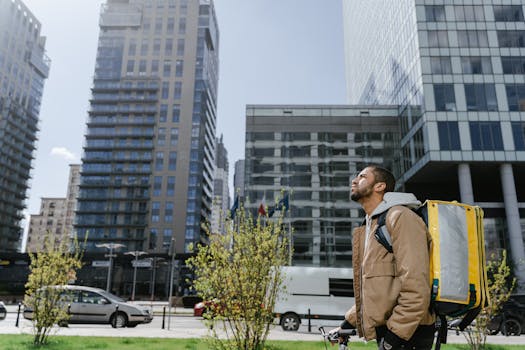 Photo: MART PRODUCTION / Pexels
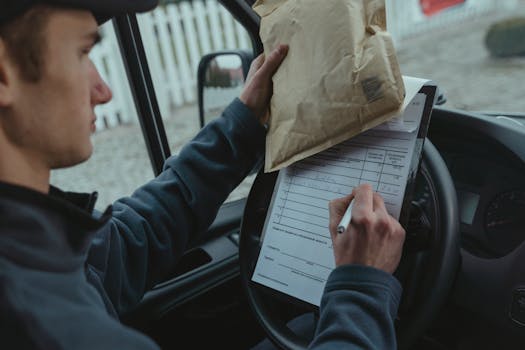 Photo: Tima Miroshnichenko / Pexels
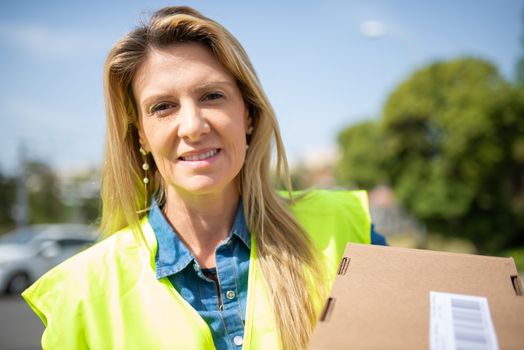 Photo: Kampus Production / Pexels
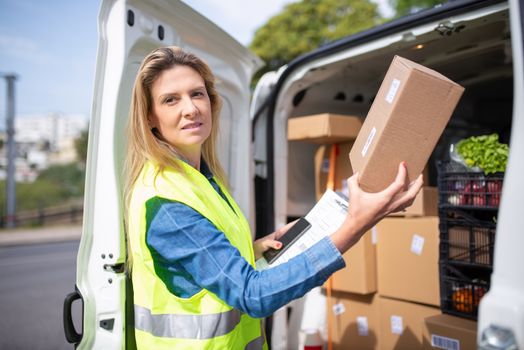 Photo: Kampus Production / Pexels