✓ Global logistics market projected to reach $18.6 trillion by 2027, driven by tech.
✓ Automation can reduce warehouse operating costs by up to 20-30%.
✓ AI-driven route optimization can cut fuel consumption by 15-20%.
✓ Real-time visibility tools are critical for 80% of supply chain professionals.
How It Works
1
Assess Current Operations
Identify bottlenecks, inefficiencies, and areas where manual processes hinder speed and accuracy. This foundational step is crucial for targeted technology adoption.
2
Research & Select Technologies
Investigate various logistics technology innovations, from AI and IoT to automation and blockchain. Choose solutions that directly address identified pain points and align with strategic goals.
3
Integrate & Pilot
Implement chosen technologies, often starting with a pilot program in a controlled environment. Seamless integration with existing systems is key for maximizing benefits and minimizing disruption.
4
Scale & Optimize
After successful piloting, scale the technology across your operations and continuously monitor performance. Leverage data analytics to further optimize processes and refine technology usage for ongoing improvement.
Revolutionizing Supply Chain Management with AI and Machine Learning
Photo: Peter Xie / Pexels
The logistics landscape is undergoing an unprecedented transformation, largely driven by the pervasive integration of Artificial Intelligence (AI) and Machine Learning (ML). These advanced technologies are not just buzzwords; they are fundamental catalysts reshaping how goods move from origin to destination, offering unparalleled levels of efficiency, predictability, and responsiveness. In the US, businesses are leveraging AI and ML to tackle complex challenges, from optimizing inventory levels to predicting demand fluctuations and streamlining last-mile delivery. One of the most impactful applications is in demand forecasting. Traditional forecasting methods often rely on historical data and can struggle with volatility. AI algorithms, however, can process vast datasets – including macroeconomic indicators, social media trends, weather patterns, and competitor activities – to generate highly accurate predictions. This allows companies to proactively adjust inventory, preventing stockouts or overstocking, which directly impacts profitability and customer satisfaction. Imagine a retailer anticipating a sudden surge in demand for a specific product due to a viral trend; AI can detect this early, enabling quicker replenishment and capitalizing on the opportunity.
Beyond forecasting, AI and ML are revolutionizing route optimization. Traffic congestion, road closures, delivery window constraints, and fuel costs are constant variables for logistics providers. AI-powered route optimization software takes all these factors into account in real-time, dynamically adjusting routes to ensure the fastest, most fuel-efficient, and timely deliveries. This not only reduces operational costs but also significantly improves delivery reliability and customer experience. For instance, a delivery fleet can respond instantly to unexpected traffic jams, rerouting vehicles to maintain schedules. Furthermore, AI is enhancing warehouse management systems (WMS) by optimizing picking paths, slotting strategies, and even the orchestration of automated guided vehicles (AGVs) and robots. By analyzing historical data on order patterns and product movement, AI can suggest optimal layouts and workflows, drastically cutting down on processing times and labor costs. The ability of ML to learn from continuous data input means these systems become smarter and more efficient over time, offering a truly adaptive and intelligent approach to logistics management. The shift towards predictive and prescriptive analytics, driven by AI and ML, is making supply chains in the US not just reactive, but truly proactive.
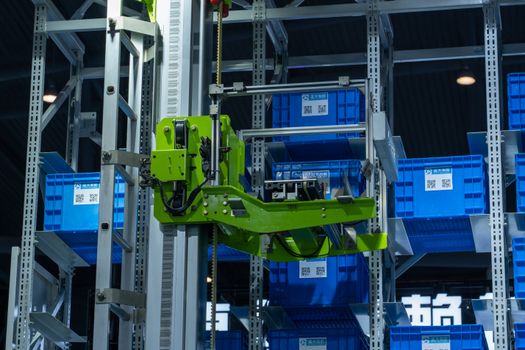
The Rise of Automation and Robotics in Warehousing
Photo: Peter Xie / Pexels
Warehousing, once a labor-intensive and often static component of the supply chain, is now at the forefront of the automation revolution. The deployment of robotics, automated guided vehicles (AGVs), autonomous mobile robots (AMRs), and sophisticated sortation systems is fundamentally transforming the speed, accuracy, and safety of warehouse operations across the United States. These logistics technology innovations are addressing critical challenges such as labor shortages, rising operational costs, and the increasing demand for faster order fulfillment driven by e-commerce. Robots are taking over repetitive, strenuous, and often dangerous tasks, from picking and packing to moving heavy pallets and sorting packages. This frees up human workers to focus on more complex, value-added activities that require critical thinking and problem-solving skills, leading to a more engaged and productive workforce. For example, robotic arms equipped with advanced vision systems can precisely pick individual items from shelves, even those with irregular shapes, and prepare them for shipment with minimal errors.
AMRs, unlike their AGV predecessors, navigate dynamically through warehouses without fixed routes, using sensors and onboard intelligence to adapt to changing environments. This flexibility allows them to work collaboratively with humans and other machines, optimizing material flow and improving throughput. Consider a large fulfillment center where thousands of orders need to be processed daily; AMRs can retrieve items from various locations simultaneously, dramatically accelerating the order fulfillment cycle. Furthermore, automated storage and retrieval systems (AS/RS) are maximizing storage density by utilizing vertical space more efficiently and reducing the footprint required for warehousing. These systems can store and retrieve items with incredible speed and precision, essential for high-volume operations. The integration of these robotic solutions often comes with advanced software platforms that orchestrate their movements and tasks, ensuring seamless operation and real-time visibility into inventory and order status. This level of automation not only boosts operational efficiency but also significantly reduces the potential for human error, leading to fewer damaged goods and improved inventory accuracy. As e-commerce continues its rapid growth, the strategic adoption of automation and robotics in warehouses is becoming a non-negotiable for businesses aiming to stay competitive and meet evolving customer expectations in the US market.
Enhancing Transparency and Security with IoT and Blockchain
Photo: Jan van der Wolf / Pexels
In an increasingly complex global supply chain, transparency and security are paramount. Internet of Things (IoT) devices and blockchain technology are emerging as powerful logistics technology innovations that address these critical needs, providing unprecedented visibility and an immutable record of transactions and events. IoT sensors, embedded in products, containers, and vehicles, collect and transmit real-time data on a multitude of parameters. This includes location, temperature, humidity, shock, and even light exposure. For instance, a pharmaceutical company shipping temperature-sensitive vaccines can monitor their exact condition throughout transit, ensuring product integrity and compliance with strict regulations. If a temperature excursion occurs, an alert is triggered immediately, allowing for corrective action or preventing the distribution of compromised goods. This level of granular, real-time data empowers logistics managers to make informed decisions, mitigate risks, and provide accurate updates to customers.
Beyond simple tracking, IoT data feeds into sophisticated analytics platforms, offering insights into operational performance, potential bottlenecks, and opportunities for optimization. Imagine identifying a specific route that consistently experiences excessive delays due to environmental factors; IoT data can highlight this, prompting a re-evaluation of routing strategies. Complementing IoT, blockchain technology offers a decentralized, distributed ledger that records every transaction and event in a verifiable and immutable manner. When integrated with IoT, blockchain creates a powerful synergy: IoT provides the real-world data, and blockchain provides the secure, transparent record of that data. For example, tracking a product from its raw material source through manufacturing, multiple shipping legs, and final delivery can be recorded on a blockchain. Each step, along with associated IoT data like temperature readings, becomes a 'block' in the chain, cryptographically linked to the previous one. This creates an unalterable audit trail that enhances trust among all parties involved – suppliers, manufacturers, carriers, and retailers. It significantly reduces fraud, disputes, and the risk of counterfeit goods entering the supply chain. For US businesses, this means enhanced regulatory compliance, improved product traceability for recalls, and greater confidence in the integrity of their goods. The combination of IoT for data capture and blockchain for secure data management is creating a new paradigm for transparency and trust in modern supply chains.
Optimizing Last-Mile Delivery and Customer Experience
Photo: Kindel Media / Pexels
The 'last mile' — the final leg of a product's journey from a distribution center to the customer's doorstep — is often the most complex, expensive, and critical part of the supply chain. It's also where customer satisfaction is won or lost. Logistics technology innovations are profoundly impacting last-mile delivery, making it faster, more efficient, and more responsive to consumer expectations. Here are key strategies and technologies:
* **Dynamic Route Optimization Software:** Moving beyond static routes, this software uses real-time traffic data, weather conditions, and delivery windows to continuously adjust delivery paths. It ensures drivers take the most efficient routes, reducing fuel costs and delivery times. Some systems even consider vehicle capacity and driver availability.
* **Autonomous Delivery Vehicles (ADVs) & Drones:** While still in nascent stages for widespread commercial use, pilot programs for autonomous ground vehicles and delivery drones are showing promise. These technologies could revolutionize delivery in dense urban areas or hard-to-reach rural locations, offering faster delivery windows and reducing labor costs. Regulatory hurdles in the US are slowly being addressed.
* **Smart Lockers & Pickup Points:** To address failed deliveries and provide flexibility, networks of smart lockers and designated pickup points are expanding. Customers can choose to have packages delivered to a secure, accessible location, retrieving them at their convenience. This reduces redelivery attempts and improves efficiency for carriers.
* **Predictive Delivery & Real-time Tracking:** Customers now expect precise delivery windows and the ability to track their package's journey in real-time. Advanced algorithms use historical data and current conditions to provide highly accurate estimated times of arrival (ETAs). Real-time GPS tracking, often integrated with customer-facing apps, empowers consumers with visibility and control, leading to higher satisfaction and fewer customer service inquiries.
* **Crowdsourced Delivery Platforms:** Leveraging a network of independent contractors, these platforms offer flexible and scalable delivery capacity, especially during peak seasons or for urgent deliveries. They provide a cost-effective alternative to traditional fleets and enhance speed.
These innovations collectively address the high costs and complexities associated with last-mile delivery, transforming it from a logistical headache into a competitive advantage. The focus remains on speed, flexibility, and transparency, directly impacting the overall customer experience.
Comparison
Feature
AI/ML (Predictive Analytics)
Robotics/Automation (Warehouse)
IoT/Blockchain (Visibility)
Primary Benefit
Optimized Decision Making
Increased Throughput
Enhanced Trust & Traceability
Key Application
Demand Forecasting, Route Optimization
Picking, Packing, Sorting
Real-time Tracking, Supply Chain Audit
Cost Reduction Area
Inventory, Fuel, Labor (indirect)
Labor, Space Utilization
Waste, Fraud, Compliance Fines
Complexity of Integration
High
Medium to High
Medium
Impact on Customer
Faster Delivery, Better Availability
Faster Fulfillment
Transparency, Product Integrity
What Readers Say
★★★★★
"Implementing AI-driven demand forecasting was a game-changer. We've reduced our inventory holding costs by 15% and rarely face stockouts now. These logistics technology innovations truly work."
Sarah Chen · New York, NY
★★★★★
"Our warehouse automation project, featuring AMRs, boosted our order fulfillment speed by 30%. It's incredible how efficient our operations have become, all thanks to modern logistics technology innovations."
David Miller · Chicago, IL
★★★★★
"The real-time tracking from IoT sensors combined with blockchain for our high-value shipments has virtually eliminated disputes. Our clients appreciate the transparency, leading to a 25% increase in repeat business."
Emily Rodriguez · Los Angeles, CA
★★★★★
"While integrating new last-mile delivery software had its initial challenges, the long-term benefits are clear. Our delivery success rate improved, and customer feedback on tracking is overwhelmingly positive."
Mark Johnson · Dallas, TX
★★★★★
"As a small e-commerce business, leveraging cloud-based logistics technology innovations has allowed us to compete with larger players. We've seen significant improvements in shipping costs and delivery times, directly impacting our bottom line."
Jessica Lee · Miami, FL
Frequently Asked Questions
What are the most impactful logistics technology innovations for small businesses?
For small businesses, cloud-based Transportation Management Systems (TMS), real-time tracking solutions, and basic warehouse management software (WMS) are highly impactful. These innovations offer scalability, reduce manual errors, and provide essential visibility without requiring massive upfront infrastructure investments.
Is investing in new logistics technology too expensive for my company?
While initial investment can be a concern, many logistics technology innovations now offer flexible, subscription-based models (SaaS). The return on investment (ROI) often comes quickly through reduced operational costs, improved efficiency, and enhanced customer satisfaction, making it a worthwhile strategic expenditure.
How do I integrate new logistics technology with my existing systems?
Successful integration typically involves API (Application Programming Interface) connections, allowing different software systems to communicate. Many modern logistics solutions are designed with open APIs to facilitate seamless integration with existing ERP, WMS, or e-commerce platforms. Planning and potentially professional integration services are key.
What's the typical ROI for investing in warehouse automation?
The ROI for warehouse automation varies widely depending on the scale and type of automation, but many companies report payback periods of 1-3 years. Benefits include significant reductions in labor costs, increased throughput, improved accuracy, and better utilization of space, all contributing to a strong financial return.
How do logistics technology innovations compare to traditional methods in terms of environmental impact?
Logistics technology innovations generally have a positive environmental impact. AI-driven route optimization reduces fuel consumption and emissions. Efficient warehouse automation minimizes waste. IoT sensors can monitor and reduce spoilage. These technologies contribute to a greener, more sustainable supply chain compared to traditional, less optimized methods.
Who should prioritize adopting advanced logistics technology innovations?
Any business facing challenges with rising operational costs, delivery delays, inventory inaccuracies, customer dissatisfaction, or intense competition should prioritize adopting advanced logistics technology innovations. Companies with complex supply chains, high shipment volumes, or strict compliance requirements will also see significant benefits.
What are the biggest risks associated with implementing new logistics technology?
Key risks include data security breaches, integration challenges with legacy systems, resistance to change from employees, and the potential for a mismatch between chosen technology and actual business needs. Thorough planning, robust cybersecurity measures, comprehensive training, and phased implementation can mitigate these risks.
What future trends should I watch in logistics technology innovations?
Beyond current trends, look out for increased adoption of hyper-automation (orchestration of multiple technologies), advanced predictive analytics for proactive problem-solving, further development in sustainable logistics technologies (e.g., electric autonomous vehicles), and the growing role of digital twins for supply chain simulation and optimization.
Embrace the future of supply chain management. Explore how these logistics technology innovations can transform your operations, drive efficiency, and elevate your customer experience. Don't get left behind – leverage technology to build a smarter, more resilient logistics network today.