
Logistics and Supply Chain Differences: Unraveling the Core
logistics and supply chain differences

Logistics and Supply Chain Differences: Unraveling the Core

Unlock the distinct yet intertwined worlds of logistics and supply chain for optimal business performance.

Explore the Distinction

Key Takeaways

  • ✓ Logistics is a component of the broader supply chain.
  • ✓ Supply chain encompasses all processes from raw material to end consumer.
  • ✓ Logistics focuses on the efficient flow and storage of goods.
  • ✓ Effective integration of both is crucial for business success.

How It Works

1
Raw Material Sourcing

The supply chain begins with identifying and procuring raw materials from suppliers. This involves strategic vendor selection and contract negotiation.

2
Manufacturing & Production

Materials are transformed into finished goods through various production processes. Logistics then manages the movement of these materials within the factory and to storage.

3
Distribution & Fulfillment

Finished products are stored, picked, packed, and shipped to customers or retailers. This phase is heavily reliant on efficient logistics operations, including warehousing and transportation.

4
Customer Delivery & Feedback

The final stage involves delivering the product to the end-user and gathering feedback. This data loops back into the supply chain for continuous improvement and demand forecasting.

Understanding the Fundamentals of Logistics Management
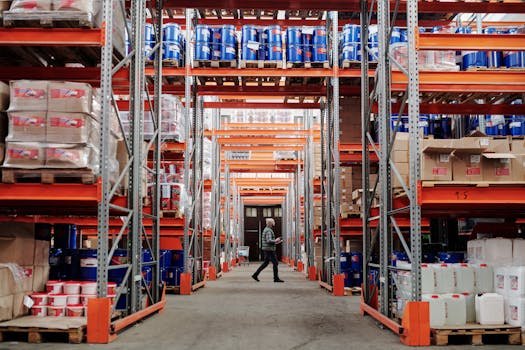
A man walking through a large industrial warehouse with stacked shelves filled with goods and products. Photo: Tiger Lily / Pexels
In the intricate world of commerce, the terms 'logistics' and 'supply chain' are often used interchangeably, leading to widespread confusion. However, discerning the core logistics and supply chain differences is paramount for any business aiming for operational excellence and strategic advantage. Logistics, at its heart, is a subset of the broader supply chain management. It primarily concerns the detailed organization and implementation of a complex operation. Specifically, in a business context, logistics management focuses on the efficient and effective forward and reverse flow and storage of goods, services, and related information between the point of origin and the point of consumption to meet customers' requirements. Think of logistics as the finely tuned gears within a larger machine. Its scope is operational, dealing with the tangible movement and storage of products. Key components of logistics include transportation, warehousing, inventory management, material handling, packaging, and security. Transportation, for instance, involves selecting the right modes (road, rail, air, sea), optimizing routes, and managing carriers to ensure timely and cost-effective delivery. Warehousing, on the other hand, deals with the strategic location, design, and operation of storage facilities, ensuring products are kept safely and are readily accessible when needed. Effective inventory management, a crucial logistics function, prevents stockouts and overstocking, balancing customer demand with holding costs. The goal of logistics is to ensure that the right product is at the right place, at the right time, in the right condition, in the right quantity, for the right customer, and at the right cost. This 'seven Rs' principle encapsulates the essence of logistics efficiency. A robust logistics strategy can significantly reduce operational costs, improve customer satisfaction, and enhance a company's competitive edge. For example, a company with optimized logistics can offer faster delivery times or more competitive shipping rates than its rivals. This direct impact on customer experience and profitability underscores why understanding logistics as a distinct discipline, separate yet integral to the larger supply chain, is so vital. It's about perfecting the 'how' of moving things. Furthermore, reverse logistics is an increasingly important aspect. This involves managing the return of products, whether for repairs, recycling, or disposal. This process requires its own set of planning and execution strategies, often mirroring forward logistics but with unique challenges such as product inspection, refurbishment, and waste management. The efficiency of reverse logistics can greatly impact customer loyalty and a company's environmental footprint. Overall, logistics is the hands-on, tactical execution that ensures physical goods flow seamlessly through the various stages of their journey.

The All-Encompassing Scope of Supply Chain Management

While logistics is concerned with the flow of goods, supply chain management (SCM) takes a much broader, strategic view. It encompasses all activities involved in the sourcing, procurement, conversion, and logistics management activities. Crucially, it also includes coordination and collaboration with channel partners, who can be suppliers, intermediaries, third-party service providers, and customers. The primary objective of SCM is to synchronize and integrate all these activities into a seamless process that creates value for the customer and stakeholders. It’s about managing the entire network of interconnected businesses involved in the ultimate delivery of product and service packages required by end customers. Consider the supply chain as the entire ecosystem, from the extraction of raw materials to the final consumption of a product and beyond to its disposal or recycling. SCM involves a much higher level of strategic planning and inter-organizational coordination than logistics alone. It looks at the big picture, optimizing not just the movement of goods but also the flow of information, finances, and relationships across the entire network. This includes demand forecasting, supply planning, production planning, strategic sourcing, supplier relationship management, customer relationship management, and, of course, logistics management. For instance, strategic sourcing in SCM involves long-term planning for obtaining necessary materials and services, including identifying potential suppliers, negotiating contracts, and building strong supplier relationships. This goes beyond the transactional aspect of procurement, aiming to create mutually beneficial partnerships. Demand forecasting, another critical SCM function, uses historical data and market analysis to predict future customer demand, which then informs production schedules and inventory levels across the entire chain. This proactive approach helps minimize waste, reduce costs, and improve responsiveness to market changes. SCM also places a significant emphasis on information flow. Real-time data sharing among all supply chain partners allows for greater transparency, quicker decision-making, and enhanced problem-solving capabilities. For example, if a supplier faces a delay, this information can be instantly communicated throughout the supply chain, allowing manufacturers to adjust production schedules and logistics providers to re-route shipments. This integrated information system is a hallmark of effective supply chain management, enabling agility and resilience in the face of disruptions. In essence, SCM is the strategic orchestrator, ensuring that every player in the vast network is working in harmony towards a common goal.

Key Logistics and Supply Chain Differences: A Comparative Analysis

The fundamental distinction between logistics and supply chain management lies in their scope, focus, and strategic implications. While logistics is operational and tactical, supply chain management is strategic and holistic. Understanding these key logistics and supply chain differences is crucial for businesses to optimize their operations and achieve competitive advantage. Logistics is primarily concerned with the 'how' and 'when' of moving and storing goods, focusing on efficiency within specific operational areas. Supply chain management, on the other hand, addresses the 'what,' 'why,' and 'who,' encompassing the entire network and focusing on integration and value creation across all partners. One of the most significant differences is the involvement of external entities. Logistics often deals with internal operations or direct relationships with transportation and warehousing providers. Supply chain management, however, explicitly includes managing relationships and integrating processes with a wide array of external partners, from raw material suppliers to end-users. It involves cross-organizational collaboration and information sharing to achieve overall system optimization. For example, a logistics manager might focus on optimizing delivery routes for their fleet, while a supply chain manager would be involved in negotiating long-term contracts with multiple transportation providers, integrating their systems with those of key suppliers, and collaborating with marketing to understand future demand trends. Another point of differentiation is the ultimate goal. The primary goal of logistics is to deliver goods efficiently and cost-effectively, meeting customer delivery requirements. Its success is often measured by metrics like on-time delivery rates, transportation costs, and inventory turnover. Supply chain management, conversely, aims to create a sustainable competitive infrastructure, synchronize supply with demand, and measure global performance in terms of customer value, profitability, and market share. It seeks to optimize the entire value chain, not just individual components. Consider the impact on decision-making. Logistics decisions are often tactical, such as choosing a particular shipping method or warehouse location. Supply chain decisions are strategic, involving choices about global sourcing strategies, outsourcing production, or designing entirely new distribution networks. A logistics manager might decide on the best way to load a truck, while a supply chain manager might decide whether to build a new factory in a different country to reduce lead times and costs for an entire product line. This distinction highlights the different levels of strategic influence each discipline holds within an organization. Recognizing these differences allows companies to build dedicated teams and strategies that address both the granular details of logistics and the overarching vision of supply chain management, ensuring both efficiency and strategic alignment. Effective logistics is a prerequisite for a successful supply chain.

Integrating Logistics and Supply Chain for Business Success

While distinct, logistics and supply chain management are inextricably linked. A well-executed logistics strategy is crucial for the success of the overall supply chain, and a robust supply chain framework provides the strategic direction within which logistics operations can thrive. The true power lies in their seamless integration, creating a synergistic effect that drives business success, enhances customer satisfaction, and builds resilience against market volatility. Effective integration means that logistics functions are not viewed in isolation but as integral parts of the larger supply chain strategy. For instance, decisions made in demand planning (a supply chain function) directly impact inventory levels and warehousing requirements (logistics functions). Similarly, insights from transportation logistics, such as transit times and costs, can inform strategic sourcing decisions or even product design within the broader supply chain. When these areas are coordinated, the entire system operates more smoothly, reducing bottlenecks and improving overall efficiency. Consider the role of technology in this integration. Advanced analytics, artificial intelligence, and blockchain are revolutionizing both logistics and supply chain management. Supply chain planning software can integrate data from sales forecasts, production schedules, and logistics operations to provide a holistic view of the entire network. This allows for proactive decision-making, such as rerouting shipments in real-time due to unforeseen disruptions or optimizing inventory levels across multiple warehouses based on predicted demand spikes. Visibility across the entire supply chain, facilitated by integrated technology, is a game-changer. Companies that excel in integrating these two areas often achieve significant competitive advantages. They can respond faster to market changes, offer more reliable delivery, reduce operational costs, and enhance customer loyalty. For example, a company that integrates its logistics with its customer relationship management (CRM) system can provide customers with real-time tracking information and proactive updates, significantly improving the post-purchase experience. This level of integration transforms a series of isolated transactions into a cohesive, customer-centric value delivery system. Ultimately, recognizing and actively managing the interplay between logistics and supply chain management is not just about avoiding confusion; it's about building a foundation for sustained growth and market leadership in today's complex global economy.

Comparison

FeatureLogistics ManagementSupply Chain Management
ScopeOperational, tacticalStrategic, holistic
FocusEfficient flow & storage of goodsIntegration of all business processes from raw materials to end-customer
ObjectiveCost-effective delivery, customer satisfaction (delivery)Competitive advantage, value creation, system optimization
Key ActivitiesTransportation, warehousing, inventory, packagingSourcing, procurement, manufacturing, logistics, customer relations, information flow
RelationshipsInternal departments, direct carriersSuppliers, manufacturers, distributors, retailers, customers
Primary GoalRight product, right time, right placeSynchronize supply & demand, optimize entire value chain
Time HorizonShort-term to medium-termLong-term strategic planning
ComplexityManages specific functionsManages entire network of relationships and processes

What Readers Say

"This article finally clarified the logistics and supply chain differences that have always confused me. It's incredibly thorough and breaks down complex concepts into easy-to-understand explanations. My team now has a much clearer picture."

Sarah J. · Dallas, TX

"As a new manager, distinguishing between logistics and supply chain was a challenge. This premium content provided the depth I needed to grasp the strategic implications of each. Highly recommend for anyone in the industry."

Mark D. · Chicago, IL

"The detailed comparison table is a brilliant addition! It helped me visualize the distinct roles and responsibilities, leading to a 15% improvement in our internal process documentation by clearly defining our team's functions."

Emily R. · Atlanta, GA

"A very comprehensive guide. While I understood most of the concepts, the emphasis on information flow within supply chain management was a new perspective that I found particularly insightful for our digital transformation efforts."

John P. · Seattle, WA

"From a small business owner's perspective, this article was invaluable. It helped me understand why I need to focus on both efficient logistics and a strategic supply chain to grow, not just one or the other. Excellent content!"

Maria L. · Miami, FL

Frequently Asked Questions

What is the primary difference between logistics and supply chain management?

The primary difference lies in their scope. Logistics is a part of supply chain management, focusing on the efficient movement and storage of goods. Supply chain management is a broader concept that encompasses all activities from sourcing raw materials to delivering the final product, including strategic planning and coordination across multiple entities.

Can a company have good logistics but a poor supply chain?

Yes, it's possible. A company might excel at moving products efficiently from point A to point B (good logistics), but if its overall supply chain strategy is flawed (e.g., poor supplier relationships, inaccurate demand forecasting), the efficiency of its logistics might not translate into overall business success or customer satisfaction.

How can I improve my company's supply chain performance?

To improve supply chain performance, focus on integrating technology for better visibility, fostering strong relationships with suppliers and customers, optimizing inventory management, enhancing demand forecasting accuracy, and continuously evaluating and adapting your entire network strategy. Remember, logistics is a key component to optimize within this broader strategy.

Is one more important than the other: logistics or supply chain?

Neither is inherently 'more important'; rather, they are interdependent and crucial for business success. Effective logistics is essential for the operational execution within the supply chain, while a well-defined supply chain strategy provides the framework and direction for logistics activities. Both must be optimized and integrated for peak performance.

How do logistics and supply chain relate to customer satisfaction?

Logistics directly impacts customer satisfaction through on-time delivery, product availability, and efficient returns. Supply chain management influences customer satisfaction more broadly by ensuring product quality, innovation, and overall responsiveness to market demands, ultimately delivering superior value through a well-coordinated network.

Who should be concerned with understanding logistics and supply chain differences?

Anyone involved in business operations, management, procurement, sales, marketing, and even finance should understand these differences. For professionals in logistics, operations, or supply chain roles, a clear understanding is fundamental for career growth and effective strategic contribution to their organizations.

What are the risks of confusing logistics with supply chain management?

Confusing the two can lead to a narrow focus on operational efficiency without considering the broader strategic implications, resulting in suboptimal decisions, fragmented processes, missed opportunities for collaboration, and a lack of resilience against disruptions across the entire business ecosystem.

What is the future trend for logistics and supply chain integration?

The future trend points towards hyper-integration, leveraging advanced technologies like AI, IoT, and blockchain for real-time visibility, predictive analytics, and autonomous decision-making across the entire supply chain. This will lead to more agile, resilient, and sustainable operations, blurring the traditional lines between logistics and strategic planning.

By now, you should have a crystal-clear understanding of the essential logistics and supply chain differences. Applying this knowledge can unlock significant efficiencies and strategic advantages for your business. Start optimizing your operations today by leveraging the power of integrated logistics and supply chain management.

Topics: logistics and supply chain differencessupply chain managementlogistics managementinventory managementtransportation management
Leo List

IE Escorts NO Escorts US Escorts NZ Escorts AU Escorts
Brampton weed
Adultwork EstrelaBet Vai de Bet R7 Bet Betão Galera Bet Rainbet Bet9ja Shop SportyBet BetKing Sisal Loto Foot Hollywoodbets YesPlay Odibets RushBet Jugabet BetWarrior BetCity MSport betPawa Fortebet