Unpacking the Logistics and Supply Chain Difference
logistics and supply chain difference

Unpacking the Logistics and Supply Chain Difference

Gain clarity on these crucial business functions to optimize operations and drive competitive advantage.

Understand the Distinction

Key Takeaways

  • ✓ Logistics is a component of the broader supply chain.
  • ✓ Supply chain encompasses all activities from raw material to end consumer.
  • ✓ Logistics primarily deals with the movement and storage of goods.
  • ✓ Effective integration of both is crucial for business success.

How It Works

1
Define Your Business Needs

Identify the core objectives for your product or service delivery. This foundational step helps in understanding where logistics and supply chain management will apply most critically.

2
Map Your Supply Chain

Visualize the entire journey of your product, from sourcing raw materials to delivering the finished good. This holistic view highlights all participants and processes involved.

3
Integrate Logistics Operations

Within your mapped supply chain, pinpoint all aspects related to transportation, warehousing, and inventory management. These are your core logistics functions that need careful planning and execution.

4
Optimize and Analyze

Continuously monitor and analyze the performance of both your supply chain and logistics activities. Use data to identify bottlenecks, improve efficiency, and adapt to market changes.

Understanding Logistics: The Engine of Movement and Storage
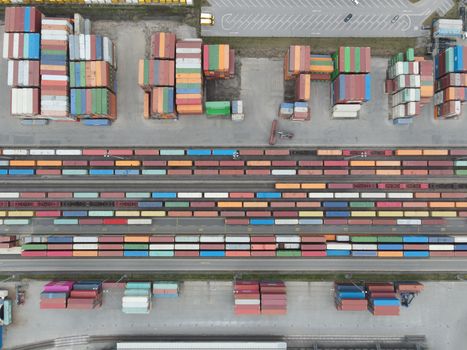
Aerial shot of stacked cargo containers at Regensburg port showcasing freight transport activity. Photo: Tobi &Chris / Pexels
In the dynamic world of commerce, the terms 'logistics' and 'supply chain' are often used interchangeably, leading to widespread confusion. However, understanding the nuanced logistics and supply chain difference is paramount for any business aiming for efficiency, cost-effectiveness, and customer satisfaction. Logistics, at its core, is the detailed organization and implementation of a complex operation. In a business context, it specifically refers to the process of planning, implementing, and controlling the efficient, effective forward and reverse flow and storage of goods, services, and related information between the point of origin and the point of consumption to meet customers' requirements. Think of logistics as the intricate engine that keeps products moving and accessible. Historically, logistics emerged from military operations, where the strategic movement and supply of troops and provisions were critical for success. This foundational principle of getting the right thing, to the right place, at the right time, in the right quantity, at the right cost, and in the right condition, still holds true today for commercial logistics. Key activities within logistics include transportation management (shipping by road, rail, air, sea), warehousing and storage, inventory control, material handling, packaging, and even security. Each of these elements requires meticulous planning and execution to ensure that products are available when and where they are needed, minimizing delays and waste. For instance, an efficient transportation network can significantly reduce shipping costs and delivery times, directly impacting profitability and customer loyalty. Similarly, optimized warehousing strategies can prevent stockouts or overstocking, both of which incur substantial financial penalties. The advent of sophisticated software and data analytics has revolutionized logistics, allowing for real-time tracking, predictive analysis, and automated decision-making, transforming it from a purely operational function into a strategic asset. Embracing these technological advancements is crucial for businesses looking to gain a competitive edge in today's fast-paced market. Without robust logistics, even the most innovative products or services would struggle to reach their intended audience effectively, underscoring its indispensable role in modern commerce. It's the tangible, hands-on process of managing the physical flow of goods. This involves everything from selecting the right carriers and negotiating freight rates to optimizing routes and managing customs documentation for international shipments. Inventory management, a crucial part of logistics, determines how much stock to hold, where to hold it, and when to replenish it, balancing customer demand with storage costs. Effective logistics ensures that products arrive in perfect condition, on schedule, and at the lowest possible cost, directly impacting the bottom line and customer perception. It's about operational excellence in the physical movement of products.

Exploring the Supply Chain: The Holistic Ecosystem

While logistics is a vital component, the supply chain is a much broader, more encompassing concept. It represents the entire network of organizations, people, activities, information, and resources involved in moving a product or service from supplier to customer. Unlike logistics, which focuses on the 'how' of movement and storage, the supply chain addresses the 'what,' 'who,' and 'why' across the entire product lifecycle. It’s a complete ecosystem that begins long before a product is even manufactured and extends well beyond its final delivery. This holistic perspective is what truly defines the logistics and supply chain difference. The supply chain includes all upstream and downstream linkages. Upstream activities involve sourcing raw materials, managing supplier relationships, and ensuring the quality and availability of components. Downstream activities encompass manufacturing, assembly, distribution, and ultimately, delivery to the end consumer. Beyond these operational elements, supply chain management also integrates strategic planning, information technology, finance, marketing, and customer service. Its primary goal is to maximize customer value and achieve a sustainable competitive advantage. For example, a company might strategically choose suppliers based not just on cost, but also on ethical practices, environmental impact, or innovation capabilities, all of which fall under the umbrella of supply chain management. Effective supply chain management requires seamless coordination and communication among all stakeholders, from the raw material producer to the retail store or online platform. It involves complex decision-making related to network design, demand forecasting, production planning, and risk management. In today's globalized economy, supply chains are often incredibly intricate, spanning multiple countries and continents, making their management a significant challenge and opportunity. The COVID-19 pandemic, for instance, starkly highlighted the vulnerabilities and interdependencies within global supply chains, underscoring the critical need for resilience and adaptability. Companies with robust supply chain strategies were better equipped to navigate disruptions, demonstrating the strategic importance of this overarching function. Ultimately, supply chain management is about creating value for the end customer by optimizing the flow of goods, services, and information across the entire network, ensuring that the right product is available at the right time, at the right place, and at the right price, while also considering broader strategic objectives. It’s a macro-level view that seeks to optimize the entire value creation process, making it a critical differentiator in today's competitive landscape. This involves strategic partnerships, technology integration, and a deep understanding of market dynamics to create a resilient and responsive system. Supply chain management is proactive, anticipating demand, mitigating risks, and adapting to global changes, far beyond the operational scope of logistics alone.

The Interplay: How Logistics Fits Within the Supply Chain

To truly grasp the logistics and supply chain difference, it's essential to understand their symbiotic relationship. Logistics is not separate from the supply chain; rather, it is a crucial, integral part of the broader supply chain framework. Think of the supply chain as a vast ecosystem, and logistics as one of its most vital organs, responsible for circulation. Without effective logistics, the entire supply chain would grind to a halt, unable to move products or materials from one point to another. Conversely, without a well-designed supply chain, logistics efforts might be misdirected or inefficient, moving the wrong products to the wrong places at the wrong time. The integration of logistics within supply chain management is where true operational excellence is achieved. Supply chain management sets the strategic direction, determining what products to make, where to source materials, and how to distribute them to meet market demand. Logistics then executes these strategies by efficiently managing the physical flow. For example, a supply chain strategy might involve setting up a new distribution center in a particular region to reduce delivery times. The logistics team would then be responsible for finding the right location, designing the warehouse layout, implementing inventory management systems, and establishing transportation routes to and from this new center. This requires a deep understanding of both strategic goals and operational realities. Furthermore, information flow is a critical connector between logistics and the broader supply chain. Data generated by logistics activities – such as shipping times, inventory levels, and delivery performance – feeds back into the supply chain management system. This information is then used to refine demand forecasts, optimize production schedules, manage supplier relationships, and improve overall supply chain resilience. For instance, real-time tracking data from logistics can alert supply chain managers to potential delays, allowing them to proactively adjust production or communicate with customers. The ongoing collaboration and communication between logistics professionals and other supply chain stakeholders (e.g., procurement, manufacturing, sales) are vital for ensuring that the entire system operates harmoniously and responds effectively to challenges and opportunities. In essence, logistics provides the operational muscle, while supply chain management provides the strategic brain and nervous system, coordinating all elements to achieve overarching business objectives. It's a continuous feedback loop where logistical performance directly informs and shapes supply chain strategy, creating a dynamic and adaptive system capable of responding to market fluctuations and unforeseen disruptions. This integrated approach ensures that every movement of goods is aligned with the company's strategic vision and contributes to enhanced customer value and competitive advantage. The synergy between them is what drives efficiency, reduces costs, and ultimately satisfies the end customer. For example, when a supply chain manager decides to implement a just-in-time inventory system, it’s the logistics team that then designs the transportation routes and warehousing protocols to support that strategy. They are two sides of the same coin, with logistics being the specialized, tactical arm of the broader, strategic supply chain. The harmonious interplay ensures products flow smoothly, costs are managed, and customer expectations are met.

Key Differences and Why They Matter: Optimizing for Success

Understanding the precise logistics and supply chain difference is not merely an academic exercise; it has profound implications for how businesses structure their operations, allocate resources, and develop strategic plans. Misconflating the two can lead to inefficiencies, missed opportunities, and a lack of clear accountability within an organization. By clearly delineating their roles, companies can optimize both functions for maximum impact. Here are some key distinctions and why they are critical for your business:
  • Scope: Logistics has a narrower focus, primarily concerned with the movement and storage of goods within a company or between a company and its direct partners. The supply chain, on the other hand, has a much broader scope, encompassing all activities and relationships from the initial raw material acquisition to the final delivery to the consumer, and even reverse logistics for returns or recycling. This distinction dictates the level of strategic oversight required for each function.
  • Objective: The primary objective of logistics is efficiency and cost-effectiveness in the physical flow of products. It aims to deliver the right product, to the right place, at the right time, and at the lowest possible cost. Supply chain management's objective is more strategic and holistic: to create overall customer value, build competitive advantage, and ensure the long-term sustainability and resilience of the entire network.
  • Participants: Logistics primarily involves internal departments (e.g., warehousing, transportation) and direct service providers (e.g., freight carriers, 3PLs). The supply chain involves a much wider array of participants, including suppliers, manufacturers, distributors, retailers, and customers, often across multiple tiers and geographies. Managing these diverse relationships requires different skill sets and strategic approaches.
  • Complexity: While logistics can be incredibly complex in its operational details, the supply chain introduces an even higher level of complexity due to the multitude of interconnected stakeholders, global reach, geopolitical factors, and the need for strategic alignment across diverse entities.
  • Focus: Logistics is often seen as an operational or tactical function, focusing on day-to-day execution. Supply chain management is inherently strategic, dealing with long-term planning, risk management, network design, and overall business strategy.
Recognizing these differences allows businesses to establish clear departmental responsibilities, develop specialized expertise, and implement appropriate performance metrics for each function. For example, a logistics manager might focus on metrics like on-time delivery rates and transportation costs, while a supply chain manager would look at broader indicators such as supplier lead times, overall inventory turns across the network, and customer satisfaction with the entire order fulfillment process. This clarity enables more effective decision-making, from choosing technology solutions tailored to specific needs to fostering collaboration between different parts of the organization. Ultimately, a deep appreciation for the distinct yet intertwined nature of logistics and supply chain management empowers companies to build more resilient, efficient, and customer-centric operations that can thrive in an increasingly complex global marketplace.

Comparison

FeatureSupply Chain ManagementLogistics ManagementKey Distinction
ScopeBroad, end-to-end networkNarrower, focuses on movement/storageMacro vs. Micro
ObjectiveStrategic competitive advantage & value creationEfficient, cost-effective physical flowOverall strategy vs. Operational execution
FocusIntegration, collaboration, overall strategyTransportation, warehousing, inventorySystem vs. Components
InvolvesSuppliers, manufacturers, distributors, customersCarriers, warehouse operators, internal departmentsAll stakeholders vs. Direct operators
Time HorizonLong-term strategic planningShort-to-medium term operational planningFuture-oriented vs. Present-focused
MetricsCustomer satisfaction, ROI, market shareOn-time delivery, freight costs, inventory accuracyOverall business health vs. Operational performance

What Readers Say

"This article finally clarified the logistics and supply chain difference for me. I always mixed them up, but now I understand how they fit together to impact my business operations."

Sarah J. · Austin, TX

"Excellent breakdown! As a small business owner, distinguishing between logistics and supply chain helps me allocate resources more effectively and plan my inventory better."

Mark D. · Chicago, IL

"After reading this, we optimized our internal logistics processes, resulting in a 15% reduction in shipping costs and a noticeable improvement in delivery times. Crucial insights!"

Emily R. · Seattle, WA

"Very informative, though I wish there were more industry-specific examples for complex global supply chains. Still, it provides a solid foundation for understanding the core concepts."

David L. · Miami, FL

"As a student in supply chain management, this article perfectly articulates the distinction. It's a great resource for anyone trying to get a handle on these interconnected fields."

Jessica M. · Denver, CO

Frequently Asked Questions

What is the primary difference between logistics and supply chain?

The primary difference is scope: Logistics is a part of the supply chain, focusing on the movement and storage of goods. The supply chain is a broader concept encompassing all activities, organizations, and resources from raw material sourcing to final customer delivery, integrating multiple functions beyond just physical movement.

Is one more important than the other for a business?

Neither is 'more important'; they are both critical and interdependent. Effective logistics is essential for operational efficiency, while strategic supply chain management ensures overall business resilience, competitive advantage, and customer value. One cannot function optimally without the other.

How can I improve my company's logistics performance?

To improve logistics, focus on optimizing transportation routes, streamlining warehousing operations, implementing advanced inventory management systems, leveraging technology for real-time tracking, and negotiating favorable terms with carriers and 3PLs. Regular performance audits are also key.

Does understanding this difference impact costs?

Absolutely. A clear understanding allows for better resource allocation, targeted investments in technology, and improved decision-making. This can lead to reduced operational costs in logistics and strategic cost savings across the entire supply chain, ultimately boosting profitability.

Can a company have good logistics but a bad supply chain?

Yes, it's possible. A company might excel at moving and storing products (good logistics) but still have a 'bad' supply chain if it sources from unreliable suppliers, faces frequent production delays, or struggles with demand forecasting, leading to overall inefficiencies and customer dissatisfaction.

Who typically manages logistics versus the supply chain in a large organization?

In large organizations, logistics is often managed by a Logistics Manager or Director, overseeing specific operational aspects like warehousing and transportation. Supply Chain Management is typically led by a Supply Chain Director or VP, who has a strategic role overseeing the entire network, including procurement, manufacturing, and distribution strategy.

Are there risks associated with not understanding the logistics and supply chain difference?

Yes, significant risks include inefficient operations, increased costs, poor customer service, lack of strategic planning, and an inability to adapt to market changes or disruptions. Mismanagement of either can lead to lost competitive advantage and potential business failure.

What future trends will impact the logistics and supply chain difference?

Future trends include increased digitalization (AI, IoT, blockchain), greater emphasis on sustainability and ethical sourcing, nearshoring/reshoring, and the growing importance of resilience and agility in response to global uncertainties. These will further integrate and complexify both functions.

Mastering the logistics and supply chain difference is no longer optional; it's a strategic imperative. By understanding their unique roles and how they integrate, your business can unlock unparalleled efficiency, reduce costs, and build a resilient framework for future growth. Take action today to refine your operations and gain a decisive competitive edge.

Topics: logistics and supply chain differencesupply chain managementlogistics definitionsupply chain vs logisticsintegrated supply chain
Leo List
Brampton weed
Adultwork EstrelaBet Vai de Bet R7 Bet Betão Galera Bet Rainbet Bet9ja Shop SportyBet BetKing Sisal Loto Foot Hollywoodbets YesPlay Odibets RushBet Jugabet BetWarrior BetCity MSport betPawa Fortebet