Optimize Your Last Mile Delivery Logistics Solutions Today
last mile delivery logistics solutions

Optimize Your Last Mile Delivery Logistics Solutions Today

Unlock efficiency, reduce costs, and delight customers with advanced last mile strategies tailored for modern businesses.

Explore Solutions

Key Takeaways

  • ✓ Last mile delivery can account for over 50% of total shipping costs.
  • ✓ Customer expectations for fast, transparent, and flexible delivery are at an all-time high.
  • ✓ Technology like AI, IoT, and real-time tracking is transforming last mile operations.
  • ✓ Poor last mile execution directly impacts customer satisfaction and brand loyalty.

How It Works

1
Order Placement & Integration

Customer places an order, which is instantly integrated into your logistics system. This ensures seamless data flow from sale to delivery.

2
Automated Route Optimization

Advanced algorithms calculate the most efficient delivery routes, considering traffic, time windows, and vehicle capacity. This minimizes fuel consumption and delivery times.

3
Real-time Tracking & Communication

Both dispatchers and customers can track deliveries in real-time. Proactive communication keeps customers informed and reduces 'where is my order' calls.

4
Proof of Delivery & Feedback

Digital proof of delivery (e.g., photo, signature) is captured upon arrival. This step often includes options for customer feedback, closing the loop on the delivery experience.

The Critical Role of Last Mile Delivery Logistics Solutions in Modern Commerce
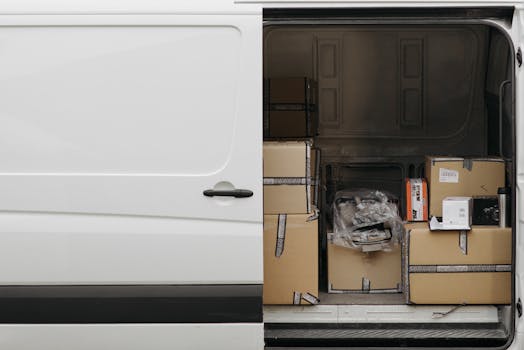
Open delivery van filled with boxes, ready for logistics and transport services. Photo: Pavel Danilyuk / Pexels
In today's fast-paced e-commerce landscape, the final leg of the delivery journey, often termed the 'last mile,' has become arguably the most critical and complex part of the entire supply chain. It's not just about getting a package from point A to point B; it's about doing so efficiently, cost-effectively, and in a way that delights the customer. Last mile delivery logistics solutions encompass the entire process of moving goods from a transportation hub to their final destination, usually a customer's home or business. This segment is characterized by its inherent challenges: navigating urban congestion, dealing with unpredictable traffic, managing diverse delivery locations, and meeting ever-increasing customer expectations for speed and transparency. The stakes are incredibly high; a flawless last mile experience can cement customer loyalty, while a single misstep can lead to negative reviews, lost business, and irreparable damage to a brand's reputation. This is why investing in robust and intelligent last mile solutions is no longer a luxury but a fundamental necessity for any business aiming to thrive in the competitive retail and logistics sectors. From small local businesses to multinational corporations, the ability to execute the last mile flawlessly directly impacts profitability and customer satisfaction. Understanding the intricacies of this final stage allows businesses to identify bottlenecks and implement strategic improvements that resonate with today's demanding consumers. It’s a dynamic environment, constantly evolving with new technologies and consumer behaviors, requiring businesses to be agile and adaptable. The focus has shifted from merely delivering a product to delivering an exceptional customer experience. The sheer volume of packages, especially during peak seasons, further exacerbates these challenges, making manual processes unsustainable and inefficient. This is where advanced logistics management systems come into play, offering automated, data-driven approaches to tackle these complexities head-on. The goal is not just to deliver, but to deliver smarter, faster, and more reliably than the competition. Without a solid strategy for last mile delivery, even the most optimized upstream supply chain processes can fall apart at the very end, negating all prior efforts and investments. The emphasis on customer-centric delivery services means that every interaction, from the moment an order is placed to the final hand-off, must be optimized for convenience and reliability. This holistic approach ensures that businesses are not just selling products, but also delivering satisfaction.

Key Components and Technologies Driving Last Mile Efficiency

A male and female courier organizing packages in a delivery truck for efficient shipment. Photo: Artem Podrez / Pexels
To overcome the formidable challenges of last mile delivery, businesses are increasingly adopting sophisticated technologies and integrating various components into a cohesive strategy. One of the foundational pillars of effective last mile delivery logistics solutions is route optimization software. These advanced platforms utilize algorithms to calculate the most efficient delivery paths, considering factors such as traffic conditions, time windows, vehicle capacity, driver availability, and even specific customer preferences. By minimizing mileage and driving time, route optimization significantly reduces fuel costs and operational expenses, while simultaneously increasing the number of deliveries a single driver can make in a day. Beyond routing, real-time tracking and visibility are paramount. GPS-enabled devices and telematics systems provide dispatchers and customers with up-to-the-minute information on package location and estimated arrival times. This transparency not only enhances customer satisfaction by setting accurate expectations but also allows businesses to proactively address potential delays or issues. Should a driver encounter unexpected traffic or a vehicle breakdown, the system can alert relevant parties and facilitate quick problem-solving. Another crucial component is automated dispatch and scheduling. These systems streamline the assignment of deliveries to drivers, ensuring that resources are allocated optimally and that delivery schedules are met. They can dynamically adjust routes and assignments based on new orders, cancellations, or changes in traffic, providing a level of flexibility that manual systems simply cannot match. For proof of delivery (POD), digital solutions are replacing traditional paper-based methods. Mobile apps allow drivers to capture electronic signatures, take photos of delivered packages, and record timestamps, providing irrefutable evidence of successful delivery. This reduces disputes, improves accountability, and speeds up the reconciliation process. Emerging technologies like Artificial Intelligence (AI) and Machine Learning (ML) are further refining these solutions. AI can predict demand fluctuations, optimize warehouse picking and packing, and even suggest optimal vehicle types for specific routes. IoT (Internet of Things) sensors integrated into vehicles and packages can monitor conditions like temperature for perishable goods, ensuring product integrity throughout the journey. The integration of customer communication tools, such as automated SMS or email updates, is also vital. These tools keep customers informed at every stage, from order confirmation to 'out for delivery' notifications and post-delivery feedback requests. This proactive communication reduces customer anxiety and the burden on customer service teams. Furthermore, the rise of alternative delivery methods, such as drone delivery (in nascent stages), locker systems, and autonomous vehicles, promises to reshape the last mile landscape even further, offering new avenues for efficiency and customer convenience. The convergence of these technologies creates a powerful ecosystem that transforms the last mile from a cost center into a competitive differentiator, enabling businesses to meet the evolving demands of modern consumers with unparalleled precision and speed.

Implementing Last Mile Delivery Logistics Solutions: A Step-by-Step Guide
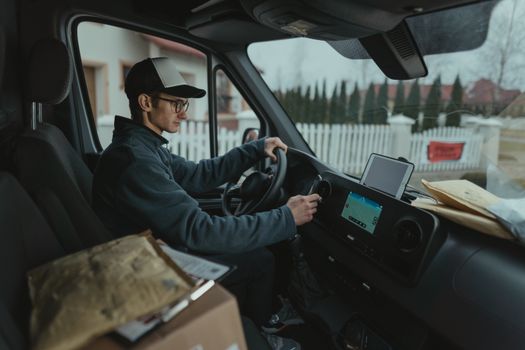
Courier driving van with packages, using GPS for efficient delivery route. Photo: Tima Miroshnichenko / Pexels
Successfully implementing last mile delivery logistics solutions requires a strategic approach, moving beyond simply purchasing software to integrating it seamlessly into existing operations and culture. The first step involves a thorough assessment of your current last mile processes. This includes analyzing existing delivery routes, identifying bottlenecks, evaluating current technology usage, and understanding customer pain points. Data collection on delivery times, costs, missed deliveries, and customer feedback is crucial to establish a baseline and identify areas for improvement. Once an assessment is complete, the next critical step is defining clear objectives. Are you aiming to reduce delivery costs by a certain percentage, improve on-time delivery rates, enhance customer satisfaction scores, or all of the above? Specific, measurable, achievable, relevant, and time-bound (SMART) goals will guide your solution selection and implementation strategy. Researching and selecting the right last mile delivery logistics solutions is paramount. The market offers a wide array of options, from comprehensive enterprise suites to specialized point solutions. Consider factors such as scalability, integration capabilities with your existing ERP or e-commerce platforms, user-friendliness for drivers and dispatchers, reporting features, and vendor support. A pilot program with a chosen solution is highly recommended. This allows you to test the system in a controlled environment, gather feedback from drivers and customers, and identify any unforeseen challenges or opportunities for optimization before a full-scale rollout. This iterative approach minimizes risks and ensures a smoother transition. Driver training and adoption are often overlooked but are absolutely essential for success. Drivers are on the front lines of your last mile operations; their buy-in and proficiency with new technology directly impact its effectiveness. Provide comprehensive training, offer ongoing support, and emphasize how the new tools will make their jobs easier and more efficient. Integration with existing systems, such as inventory management, order processing, and customer relationship management (CRM), is vital for a holistic approach. A siloed last mile solution will undermine its potential benefits. Ensure data flows seamlessly across your entire operational ecosystem, providing a unified view of your supply chain. Continuous monitoring and optimization are ongoing processes. The last mile landscape is dynamic, so regularly review performance metrics against your initial objectives. Use data analytics to identify trends, pinpoint areas for further refinement, and adapt to changing market conditions or customer expectations. This could involve tweaking route parameters, adjusting delivery windows, or exploring new delivery models. Finally, cultivate a culture of customer-centricity. Remind your team that the last mile is often the only direct interaction a customer has with your brand after purchase. Every delivery is an opportunity to reinforce a positive brand image. By following these steps, businesses can effectively implement last mile delivery logistics solutions that drive efficiency, reduce costs, and ultimately deliver superior customer experiences, setting them apart in a competitive market. It’s an investment in the future of your supply chain efficiency and customer loyalty.

Common Mistakes to Avoid and Best Practices for Last Mile Success

Courier driving van with packages, using GPS for efficient delivery route. Photo: Tima Miroshnichenko / Pexels
While the benefits of optimizing last mile delivery logistics solutions are clear, many businesses stumble during implementation or ongoing management. Avoiding common pitfalls is as crucial as embracing best practices. One significant mistake is underestimating the complexity of urban delivery. Dense areas present unique challenges like parking restrictions, unpredictable traffic, and security concerns, which generic route planners might not adequately address. Always opt for solutions that offer hyper-local data and dynamic re-routing capabilities. Another frequent error is neglecting driver feedback. Drivers are the eyes and ears on the ground; their insights into real-world conditions, route feasibility, and customer interactions are invaluable. Involve them in the selection and testing phases of any new technology. Ignoring customer communication is also a critical mistake. In today's expectation economy, customers demand transparency. Failing to provide real-time tracking, accurate ETAs, and proactive updates leads to frustration and increased customer service inquiries. A robust customer notification system is non-negotiable. **Best Practices for Last Mile Success:** * **Invest in Dynamic Route Optimization:** Move beyond static routes. Implement software that can adjust in real-time based on traffic, weather, and new orders. * **Prioritize Driver Training and Empowerment:** Equip your drivers with user-friendly technology and empower them to make informed decisions on the road. * **Embrace Data Analytics:** Continuously collect and analyze data on delivery performance, costs, and customer satisfaction to identify trends and areas for improvement. * **Offer Flexible Delivery Options:** Provide customers with choices like specific time slots, locker pick-up, or in-store collection to enhance convenience. * **Optimize Vehicle Fleets:** Match vehicle types to delivery needs (e.g., smaller vans for urban areas, electric vehicles for sustainability) to maximize efficiency and reduce environmental impact. * **Integrate Technology End-to-End:** Ensure your last mile solution integrates seamlessly with order management, inventory, and CRM systems for a unified operational view. * **Focus on Proactive Communication:** Keep customers informed with automated updates at every stage of the delivery process. * **Implement Digital Proof of Delivery (POD):** Streamline the delivery confirmation process, reduce disputes, and improve accountability with electronic signatures and photo capture. * **Build a Contingency Plan:** Anticipate potential disruptions (e.g., vehicle breakdown, extreme weather) and have protocols in place to mitigate their impact. * **Seek Continuous Improvement:** The last mile landscape is constantly evolving. Regularly review your strategies and adapt to new technologies and customer expectations. By diligently applying these best practices and consciously avoiding common pitfalls, businesses can transform their last mile delivery from a logistical headache into a powerful competitive advantage, ensuring customer satisfaction and sustainable growth.

Comparison

FeatureDedicated Last Mile SoftwareGeneric Logistics SoftwareManual ProcessBasic GPS App
Route OptimizationAdvanced, dynamic, multi-stopBasic, often staticPoor, human error proneLimited, point-to-point
Real-time TrackingDriver & customer facing, granularDriver facing, less granularNoneBasic vehicle tracking
Proof of DeliveryDigital (e-signature, photo), instantDigital, often integratedPaper, slow, prone to lossNone or manual capture
Customer NotificationsAutomated SMS/email, custom brandingBasic, often genericManual calls, inconsistentNone
Fleet ManagementComprehensive, maintenance, driver metricsBasic vehicle locationNoneLimited
Integration with ERP/CRMSeamless, API-drivenModerate, requires customizationNoneNone
Cost EfficiencyHigh potential savingsModerate savingsHigh operational costsMinimal impact
ScalabilityExcellent, designed for growthGood, with limitationsPoor, labor-intensivePoor

What Readers Say

"Our e-commerce business was struggling with late deliveries and high fuel costs. Implementing these last mile delivery logistics solutions transformed our operations, reducing delivery times by 20% and customer complaints significantly. It's truly a game-changer!"

Sarah J. · Austin, TX

"The real-time tracking and automated customer updates have made our delivery service stand out. Customers love knowing exactly when their package will arrive, and our drivers are much more efficient thanks to the optimized routing. Highly recommend these last mile delivery logistics solutions."

Mark D. · Chicago, IL

"We reduced our average delivery cost per package by 15% within the first three months of using these last mile delivery logistics solutions. The digital proof of delivery has also streamlined our accounting and reduced disputes, saving us countless hours."

Emily R. · Miami, FL

"While the initial setup for our last mile delivery logistics solutions took a bit longer than expected due to our complex existing systems, the long-term benefits are undeniable. Our customer satisfaction scores have improved, and the team appreciates the increased transparency."

John P. · Seattle, WA

"As a small food delivery service, efficient last mile delivery is our bread and butter. These solutions have allowed us to expand our delivery radius and handle more orders without increasing our fleet, directly impacting our bottom line and growth."

Alex K. · Denver, CO

Frequently Asked Questions

What are last mile delivery logistics solutions?

Last mile delivery logistics solutions refer to the technologies, strategies, and processes used to optimize the final leg of a product's journey from a distribution center or hub to the end customer's doorstep. This includes route optimization, real-time tracking, automated dispatch, and proof of delivery systems, all aimed at improving efficiency, reducing costs, and enhancing customer satisfaction in the most challenging part of the supply chain.

How can last mile solutions reduce operational costs?

Last mile solutions reduce operational costs primarily through route optimization, which minimizes fuel consumption and driver hours. They also improve vehicle utilization, reduce idle time, and decrease the number of missed or failed deliveries, which incur significant re-delivery expenses. Automated processes further cut down on administrative overhead and human error.

What technology is crucial for effective last mile delivery?

Crucial technologies include advanced route optimization software (often AI-powered), real-time GPS tracking and telematics, mobile applications for drivers (for navigation, communication, and proof of delivery), automated dispatch and scheduling systems, and customer communication platforms for notifications and feedback. Integration with existing ERP and CRM systems is also key.

Is investing in last mile delivery logistics solutions cost-effective for small businesses?

Yes, it can be highly cost-effective for small businesses. While enterprise solutions exist, many scalable and affordable cloud-based platforms are available. By optimizing routes, reducing fuel consumption, improving driver efficiency, and enhancing customer satisfaction, even small businesses can see a significant return on investment, helping them compete with larger players.

How do last mile solutions improve customer satisfaction?

Last mile solutions enhance customer satisfaction by providing faster, more reliable deliveries, offering flexible delivery options (e.g., time slots), and enabling real-time tracking and proactive communication. Customers appreciate transparency, accurate ETAs, and the ability to manage their deliveries, leading to a much more positive overall experience.

Who should use last mile delivery logistics solutions?

Any business that delivers products directly to customers, whether B2C or B2B, can benefit. This includes e-commerce retailers, food delivery services, grocery stores, pharmacies, couriers, field service companies, and even manufacturers distributing goods to their clients. Essentially, if you have a 'last mile' in your operation, these solutions are for you.

What are the security considerations for last mile delivery?

Security considerations include preventing package theft, ensuring driver safety, and protecting sensitive customer data. Solutions often incorporate secure proof-of-delivery methods (e.g., photo POD), driver monitoring, and robust data encryption. Clear communication and secure drop-off instructions also play a role in mitigating risks.

What are the future trends in last mile delivery logistics solutions?

Future trends include increased adoption of autonomous delivery vehicles (drones, robots), micro-fulfillment centers in urban areas, hyper-personalization of delivery options, greater use of predictive analytics and AI for demand forecasting, and a stronger focus on sustainable, eco-friendly delivery methods like electric vehicles and cargo bikes.

Ready to revolutionize your delivery operations and delight your customers? Explore cutting-edge last mile delivery logistics solutions today to optimize routes, reduce costs, and build a reputation for unparalleled service. Take the first step towards a more efficient and profitable future for your business.

Topics: last mile delivery logistics solutionsdelivery optimizationsupply chain managementroute planning softwarecustomer experience logistics
Leo List

IE Escorts NO Escorts US Escorts NZ Escorts AU Escorts
Brampton weed
Adultwork EstrelaBet Vai de Bet R7 Bet Betão Galera Bet Rainbet Bet9ja Shop SportyBet BetKing Sisal Loto Foot Hollywoodbets YesPlay Odibets RushBet Jugabet BetWarrior BetCity MSport betPawa Fortebet