✓ The US 3PL market is projected to reach over $300 billion by 2025.
✓ Choosing the wrong partner can increase costs by up to 15% and damage customer trust.
✓ Strategic partnerships improve delivery times by an average of 10-20%.
How It Works
1
Define Your Needs & Goals
Clearly outline your current logistics challenges, future growth aspirations, and specific service requirements. This foundational step ensures you know exactly what you're looking for in a partner.
2
Research & Shortlist Providers
Identify potential logistics partners based on their services, industry reputation, technological capabilities, and geographic reach. Look for providers specializing in your industry or product type.
3
Evaluate & Request Proposals
Send detailed RFPs to shortlisted partners, evaluating their proposals on cost, service level agreements (SLAs), technology integration, and scalability. Conduct thorough due diligence, including site visits.
4
Negotiate & Onboard
Finalize contract terms, ensuring clear expectations for performance metrics, reporting, and dispute resolution. Develop a robust onboarding plan to integrate systems and processes smoothly.
Understanding Your Business Needs for Effective Logistics Strategy
Photo: Jan van der Wolf / Pexels
Before you can even begin to consider how to choose a logistics partner, an in-depth understanding of your own business's unique needs, challenges, and long-term objectives is absolutely critical. This foundational self-assessment isn't just a preliminary step; it's the bedrock upon which a successful partnership is built. Without this clarity, you risk selecting a partner that is ill-equipped to meet your specific demands, leading to inefficiencies, increased costs, and ultimately, dissatisfaction.
Start by dissecting your current supply chain. What are your primary pain points? Are you struggling with high shipping costs, slow delivery times, inventory management complexities, or a lack of real-time visibility? Perhaps your customer returns process is cumbersome, or you're facing challenges with last-mile delivery in urban areas. Quantify these issues wherever possible. For instance, if high shipping costs are a concern, identify specific routes or product types contributing most to this expense. If delivery times are an issue, pinpoint the average delay and its impact on customer satisfaction.
Next, project your future growth. Are you planning to expand into new markets, launch new product lines, or significantly increase sales volume? A logistics partner must be scalable and capable of growing with you. Consider seasonal fluctuations in demand. Do you experience peak seasons that require surge capacity? A partner with flexible resources can be invaluable in managing these ebbs and flows without incurring excessive fixed costs during off-peak periods. Your product characteristics also play a significant role. Do you handle perishable goods, oversized items, hazardous materials, or high-value products requiring specialized handling, temperature control, or enhanced security? Each of these factors dictates the type of expertise and infrastructure a logistics partner must possess.
Don't overlook your customer expectations. In today's e-commerce driven world, consumers demand fast, reliable, and often free shipping, along with easy returns. Your chosen partner must be able to deliver on these expectations to maintain and enhance your brand's reputation. What level of transparency do your customers expect regarding order tracking? Do you need advanced reporting and analytics to gain insights into your logistics performance? Consider your internal resources as well. Do you have dedicated staff for logistics management, or are you looking for a partner to handle everything from warehousing to freight forwarding? The extent of outsourcing you require will significantly narrow down your options.
Finally, define your budget. While cost shouldn't be the sole deciding factor, it's a crucial consideration. Be realistic about what you can afford, but also understand that investing in a quality logistics partner can lead to long-term cost savings through efficiency improvements and reduced errors. Documenting these requirements meticulously will form the basis of your Request for Proposal (RFP) and ensure that potential partners understand your specific needs. This detailed self-assessment is the first, most critical step in optimizing your logistics operations and finding a partner that truly adds value to your business.
Key Criteria for Evaluating Potential 3PL Providers
Photo: Tobi &Chris / Pexels
Once you have a clear understanding of your business needs, the next critical phase in how to choose a logistics partner involves rigorously evaluating potential Third-Party Logistics (3PL) providers. This evaluation should go beyond just comparing price lists; it requires a holistic assessment of their capabilities, reliability, and cultural fit. Several key criteria must be meticulously examined to ensure you select a partner that will truly serve as an extension of your business.
First and foremost, assess their service offerings and specialization. Does the 3PL offer the specific services you require, such as warehousing, transportation (full truckload, less-than-truckload, parcel), fulfillment, reverse logistics, cross-docking, or value-added services like kitting and assembly? More importantly, do they specialize in your industry or product type? A partner with experience in handling perishable goods will have different infrastructure and processes than one specializing in electronics or apparel. Industry-specific knowledge can translate into greater efficiency, compliance, and problem-solving capabilities.
Technology and innovation are increasingly vital. A modern 3PL should leverage advanced logistics technology, including a robust Warehouse Management System (WMS), Transportation Management System (TMS), and potentially Order Management Systems (OMS). These systems should offer real-time inventory visibility, shipment tracking, data analytics, and seamless integration with your existing ERP or e-commerce platforms. Ask about their data security protocols and disaster recovery plans. A technologically advanced partner can provide the transparency and insights necessary to optimize your supply chain and respond quickly to market changes.
Financial stability and reputation are non-negotiable. Request financial statements to ensure the 3PL is financially sound and won't pose a risk to your operations. Investigate their industry reputation through client references, case studies, and online reviews. A long-standing history of reliable service and positive client testimonials is a strong indicator of trustworthiness. Inquire about their insurance coverage and liability policies to understand the extent of protection for your goods.
Scalability and flexibility are paramount for growth. Can the 3PL scale its operations up or down to accommodate your fluctuating demands? Do they have a network of facilities and transportation assets that can support your expansion into new geographic regions? A partner that can adapt to your evolving needs will prevent you from having to switch providers frequently, saving you time and resources.
Finally, evaluate their customer service and communication. How responsive are they? What is their communication protocol for issues, delays, or emergencies? A dedicated account manager and clear lines of communication are essential for a smooth partnership. Consider their approach to problem-solving and continuous improvement. The best partners are proactive, identifying potential issues before they arise and offering solutions to enhance efficiency. This detailed evaluation process ensures you're not just picking a vendor, but a strategic partner committed to your success.
The Power of Due Diligence: Site Visits, RFPs, and Contract Negotiations
Photo: Jan van der Wolf / Pexels
The process of how to choose a logistics partner culminates in thorough due diligence, encompassing site visits, comprehensive Request for Proposals (RFPs), and meticulous contract negotiations. This stage is where theoretical evaluations transform into practical assessments, ensuring that your selected partner can deliver on their promises and integrate seamlessly into your operations. Skipping any of these steps can lead to costly mistakes and a less-than-optimal partnership.
Site visits are indispensable. While a 3PL's sales presentation may paint a rosy picture, nothing replaces seeing their operations firsthand. Visit their warehouses, fulfillment centers, and potentially their transportation hubs. Pay close attention to the organization, cleanliness, and efficiency of their facilities. Observe their inventory management systems, security measures, and the condition of their equipment. Are their staff well-trained and engaged? Do they follow safety protocols? A well-run facility is a strong indicator of a well-managed company. Ask to see how similar products to yours are handled and stored. This direct observation provides invaluable insights into their operational capabilities and attention to detail. It also offers an opportunity to meet the operational team you would be working with, assessing their expertise and approachability.
Developing a detailed Request for Proposal (RFP) is your blueprint for comparison. Your RFP should be comprehensive, clearly outlining all the requirements identified in your initial needs assessment. Include specific volumes (e.g., number of SKUs, daily order volume, peak season volumes), geographical reach, technology integration needs, desired service levels (e.g., order accuracy rates, on-time delivery percentages), reporting requirements, and any specialized handling needs. Ask for detailed pricing structures, including all potential surcharges. Request case studies, client references (and actually contact them), and information on their financial stability, insurance, and risk management strategies. A well-structured RFP allows for an apples-to-apples comparison of proposals, making the decision-making process more objective and data-driven.
Contract negotiations are not just about price; they're about defining the entire relationship. The contract should clearly articulate Service Level Agreements (SLAs) with measurable Key Performance Indicators (KPIs) for every aspect of the service, such as order fulfillment accuracy, on-time shipping, inventory accuracy, and response times. Include clauses for performance penalties and incentives to align interests. Define reporting requirements, audit rights, and clear communication channels. Address scalability options, exit clauses, and dispute resolution mechanisms. Ensure the contract specifies data ownership, security, and confidentiality. Legal review by a professional specializing in logistics contracts is highly recommended. A robust contract protects both parties and provides a clear framework for the partnership. By investing time and effort in due diligence, you significantly mitigate risks and lay the groundwork for a long-term, mutually beneficial partnership that drives efficiency and growth for your business. This diligent approach is paramount when determining the best approach for supply chain optimization.
Common Pitfalls and Best Practices in Logistics Partner Selection
Photo: Tiger Lily / Pexels
Navigating the landscape of third-party logistics can be complex, and several common pitfalls can derail even the most well-intentioned efforts to choose a logistics partner. Awareness of these traps, coupled with adherence to best practices, is crucial for a successful selection process.
**Common Pitfalls:**
* **Solely Focusing on Price:** While cost is a factor, making a decision based purely on the lowest bid often leads to compromises in service quality, reliability, and ultimately, higher long-term costs due to errors, delays, and dissatisfied customers.
* **Lack of Clear Requirements:** Failing to define your specific needs, volumes, and expectations upfront makes it impossible to compare providers accurately and often results in a mismatch between your business and the partner's capabilities.
* **Ignoring Technology Compatibility:** Overlooking the importance of seamless integration between your systems (ERP, e-commerce platform) and the 3PL's WMS/TMS can lead to manual processes, data inaccuracies, and significant operational bottlenecks.
* **Neglecting Scalability:** Choosing a partner that cannot grow with your business or handle seasonal spikes in demand will force you to switch providers prematurely, incurring significant transition costs and disruptions.
* **Poor Communication & Relationship Management:** A breakdown in communication channels or a lack of a dedicated account manager can quickly escalate minor issues into major problems, damaging the partnership.
* **Skipping Due Diligence:** Not conducting site visits, checking references, or thoroughly reviewing financial stability leaves you vulnerable to unforeseen operational or financial risks.
**Best Practices:**
1. **Develop a Cross-Functional Team:** Involve key stakeholders from operations, finance, sales, and IT in the selection process to ensure all perspectives and needs are considered.
2. **Prioritize Cultural Fit:** Look for a partner whose values, communication style, and approach to business align with yours. A good cultural fit fosters better collaboration and problem-solving.
3. **Emphasize Data and Reporting:** Ensure the 3PL can provide robust, customizable reporting and analytics. Data-driven insights are vital for continuous improvement and strategic decision-making.
4. **Focus on Continuous Improvement:** A strong logistics partner should be proactive in identifying opportunities for efficiency gains, cost reductions, and service enhancements. Look for evidence of their commitment to innovation.
5. **Start Small, Scale Up:** If possible, consider a pilot program or a phased approach, especially for larger or more complex operations. This allows you to test the relationship and capabilities before full commitment.
6. **Regular Performance Reviews:** Establish a formal schedule for reviewing performance against agreed-upon KPIs. This ensures accountability and allows for timely adjustments to the partnership.
By avoiding these pitfalls and embracing best practices, businesses can significantly improve their chances of selecting a logistics partner that not only meets their current needs but also contributes to their long-term success and competitive advantage.
"Following this guide on how to choose a logistics partner transformed our e-commerce operations. We went from constant shipping delays to 98% on-time delivery rates, which significantly boosted our customer satisfaction scores. The emphasis on defining clear KPIs was particularly helpful."
Sarah Chen · Seattle, WA
★★★★★
"This article provided an invaluable framework for evaluating 3PLs. We used the RFP template suggestions and found a partner that not only met our budget but also integrated seamlessly with our existing tech stack. Our inventory accuracy improved dramatically."
Mark Johnson · Dallas, TX
★★★★★
"As a small business owner, the thought of choosing a logistics partner was daunting. This guide broke down the process into manageable steps, highlighting the importance of cultural fit. We now have a partner who truly understands our brand and helps us scale."
Emily Rodriguez · Miami, FL
★★★★★
"The advice on due diligence, especially site visits, was crucial. While we had a good initial list, seeing the operations firsthand revealed important differences in efficiency and cleanliness among providers. We chose a slightly more expensive option, but the peace of mind is worth it."
David Lee · Chicago, IL
★★★★★
"Our previous logistics setup was a constant headache. This article helped us articulate our pain points and find a partner specializing in reverse logistics for our apparel brand. Returns are now streamlined, and customer experience has never been better."
Jessica Brown · Los Angeles, CA
Frequently Asked Questions
What is the most critical factor when choosing a logistics partner?
While many factors are important, the most critical is a clear alignment between your business's specific needs (e.g., product type, volume, customer expectations) and the partner's capabilities, expertise, and technological infrastructure. Without this alignment, even a seemingly good partner will fail to deliver optimal results.
How can I ensure my data is secure with a third-party logistics provider?
To ensure data security, inquire about the 3PL's cybersecurity protocols, certifications (e.g., ISO 27001), data encryption methods, and disaster recovery plans. Ensure your contract includes strong data protection clauses, specifies data ownership, and outlines breach notification procedures.
What should be included in a Request for Proposal (RFP) for logistics services?
An RFP should include your company overview, detailed service requirements (warehousing, transport, fulfillment), expected volumes, desired KPIs and SLAs, technology integration needs, reporting expectations, and a request for pricing, company financials, references, and proposed solutions to your specific challenges.
Is it always cheaper to outsource logistics to a 3PL?
Not always initially. While 3PLs can offer economies of scale and specialized expertise that reduce costs over time, particularly for complex or high-volume operations, initial setup costs can exist. The true value lies in efficiency gains, reduced errors, improved service levels, and the ability to focus on core business, which often translates to long-term savings and increased revenue.
How do 3PLs compare to freight forwarders?
A 3PL (Third-Party Logistics) typically offers a comprehensive suite of services including warehousing, fulfillment, and transportation, managing an entire supply chain segment. A freight forwarder primarily specializes in arranging the transportation of goods, often internationally, handling customs and documentation but generally not warehousing or inventory management.
Who should consider using a logistics partner?
Businesses experiencing rapid growth, those entering new markets, companies facing increasing shipping complexity, those lacking in-house logistics expertise or infrastructure, and businesses looking to reduce operational costs and improve efficiency should consider a logistics partner. Both small and large businesses can benefit significantly.
What are the risks of choosing the wrong logistics partner?
Choosing the wrong partner can lead to increased shipping costs, delayed deliveries, damaged inventory, poor customer service, loss of sales, reputational damage, and operational inefficiencies. It can also divert significant internal resources to problem-solving rather than core business activities.
What future trends should I consider when selecting a logistics partner?
Look for partners embracing automation (robotics in warehouses), AI and machine learning for predictive analytics, sustainable practices (green logistics), blockchain for supply chain transparency, and advanced last-mile delivery solutions. A forward-thinking partner will ensure your supply chain remains competitive.
Choosing the right logistics partner is a strategic decision that can profoundly impact your business's efficiency, customer satisfaction, and profitability. By following these comprehensive guidelines on how to choose a logistics partner, you can forge a powerful alliance that propels your business forward, allowing you to focus on innovation and growth while your supply chain runs seamlessly.

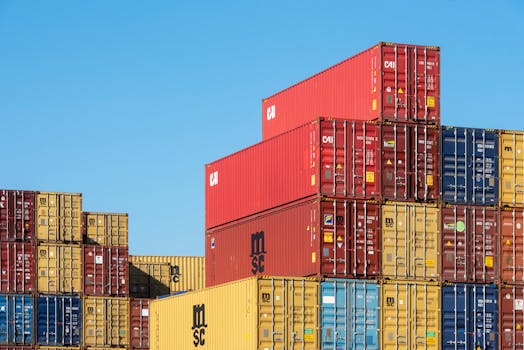 Photo: Jan van der Wolf / Pexels
 Photo: Tobi &Chris / Pexels
 Photo: Tiger Lily / Pexels