The Best Logistics Companies for E-commerce: Your Ultimate Guide
best logistics companies for e-commerce

The Best Logistics Companies for E-commerce: Your Ultimate Guide

Unlock growth and customer loyalty by partnering with top-tier logistics providers tailored for your e-commerce success.

Find Your Perfect Partner

Key Takeaways

  • ✓ The e-commerce logistics market is projected to reach over $1,200 billion by 2027.
  • ✓ Poor logistics are responsible for 70% of abandoned carts.
  • ✓ Two-day shipping is now considered standard by 60% of online shoppers.
  • ✓ Outsourcing to a 3PL can reduce shipping costs by up to 20% for many businesses.

How It Works

1
Assess Your Needs

Evaluate your current order volume, product types, geographical reach, and specific fulfillment requirements to define your ideal logistics partner.

2
Research & Compare Providers

Investigate various logistics companies, focusing on their service offerings, technology, pricing models, and reputation within the e-commerce sector.

3
Request Quotes & Proposals

Contact your shortlisted companies, providing detailed information about your business to receive accurate and comprehensive service proposals.

4
Integrate & Optimize

Once a partner is chosen, work closely with them to integrate your systems, streamline workflows, and continuously monitor performance for ongoing optimization.

Understanding E-commerce Fulfillment Services and 3PLs
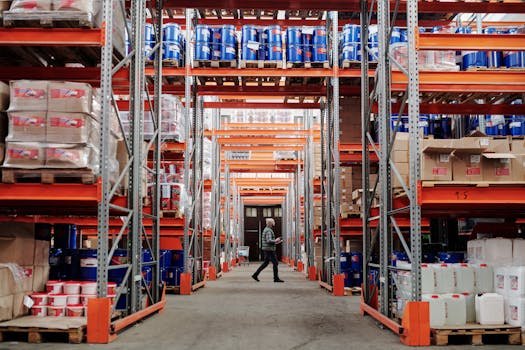
A man walking through a large industrial warehouse with stacked shelves filled with goods and products. Photo: Tiger Lily / Pexels
In the rapidly evolving world of online retail, simply having a great product isn't enough. The backbone of any successful e-commerce business is its logistics. From the moment a customer clicks 'buy' to the package arriving at their doorstep, every step in the fulfillment process impacts customer satisfaction, brand reputation, and ultimately, your bottom line. E-commerce fulfillment services, often provided by Third-Party Logistics (3PL) companies, are specialized providers that handle everything from warehousing and inventory management to order processing, picking, packing, and shipping. They are designed to take the operational burden off e-commerce businesses, allowing them to focus on core competencies like product development and marketing. The scope of services offered by these providers is vast. It begins with receiving inventory from manufacturers or suppliers, where items are checked, counted, and stored in strategically located warehouses. Advanced inventory management systems ensure accurate tracking, minimize stockouts, and optimize storage space. When an order comes in, the 3PL's system integrates with your e-commerce platform, triggering the 'picking' process where items are retrieved from storage. Next is 'packing,' which involves selecting appropriate packaging materials, ensuring product safety, and often includes branded packaging or inserts – a crucial touchpoint for customer experience. Finally, the 'shipping' phase involves selecting the most efficient and cost-effective carrier, generating labels, and dispatching the package for delivery. Many 3PLs also handle reverse logistics, managing returns and exchanges, which is a significant aspect of customer retention in e-commerce. The benefits of partnering with the best logistics companies for e-commerce are multifaceted. First, scalability: as your business grows, a 3PL can easily accommodate increased order volumes without you needing to invest in additional warehouse space, staff, or equipment. This agility is invaluable during peak seasons or periods of rapid expansion. Second, cost efficiency: 3PLs leverage economies of scale, negotiating better shipping rates with carriers due to their high volume. They also optimize warehouse operations, reducing labor and overhead costs that an individual business might incur. Third, expertise: these companies are specialists in logistics. They possess the knowledge, technology, and infrastructure to handle complex shipping requirements, international customs, and compliance regulations, ensuring smooth operations. Logistics technology plays a pivotal role here, with advanced WMS (Warehouse Management Systems) and TMS (Transportation Management Systems) providing real-time visibility and data analytics. Finally, improved customer experience: faster shipping times, accurate order fulfillment, and seamless returns directly contribute to higher customer satisfaction and repeat business. Choosing the right 3PL means entrusting a critical part of your business to experts, allowing you to scale efficiently and delight your customers.

Key Factors for Choosing the Right E-commerce Logistics Partner
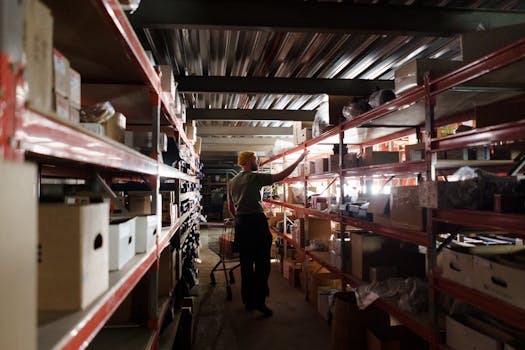
A warehouse worker arranging inventory on metal shelves in a storage facility Photo: cottonbro studio / Pexels
Selecting the ideal logistics partner is a strategic decision that can significantly impact your e-commerce business's success. It's not just about finding the cheapest option; it's about finding the right fit that aligns with your specific needs, growth trajectory, and customer expectations. Several critical factors should guide your decision-making process. First and foremost is location and network. Consider where your customers are predominantly located. A logistics partner with strategically placed warehouses across the US can significantly reduce shipping times and costs, offering faster delivery to a wider geographic area. This is especially important for businesses promising 1-2 day shipping. Their network should also include strong relationships with various shipping carriers, allowing for flexible and cost-effective options for different package sizes, weights, and delivery speeds. Technology and integration capabilities are another non-negotiable factor. The best logistics companies for e-commerce utilize cutting-edge technology. Look for providers that offer robust Warehouse Management Systems (WMS) that integrate seamlessly with your existing e-commerce platform (e.g., Shopify, WooCommerce, Magento), ERP system, and CRM. This integration ensures real-time inventory updates, automated order processing, accurate tracking information for customers, and comprehensive reporting. A good WMS should provide clear visibility into your inventory levels, order status, and shipping performance, allowing you to make data-driven decisions. Scalability and flexibility are crucial for e-commerce businesses, which often experience fluctuating demand. Your chosen logistics partner should be able to scale their services up or down to accommodate seasonal peaks, promotional campaigns, or periods of rapid growth without compromising service quality. Inquire about their capacity, staffing flexibility, and how they handle sudden spikes in order volume. This flexibility ensures that you're not overpaying for services during slow periods and that you're well-equipped to handle high demand without operational bottlenecks. Cost structure and transparency are also vital. Understand their pricing model thoroughly. Is it a per-order fee, per-item fee, storage fee, or a combination? Are there hidden costs for returns, special packaging, or expedited shipping? Request a detailed breakdown of all potential charges and compare them across different providers. Transparency in pricing builds trust and prevents unexpected expenses down the line. While cost is important, remember that the cheapest option isn't always the best; value for money, in terms of service quality, technology, and reliability, should be the primary consideration. Finally, customer service and support are paramount. You need a partner who is responsive, proactive, and easy to communicate with. Inquire about their dedicated account management, response times for inquiries, and how they handle issues or discrepancies. A strong, communicative relationship with your logistics partner is essential for smooth operations and quick resolution of any challenges that may arise. Thoroughly vetting these factors will help you make an informed decision and secure a partnership that fuels your e-commerce growth.

Top Contenders: Leading E-commerce Shipping Solutions and 3PLs in the US
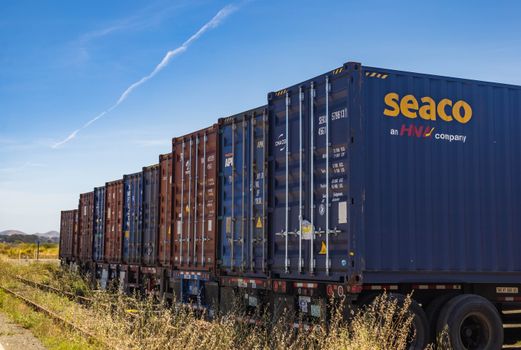
Row of vibrant cargo containers on train tracks under a clear blue sky. Photo: Robert So / Pexels
The US market for e-commerce logistics is vast and competitive, with several key players offering a range of services tailored to different business sizes and needs. Identifying the best logistics companies for e-commerce involves looking at their overall capabilities, technological prowess, and reputation for reliability. Here, we highlight some of the top contenders that consistently deliver exceptional value and service. **ShipBob** stands out as a leading 3PL for direct-to-consumer (DTC) brands, particularly small to medium-sized businesses (SMBs) experiencing rapid growth. They offer a robust fulfillment network with multiple warehouse locations across the US, enabling faster, more cost-effective shipping. ShipBob's strength lies in its advanced technology platform, which provides seamless integration with major e-commerce platforms, real-time inventory tracking, order management, and comprehensive analytics. Their transparent pricing model and focus on customer support make them a strong choice for businesses looking to scale. They are also known for their flexible packaging options and international shipping capabilities, supporting global expansion. **Red Stag Fulfillment** specializes in handling oversized, heavy, high-value, or fragile items, an area where many generalist 3PLs struggle. They boast industry-leading accuracy and order fill rates, often guaranteeing 100% accuracy and shipping within 24 hours. Their warehouses are optimized for bulk storage and efficient handling of unique product dimensions, reducing damage and improving delivery times for specialized goods. Red Stag's commitment to precision and lower error rates translates directly into cost savings and higher customer satisfaction for businesses with specific product profiles. They offer transparent pricing and a strong focus on security for valuable inventory. **Flexport (formerly Shipwire)** offers a comprehensive global logistics platform, combining freight forwarding with fulfillment services. While they cater to businesses of all sizes, their strength lies in helping companies manage their entire supply chain, from manufacturer to customer, especially for those with international sourcing or sales. Flexport's technology platform provides unparalleled visibility into global shipments, optimizing routes and reducing transit times. Their integrated approach makes them ideal for businesses seeking a single partner to manage both inbound and outbound logistics, streamlining complex global operations. Supply chain optimization is a core tenet of their offering. **DHL Supply Chain** offers a vast global network and a wide range of customized logistics solutions, catering to larger enterprises and those with complex, high-volume operations. They provide end-to-end supply chain management, including warehousing, transportation, e-commerce fulfillment, and value-added services. Their extensive resources and expertise in various industries make them a reliable choice for businesses requiring highly specialized or large-scale logistics operations. While they serve major corporations, they also have divisions that can support growing e-commerce businesses seeking a comprehensive and globally integrated solution. **FedEx Fulfillment and UPS Supply Chain Solutions** leverage their extensive carrier networks to offer integrated fulfillment services. For businesses already heavily reliant on FedEx or UPS for shipping, their fulfillment arms provide a seamless extension of services. They offer warehousing, inventory management, order fulfillment, and distribution, often with robust tracking and visibility. These options can be particularly attractive for businesses looking to consolidate their logistics needs with a single, well-established brand, benefiting from their vast infrastructure and long-standing expertise in package delivery. Their solutions are scalable and can support a wide range of e-commerce businesses, from mid-market to enterprise level, seeking reliability and brand recognition in their logistics partner.

Navigating Challenges and Future Trends in E-commerce Logistics
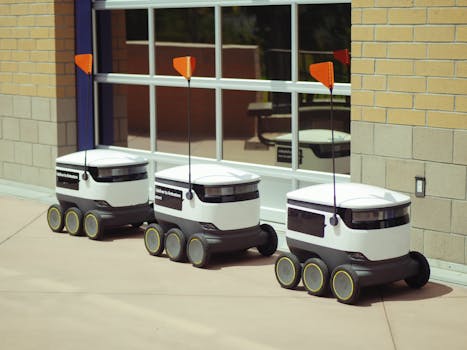
Three autonomous delivery robots parked outside a building, showcasing modern technology. Photo: Kindel Media / Pexels
The e-commerce logistics landscape is dynamic, constantly evolving with new technologies, consumer expectations, and global challenges. Successfully navigating this environment requires foresight and adaptability. Understanding the common pitfalls and emerging trends is crucial for any e-commerce business seeking to partner with the best logistics companies for e-commerce and maintain a competitive edge. **Common Challenges in E-commerce Logistics:** * **Rising Shipping Costs:** Fuel prices, labor shortages, and increased demand contribute to higher shipping rates. Businesses must continuously optimize carrier selection and fulfillment strategies to mitigate these costs without compromising service. * **Inventory Management Complexity:** Managing inventory across multiple sales channels and warehouse locations, especially with diverse product lines, can lead to stockouts or overstocking if not handled efficiently. * **Last-Mile Delivery:** This is often the most expensive and complex part of the delivery process. Urban congestion, customer availability, and the demand for fast delivery times pose significant hurdles. * **Returns Management (Reverse Logistics):** E-commerce typically has higher return rates than brick-and-mortar retail. Efficiently processing returns, restocking, or disposing of items is a critical, often underestimated, logistical challenge. * **Sustainability Demands:** Consumers are increasingly conscious of environmental impact. Businesses face pressure to adopt eco-friendly packaging, optimize delivery routes, and reduce their carbon footprint, adding another layer of complexity to logistics. **Future Trends Shaping E-commerce Logistics:** * **Automation and Robotics:** Warehouses are increasingly adopting robotic picking systems, automated guided vehicles (AGVs), and drone technology for inventory management and even last-mile delivery, improving speed and accuracy while reducing labor costs. * **Artificial Intelligence (AI) and Machine Learning (ML):** AI and ML are being used for demand forecasting, optimizing inventory placement, predicting delivery delays, and personalizing shipping options for customers. This data-driven approach enhances efficiency and customer satisfaction. * **Hyperlocal Fulfillment:** To meet same-day or next-day delivery expectations, there's a growing trend towards establishing micro-fulfillment centers closer to urban population centers, sometimes within existing retail spaces. * **Blockchain for Supply Chain Transparency:** Blockchain technology is being explored to create more transparent, secure, and traceable supply chains, improving accountability and reducing fraud. * **Sustainable Logistics:** Expect to see more electric delivery vehicles, reusable packaging solutions, optimized route planning to reduce fuel consumption, and carbon offsetting programs becoming standard practice. * **Increased Use of Data Analytics:** Leveraging big data to gain deeper insights into customer behavior, operational efficiency, and market trends will be paramount for optimizing logistics strategies and making informed business decisions. Partnering with a logistics provider that is aware of these challenges and actively investing in these future trends will be key to long-term success. Look for partners who demonstrate innovation and a commitment to adapting their services to the evolving demands of the e-commerce landscape.

Comparison

FeatureShipBobRed Stag FulfillmentFlexport (Shipwire)
Target Business SizeSMBs, DTC BrandsMid-market (specialty)SMBs to Enterprise (global)
Product SpecializationGeneral E-commerce GoodsOversized, Heavy, FragileDiverse, Global Sourcing
Technology IntegrationExcellent (e-commerce platforms)Strong (WMS, ERP)Comprehensive (end-to-end supply chain)
Warehouse Network (US)Extensive, Multi-RegionalStrategic, High-CapacityGlobal & US Hubs
Cost TransparencyHighHighGood, for complex services
Reverse Logistics
International Shipping✗ (focus on US)✓✓ (core strength)

What Readers Say

"ShipBob completely transformed our fulfillment process. We went from packing orders ourselves to seamless, fast shipping in just weeks. Their dashboard gives us total visibility and peace of mind."

Sarah Chen · Austin, TX

"As a furniture e-commerce brand, finding a logistics partner for our large items was a nightmare until Red Stag. Their accuracy and damage prevention are unparalleled, saving us so much money and hassle."

Mark Ramirez · Denver, CO

"Flexport has been instrumental in scaling our international sourcing and sales. Their integrated platform handles everything from factory to customer, reducing our lead times by nearly 30%."

Emily White · Miami, FL

"We've used a few 3PLs, and while no one is perfect, ShipBob's integrations are top-notch. Sometimes support can be a bit slow during peak season, but overall, they deliver reliable service and great value for our growth stage."

David Lee · Seattle, WA

"For our high-value electronics, Red Stag's secure handling and precise inventory management are critical. Their guarantee on accuracy means we rarely deal with customer complaints about wrong items, which is huge for our brand reputation."

Jessica Brown · Chicago, IL

Frequently Asked Questions

What are the best logistics companies for e-commerce for small businesses?

For small businesses, companies like ShipBob, ShipStation (for self-fulfillment with carrier integration), and occasionally regional 3PLs are excellent choices. They offer scalable solutions, competitive pricing for lower volumes, and user-friendly platforms that integrate well with popular e-commerce storefronts, allowing you to grow without immediate heavy investment in infrastructure.

How much does e-commerce fulfillment typically cost?

E-commerce fulfillment costs vary widely based on factors like order volume, product size/weight, number of SKUs, storage duration, and required services (e.g., custom packaging, kitting). Most 3PLs charge a combination of receiving fees, storage fees, pick and pack fees per order/item, and shipping costs. Always request a detailed quote tailored to your specific business profile.

How do I integrate a 3PL with my e-commerce store?

Most reputable 3PLs offer direct integrations with major e-commerce platforms like Shopify, WooCommerce, BigCommerce, and Magento. This usually involves installing a plugin or app, then connecting your store's API keys to the 3PL's system. This allows for automated order syncing, inventory updates, and tracking information to flow seamlessly between your store and the fulfillment center.

What's the difference between a 3PL and a shipping carrier?

A shipping carrier (like UPS, FedEx, USPS, DHL) primarily focuses on transporting packages from one point to another. A 3PL (Third-Party Logistics provider) offers a comprehensive suite of services, including warehousing, inventory management, order processing, picking, packing, and then coordinating with shipping carriers for the actual delivery. A 3PL manages the entire fulfillment process, while a carrier only handles the transportation aspect.

Should I use Amazon FBA or an independent 3PL?

Amazon FBA (Fulfillment by Amazon) is excellent if a significant portion of your sales comes from Amazon's marketplace, offering Prime shipping benefits. However, an independent 3PL provides more control over branding, packaging, and offers direct-to-consumer (DTC) fulfillment for all your sales channels (your website, other marketplaces), often with more personalized service and flexible terms. The best choice depends on your sales channels and brand strategy.

What is reverse logistics in e-commerce?

Reverse logistics refers to the process of managing returned or unwanted products from the customer back to the seller or manufacturer. For e-commerce, this includes handling returns, exchanges, refunds, quality checks, repackaging, restocking, or disposal. Efficient reverse logistics is crucial for customer satisfaction and minimizing losses, and many top logistics companies for e-commerce offer robust solutions for this.

How important is technology in choosing a logistics partner?

Technology is paramount. A logistics partner with advanced WMS (Warehouse Management System), integration capabilities, real-time tracking, and data analytics tools provides transparency, efficiency, and allows for data-driven decision-making. It ensures accurate inventory, faster order processing, and better communication, all of which directly impact customer experience and operational costs.

What are the future trends in e-commerce logistics?

Future trends include increased automation and robotics in warehouses, greater use of AI and machine learning for demand forecasting and route optimization, the rise of hyperlocal fulfillment centers for faster delivery, sustainable logistics practices (e.g., electric vehicles, eco-friendly packaging), and enhanced data analytics for supply chain visibility and efficiency. The best logistics companies for e-commerce are already investing in these areas.

Ready to elevate your e-commerce operations? Partnering with the best logistics companies for e-commerce can unlock unparalleled efficiency, customer satisfaction, and growth. Don't let fulfillment be a bottleneck – explore our recommended solutions and find the perfect match for your business today.

Topics: best logistics companies for e-commercee-commerce fulfillment servicesshipping solutions for online stores3PL for e-commercesupply chain management e-commerce
Leo List
Brampton weed
Adultwork EstrelaBet Vai de Bet R7 Bet Betão Galera Bet Rainbet Bet9ja Shop SportyBet BetKing Sisal Loto Foot Hollywoodbets YesPlay Odibets RushBet Jugabet BetWarrior BetCity MSport betPawa Fortebet