
Unlocking Growth: The Benefits of Logistics Outsourcing
Streamline operations, reduce costs, and focus on core competencies by leveraging expert third-party logistics providers.
Optimize Your Supply Chain NowKey Takeaways
- ✓ Outsourcing logistics can reduce operational costs by up to 30%.
- ✓ 80% of Fortune 500 companies utilize 3PL services.
- ✓ Access to advanced technology and expertise without capital investment.
- ✓ Improved scalability and flexibility to adapt to market demands.
How It Works
Identify your current logistics challenges, operational bottlenecks, and strategic goals. Determine which areas of your supply chain would benefit most from external expertise and resources.
Research and evaluate potential third-party logistics (3PL) providers based on their experience, technology, services offered, and cultural fit. Request proposals and conduct thorough due diligence.
Work closely with your chosen 3PL to integrate their systems with yours, ensuring seamless data flow and communication. Establish clear protocols for inventory management, order fulfillment, and transportation.
Continuously track key performance indicators (KPIs) and regularly review service level agreements (SLAs) with your 3PL. Collaborate to identify areas for ongoing improvement and efficiency gains.
Achieving Cost Savings and Financial Efficiency through 3PL
 Photo: RDNE Stock project / Pexels
Enhancing Efficiency and Operational Streamlining
 Photo: Tiger Lily / Pexels
Achieving Scalability, Flexibility, and Market Agility with Outsourced Logistics
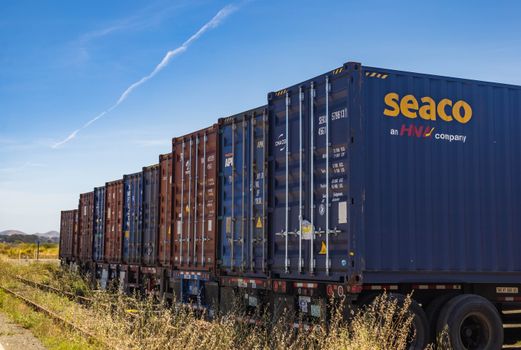 Photo: Robert So / Pexels
Avoiding Common Pitfalls and Maximizing Your 3PL Partnership
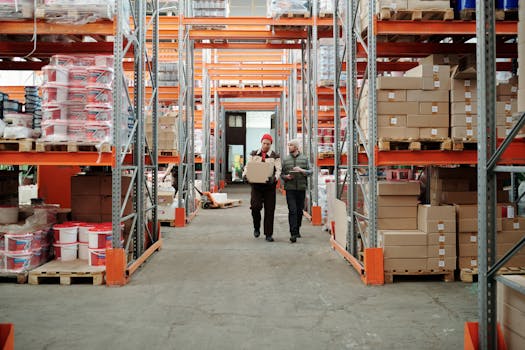 Photo: Tiger Lily / Pexels
Comparison
| Feature | Outsourced Logistics (3PL) | In-house Logistics | Hybrid Model |
|---|---|---|---|
| Capital Investment | Low (variable costs) | High (fixed costs) | Medium (mix of both) |
| Scalability/Flexibility | High (adapts to demand) | Low (rigid infrastructure) | Medium (flexible in outsourced areas) |
| Expertise & Technology Access | Advanced & Specialized | Requires internal investment | Access in outsourced areas |
| Operational Control | Delegated, strategic oversight | Full direct control | Shared control |
| Focus on Core Business | ✓ | ✗ | ✓ |
| Risk Mitigation | Managed by 3PL | Internal responsibility | Shared responsibility |
| Geographic Reach | Extensive global networks | Limited to internal capacity | Expanded through 3PL |
What Readers Say
"Outsourcing our warehousing and distribution to a 3PL was a game-changer. We've seen a 20% reduction in our overall logistics costs and our delivery times have improved dramatically, directly impacting our customer satisfaction scores."
Sarah J. · Dallas, TX"The flexibility we gained from logistics outsourcing allowed us to scale our e-commerce business much faster than we ever could have internally. We no longer worry about peak season capacity, which is a huge relief."
Mark D. · Chicago, IL"Before outsourcing, our internal logistics team was constantly overwhelmed. Now, with our 3PL partner, our order accuracy is up by 15%, and our shipping errors are virtually non-existent, leading to fewer returns and happier customers."
Emily R. · Los Angeles, CA"While the initial integration had its challenges, the long-term benefits of logistics outsourcing have been clear. We've been able to focus more on product development, and our supply chain is now far more resilient to market changes."
John S. · Atlanta, GA"As a small business expanding internationally, the global network and local expertise provided by our 3PL were invaluable. They handled all the complexities of cross-border shipping, something we could never have managed on our own."
Maria G. · Miami, FLFrequently Asked Questions
What are the primary benefits of logistics outsourcing for small businesses?
For small businesses, the primary benefits of logistics outsourcing include gaining access to advanced technology and expertise without significant capital investment, reducing fixed operational costs, improving scalability to handle growth spurts, and freeing up internal resources to focus on core business development and customer acquisition. It levels the playing field against larger competitors.
Is losing control a major concern when considering outsourced logistics?
While the perception of losing control is a common concern, effective logistics outsourcing involves delegating operational tasks, not strategic oversight. With clear contracts, defined KPIs, and regular communication with your 3PL partner, you maintain strategic control and gain real-time visibility through their advanced systems. It's about smart delegation, not abdication.
How do companies typically select a suitable 3PL partner?
Selecting a 3PL partner typically involves a multi-step process: defining your specific logistics needs and goals, researching potential providers with relevant industry experience and technological capabilities, issuing a Request for Proposal (RFP), evaluating proposals based on cost, service offerings, technology, and cultural fit, conducting site visits, checking references, and finally, negotiating a comprehensive Service Level Agreement (SLA).
What is the typical cost structure for logistics outsourcing, and how does it provide value?
The typical cost structure for logistics outsourcing is variable, often based on factors like storage space utilized, volume of shipments, number of orders fulfilled, and specific services rendered (e.g., kitting, returns management). This variable cost model provides immense value by allowing businesses to pay only for the services they use, converting fixed capital expenditures into predictable operational expenses, and benefiting from the 3PL's economies of scale and optimized processes, leading to overall cost efficiencies.
How does logistics outsourcing compare to building an in-house logistics department?
Logistics outsourcing offers immediate access to specialized expertise, advanced technology, and scalable infrastructure without the significant capital investment, operational overhead, and long lead times required to build an in-house department. While an in-house department offers complete direct control, it often sacrifices flexibility, efficiency, and the ability to focus on core competencies, making outsourcing a more agile and cost-effective solution for many businesses.
Which types of businesses benefit most from logistics outsourcing?
Businesses of all sizes can benefit, but those experiencing rapid growth, seasonal demand fluctuations, international expansion, or those lacking specialized logistics expertise and capital for infrastructure investment often benefit most. E-commerce companies, manufacturers, and retailers frequently find significant advantages in outsourcing to streamline their supply chains.
What are the risks associated with outsourcing logistics, and how can they be mitigated?
Risks include potential service disruptions, data security concerns, loss of direct control, and compatibility issues. Mitigation strategies involve thorough due diligence when selecting a 3PL, establishing clear contracts with robust SLAs, implementing strong communication channels, conducting regular performance reviews, ensuring data security protocols are in place, and having contingency plans.
How might future trends like AI and automation impact the benefits of logistics outsourcing?
Future trends like AI and automation will further amplify the benefits of logistics outsourcing. 3PLs are typically early adopters of these technologies (e.g., robotic process automation in warehouses, AI-driven route optimization), allowing their clients to benefit from cutting-edge efficiency, predictive analytics, and even greater cost savings without needing to invest in and manage these complex systems themselves, pushing the boundaries of supply chain optimization.
Ready to transform your supply chain, reduce costs, and unlock new growth opportunities? Explore the unparalleled benefits of logistics outsourcing today and discover how a strategic 3PL partnership can empower your business to thrive in a competitive market.