Optimize Operations: Advanced Warehouse Logistics Solutions
warehouse logistics solutions

Optimize Operations: Advanced Warehouse Logistics Solutions

Unlock peak efficiency and cost savings with integrated strategies for your modern warehouse and distribution network.

Explore Solutions

Key Takeaways

  • ✓ Over 75% of supply chain leaders plan to increase investment in warehouse automation.
  • ✓ Poor inventory management costs businesses over $1 trillion annually.
  • ✓ Effective warehouse logistics can reduce operational costs by up to 30%.
  • ✓ E-commerce growth demands faster, more accurate fulfillment processes.

How It Works

1
Assess Current Operations

We begin by thoroughly analyzing your existing warehouse processes, infrastructure, and pain points. This diagnostic phase identifies bottlenecks and areas ripe for improvement.

2
Design Tailored Strategy

Based on the assessment, we develop a customized logistics strategy integrating advanced technologies and process enhancements. This plan aligns with your business goals and budget.

3
Implement & Integrate

Our team oversees the seamless implementation of new systems, automation, and operational changes. We ensure smooth integration with your existing IT infrastructure and staff training.

4
Monitor & Optimize Continuously

Post-implementation, we provide ongoing monitoring, performance analysis, and iterative optimization. This ensures your warehouse logistics solutions continue to evolve and deliver maximum value.

The Imperative for Advanced Warehouse Logistics Solutions

Delivery worker using a tablet to manage shipments with stacked boxes in the background. Photo: Artem Podrez / Pexels
In today's hyper-competitive and rapidly evolving global marketplace, the efficiency and responsiveness of your warehouse operations are no longer just an advantage—they are a fundamental requirement for survival and growth. The landscape of logistics has been dramatically reshaped by factors such as the explosive growth of e-commerce, increasing customer expectations for faster delivery, a persistent labor shortage, and the relentless pressure to reduce operational costs. Traditional, manual-intensive warehouse processes are simply no longer sufficient to meet these modern demands. Businesses that cling to outdated methods risk falling behind, experiencing increased errors, higher labor costs, slower fulfillment times, and ultimately, dissatisfied customers. Advanced warehouse logistics solutions offer a comprehensive approach to addressing these challenges head-on. They encompass a wide array of technologies, strategies, and best practices designed to optimize every facet of warehouse management, from inbound receiving and storage to order picking, packing, and outbound shipping. This isn't just about implementing a single piece of software or a new piece of equipment; it's about creating an integrated ecosystem where data flows seamlessly, processes are automated intelligently, and human capital is leveraged for higher-value tasks. By embracing these solutions, companies can transform their warehouses from cost centers into strategic assets that drive efficiency, enhance customer satisfaction, and contribute directly to profitability. The investment in robust warehouse logistics solutions yields tangible benefits, including significant reductions in operational expenditure, improvements in inventory accuracy, faster order fulfillment cycles, and a notable increase in overall supply chain resilience. Understanding the critical role these solutions play is the first step toward building a more agile, efficient, and future-proof operation. It's about staying ahead of the curve and ensuring your business can adapt to the unpredictable nature of modern commerce. For more insights into the broader context, explore the evolving world of logistics.

Key Components of Modern Warehouse Logistics Solutions
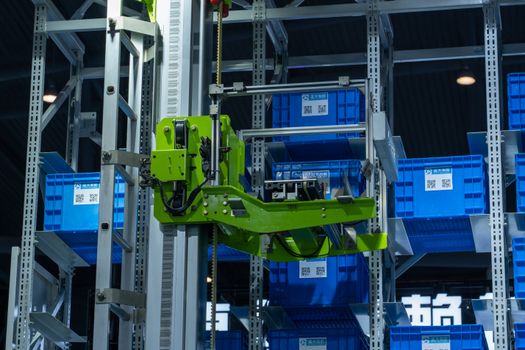
High-tech automated warehouse system featuring a green robotic arm handling blue storage crates. Photo: Peter Xie / Pexels
Effective warehouse logistics solutions are built upon several foundational pillars, each contributing to the overall optimization of the distribution center. At the core is a robust Warehouse Management System (WMS). A WMS is far more than just inventory tracking software; it's the brain of the warehouse, orchestrating all activities from receiving and put-away to picking, packing, and shipping. Modern WMS platforms offer advanced features like task interleaving, slotting optimization, labor management, and yard management, all designed to maximize throughput and minimize operational costs. They provide real-time visibility into inventory levels, locations, and movements, enabling proactive decision-making and significantly reducing stockouts and overstock situations. Beyond the WMS, automation plays a crucial role. This can range from relatively simple technologies like barcode scanners and RFID tags for accurate data capture to sophisticated systems such as Automated Storage and Retrieval Systems (AS/RS), robotic process automation (RPA) for administrative tasks, and autonomous mobile robots (AMRs) for material handling. AS/RS systems dramatically increase storage density and retrieval speed, while AMRs can transport goods across the warehouse floor, reducing manual labor and improving safety. These automation tools work in concert with the WMS to create highly efficient, lights-out operations or to augment human workers, allowing them to focus on more complex tasks. Another vital component is data analytics and predictive intelligence. By collecting and analyzing vast amounts of data from various warehouse activities, businesses can gain invaluable insights into performance, identify trends, and anticipate future demands. This data can inform decisions on optimal inventory levels, staffing requirements, facility layout, and even carrier selection. Predictive analytics can forecast demand fluctuations, allowing for proactive adjustments in inventory and labor, thereby preventing costly bottlenecks or excess stock. The integration of these components—WMS, automation, and data intelligence—creates a synergistic effect, elevating warehouse operations from mere storage facilities to dynamic, responsive hubs that are integral to a successful supply chain strategy. This holistic approach ensures that every aspect of the warehouse is optimized for speed, accuracy, and cost-effectiveness, preparing businesses for future growth and market changes.

Implementing and Integrating Advanced Warehouse Logistics Solutions
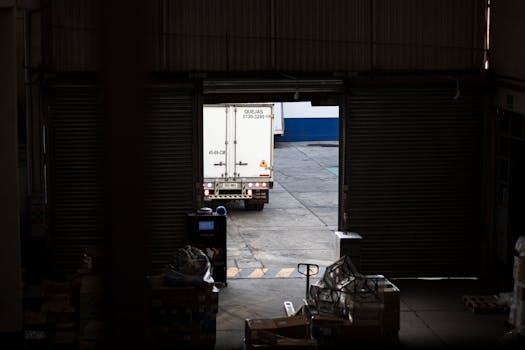
A white delivery truck exits a dimly lit warehouse loading dock, surrounded by packages and pallets. Photo: Juan R. Real / Pexels
The journey of implementing advanced warehouse logistics solutions is a complex undertaking that requires careful planning, strategic execution, and a clear understanding of both current needs and future aspirations. It's not a one-size-fits-all process; rather, it demands a tailored approach that considers the unique characteristics of each business, including its industry, product portfolio, order profiles, and existing infrastructure. The first critical step involves a thorough assessment of current operations, identifying inefficiencies, bottlenecks, and areas where technology can deliver the most significant impact. This diagnostic phase often includes process mapping, data analysis, and stakeholder interviews to gain a holistic view of the current state. Once the assessment is complete, the selection of appropriate technologies and vendors becomes paramount. This involves evaluating various WMS providers, automation solutions (e.g., AS/RS, AMRs, conveyor systems), and data analytics platforms, ensuring they align with the business's specific requirements and budget. Interoperability is a key consideration; the chosen solutions must seamlessly integrate with existing enterprise resource planning (ERP) systems, transportation management systems (TMS), and other crucial business applications to avoid data silos and ensure a unified flow of information. This integration often requires significant IT effort and expertise, and sometimes custom API development. Implementation itself is a multi-phase project, typically involving system configuration, data migration, hardware installation, and rigorous testing. User training is equally vital; employees must be equipped with the knowledge and skills to effectively operate new systems and utilize automated equipment. A phased rollout strategy can help mitigate risks, allowing for adjustments and optimizations before full-scale deployment. Post-implementation, continuous monitoring and optimization are essential. The logistics landscape is constantly shifting, and solutions must evolve to remain effective. Regular performance reviews, data analysis, and feedback loops help identify areas for further refinement, ensuring the warehouse continues to operate at peak efficiency and adapt to changing market demands. For a deeper dive into overall supply chain improvements, consider exploring comprehensive supply chain management strategies.

Overcoming Challenges and Future Trends in Warehouse Logistics
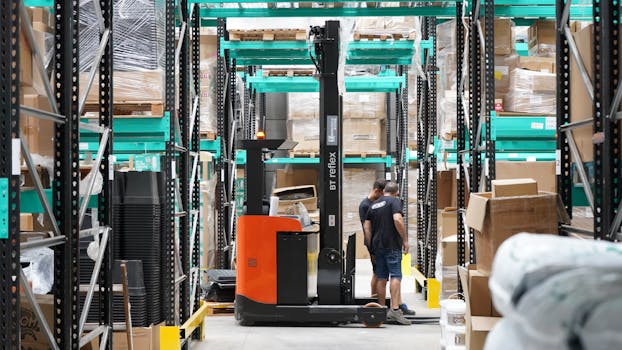
Warehouse scene featuring workers and a forklift navigating aisles for logistics and inventory management. Photo: GB The Green Brand / Pexels
While the benefits of advanced warehouse logistics solutions are undeniable, their implementation and ongoing management come with a unique set of challenges. One of the most significant hurdles is the initial capital investment required for new technologies like automation and sophisticated WMS platforms. Businesses must conduct thorough ROI analyses to justify these costs and ensure a clear path to profitability. Another challenge is the complexity of integrating diverse systems from multiple vendors, which can lead to compatibility issues and data synchronization problems if not managed carefully. The talent gap also presents a formidable obstacle; finding and retaining skilled professionals capable of managing, operating, and maintaining these advanced systems can be difficult. **Common Challenges & How to Address Them:** * **High Upfront Costs:** Prioritize solutions with clear, measurable ROI; consider phased implementation; explore leasing or RaaS (Robotics as a Service) models. * **System Integration Complexity:** Choose open-architecture systems; invest in robust middleware; partner with experienced integration specialists. * **Workforce Adaptation:** Implement comprehensive training programs; involve employees in the planning process; emphasize upskilling for new roles. * **Data Security & Privacy:** Implement strong cybersecurity protocols; ensure compliance with data protection regulations; choose vendors with proven security records. * **Scalability & Flexibility:** Select modular systems that can grow with your business; design for peak demands, not just average. Looking ahead, several key trends are poised to further shape the future of warehouse logistics. Artificial Intelligence (AI) and Machine Learning (ML) will become even more pervasive, driving predictive analytics, optimizing picking paths, and enabling intelligent automation. The Internet of Things (IoT) will provide unprecedented real-time visibility into inventory and equipment performance. Sustainable logistics practices, including energy-efficient warehouses and optimized transportation routes, will gain increasing importance. Finally, the rise of micro-fulfillment centers and dark stores will bring inventory closer to urban consumers, demanding highly agile and automated small-scale operations. Businesses that proactively embrace these trends and continuously adapt their warehouse logistics solutions will be best positioned for sustained success in the decades to come.

Comparison

FeatureIntegrated WMS + AutomationManual Processes + Basic ERPStandalone WMS (No Automation)
Inventory Accuracy99%+60-80%90-95%
Order Fulfillment SpeedVery HighLowMedium
Operational Cost ReductionSignificant (20-30%)Minimal/NegativeModerate (5-10%)
ScalabilityExcellentPoorGood
Real-time VisibilityComprehensiveLimitedGood
Labor Efficiency
Error RateMinimalHighModerate

What Readers Say

"Our previous warehouse system was a nightmare. These warehouse logistics solutions completely transformed our operations, reducing picking errors by 40% and speeding up our delivery times significantly. The implementation was smooth, and the team was incredibly supportive."

Sarah Chen · Dallas, TX

"We've seen a massive improvement in inventory management since adopting their warehouse logistics solutions. Stockouts are a thing of the past, and we finally have real-time visibility across all our distribution centers. Highly recommend for any growing business."

Mark Johnson · Chicago, IL

"The automation components integrated into our warehouse logistics solutions allowed us to reallocate staff to more valuable roles. Our labor costs decreased by 15%, and throughput increased by 25% within the first year. A truly game-changing investment for our e-commerce fulfillment."

Emily Rodriguez · Los Angeles, CA

"While the initial setup of the warehouse logistics solutions took a bit longer than anticipated, the long-term benefits are clear. Our team is still adjusting to some of the new processes, but the efficiency gains are already noticeable, and the support has been excellent."

David Lee · Atlanta, GA

"As a third-party logistics provider, offering top-tier warehouse logistics solutions to our clients is paramount. Their modular system allowed us to customize offerings for various client needs, enhancing our service quality and attracting new business."

Jessica White · Seattle, WA

Frequently Asked Questions

What are the primary benefits of implementing warehouse logistics solutions?

Implementing warehouse logistics solutions primarily leads to significant improvements in operational efficiency, reduced labor costs, enhanced inventory accuracy, faster order fulfillment, and increased customer satisfaction. They also provide better scalability and adaptability to market changes, transforming your warehouse into a strategic asset rather than just a storage facility.

Is my business too small to benefit from advanced warehouse logistics solutions?

Not at all. While large enterprises often adopt these solutions, many modern warehouse logistics solutions are modular and scalable, making them suitable for businesses of all sizes. Even small to medium-sized businesses can gain substantial advantages from optimized inventory management, streamlined picking processes, and data-driven insights.

How do I choose the right warehouse logistics solutions for my company?

Choosing the right solution involves a thorough assessment of your current operations, identifying pain points, and defining your specific goals (e.g., cost reduction, speed, accuracy). Research different WMS providers, automation technologies, and integration capabilities. Consider factors like scalability, vendor support, and your budget, and seek expert consultation if needed.

What is the typical ROI for investing in warehouse logistics solutions?

The ROI for warehouse logistics solutions can vary significantly based on the scope of implementation, initial investment, and current operational inefficiencies. However, businesses commonly report ROI within 1-3 years through reduced labor costs, decreased errors, optimized inventory levels, and improved customer retention. Some advanced automation can show even quicker returns.

How do warehouse logistics solutions differ from a standard WMS?

While a Warehouse Management System (WMS) is a core component, 'warehouse logistics solutions' encompass a broader, more integrated approach. This includes the WMS, but also extends to automation technologies (robots, AS/RS), data analytics, IoT devices, labor management systems, and strategic process redesign, creating a holistic and optimized operational ecosystem.

Who should consider implementing advanced warehouse logistics solutions?

Any business struggling with inventory accuracy, slow fulfillment times, high operational costs, labor shortages, or increasing customer demands should consider advanced warehouse logistics solutions. This includes e-commerce businesses, manufacturers, distributors, 3PLs, and retailers looking to optimize their supply chain and gain a competitive edge.

What are the security risks associated with digital warehouse logistics solutions?

Digital warehouse logistics solutions, like any networked system, face risks such as cyberattacks, data breaches, and system downtime. Mitigating these risks requires robust cybersecurity measures, secure data encryption, regular system audits, employee training on best practices, and partnering with vendors who prioritize data security and offer strong disaster recovery plans.

How will AI and Machine Learning impact future warehouse logistics solutions?

AI and ML are poised to revolutionize future warehouse logistics solutions by enabling more intelligent automation, predictive analytics for demand forecasting and inventory optimization, dynamic routing for picking and material handling, and even proactive maintenance for equipment. They will drive even greater efficiency, adaptability, and resilience in warehouse operations.

Ready to transform your operations and gain a significant competitive edge? Explore our advanced warehouse logistics solutions today to discover how tailored strategies and cutting-edge technology can drive efficiency, reduce costs, and elevate your customer satisfaction. Contact us for a personalized consultation and take the first step towards a smarter, more productive warehouse.

Topics: warehouse logistics solutionssupply chain optimizationinventory managementwarehouse automationlogistics technology
Leo List

IE Escorts NO Escorts US Escorts NZ Escorts AU Escorts
Brampton weed
Adultwork EstrelaBet Vai de Bet R7 Bet Betão Galera Bet Rainbet Bet9ja Shop SportyBet BetKing Sisal Loto Foot Hollywoodbets YesPlay Odibets RushBet Jugabet BetWarrior BetCity MSport betPawa Fortebet