
What is Third-Party Logistics? Your Ultimate Guide to 3PL
Unlock efficiency and growth by understanding and utilizing 3PLs to optimize your entire supply chain operation.
Explore 3PL BenefitsKey Takeaways
- ✓ 3PLs manage non-core logistics activities for businesses.
- ✓ Services range from warehousing to freight forwarding and fulfillment.
- ✓ Key benefits include cost savings, scalability, and expert knowledge.
- ✓ Choosing the right 3PL requires careful evaluation of needs and capabilities.
How It Works
Businesses identify their logistics challenges and pain points. They then engage with a 3PL provider to outline specific service requirements and establish a partnership agreement.
The 3PL integrates its systems with the client's (e.g., inventory management, order processing). Physical assets like inventory are transferred to the 3PL's facilities, and operational workflows are established.
The 3PL executes daily logistics tasks, including receiving, storing, picking, packing, and shipping goods. They manage transportation, track inventory, and handle returns according to agreed-upon service levels.
Regular reporting and performance reviews ensure the 3PL meets KPIs. Continuous analysis helps identify areas for process improvement, cost reduction, and enhanced efficiency in the supply chain.
Understanding the Core Concept of 3PL
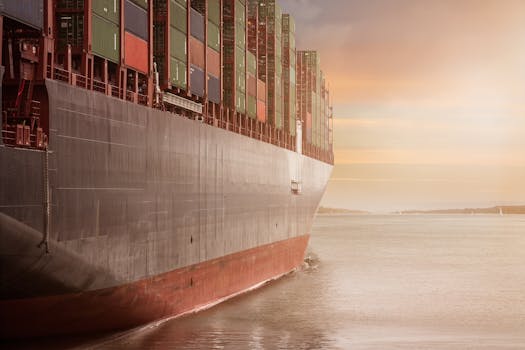 Photo: Pixabay / Pexels
The Comprehensive Range of 3PL Services
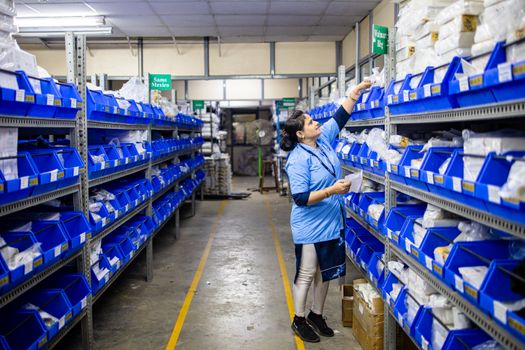 Photo: EqualStock IN / Pexels
Key Advantages and Strategic Benefits of Partnering with a 3PL
 Photo: Ann H / Pexels
Choosing the Right 3PL Partner: Essential Considerations
 Photo: Ketut Subiyanto / Pexels
Comparison
| Feature | In-House Logistics | Third-Party Logistics (3PL) | Fourth-Party Logistics (4PL) |
|---|---|---|---|
| Capital Investment | High (warehouses, fleet) | Low (outsourced assets) | Low (outsourced assets) |
| Operational Control | Complete | Shared (via SLA) | Strategic (via 3PLs) |
| Expertise & Tech | Requires internal development | Access to specialized expertise & tech | Integrated supply chain optimization |
| Scalability | Limited, complex | High, flexible | Very High, strategic |
| Focus for Business | Logistics & Core Business | Core Business | Core Business & Supply Chain Strategy |
| Cost Structure | Fixed & Variable | Primarily Variable | Primarily Variable |
What Readers Say
"Understanding what is third-party logistics was a game-changer for our small e-commerce business. We were drowning in fulfillment tasks, and our 3PL partner completely streamlined our operations, allowing us to scale without the headache of managing our own warehouse."
Sarah Chen · Austin, TX"Our 3PL handled all our international shipping complexities. Their expertise in customs and global freight saved us countless hours and prevented costly delays. It's truly a seamless extension of our team."
Michael Rodriguez · Miami, FL"By outsourcing our warehousing and distribution to a 3PL, we cut our logistics costs by 20% in the first year. The efficiency gains and accurate inventory management have directly boosted our profitability."
Emily White · Chicago, IL"While the initial integration had a few minor hiccups, our 3PL's responsiveness and commitment to resolving issues quickly impressed us. Now, our order fulfillment is faster and more reliable than ever before."
David Kim · Seattle, WA"For our subscription box service, timely and accurate fulfillment is everything. Our 3PL consistently delivers, handling our kitting and shipping with precision, which directly translates to happier customers and lower churn."
Jessica Lee · New York, NYFrequently Asked Questions
What is the primary benefit of using a Third-Party Logistics (3PL) provider?
The primary benefit of using a 3PL provider is gaining access to specialized logistics expertise, infrastructure, and technology without the significant capital investment. This leads to cost savings, improved efficiency, enhanced scalability, and allows businesses to focus on their core competencies, ultimately boosting competitiveness and customer satisfaction.
Is outsourcing my logistics to a 3PL risky for my business?
While any outsourcing involves a degree of risk, partnering with a reputable 3PL can actually mitigate many logistics-related risks. They have robust security protocols, contingency plans, and insurance. The key is thorough due diligence in selecting a partner with a proven track record, clear service level agreements, and strong communication channels.
How do I integrate my existing systems with a 3PL's platform?
Most modern 3PLs offer various integration methods, including API connections, EDI (Electronic Data Interchange), or web portals. The integration process typically involves mapping data fields between your ERP or e-commerce platform and the 3PL's Warehouse Management System (WMS) to ensure seamless, real-time information exchange for orders, inventory, and shipping statuses.
How much does Third-Party Logistics (3PL) cost?
3PL costs are highly variable and depend on the scope of services, volume, product type, and geographic reach. They typically charge based on factors like storage space utilized, number of orders fulfilled, shipping weight/volume, and any value-added services. While there's an expense, the cost savings from efficiency, reduced capital expenditure, and optimized shipping often outweigh the fees.
How does a 3PL differ from a 4PL (Fourth-Party Logistics)?
A 3PL manages specific logistics operations like warehousing and transportation. A 4PL, on the other hand, acts as a strategic logistics partner, overseeing and optimizing the entire supply chain, including managing multiple 3PLs and other logistics providers. A 4PL offers a higher level of integration and strategic oversight, often functioning as a single point of contact for the client's entire supply chain.
Who should consider using a Third-Party Logistics (3PL) provider?
Businesses of all sizes can benefit from a 3PL. E-commerce companies, retailers, manufacturers, and distributors experiencing rapid growth, struggling with high shipping costs, lacking in-house logistics expertise or infrastructure, or needing to expand into new markets are prime candidates for leveraging 3PL services.
What kind of visibility will I have into my inventory and shipments with a 3PL?
Reputable 3PLs provide robust technology platforms, including client portals and dashboards, that offer real-time visibility into inventory levels, order statuses, and shipment tracking. This allows businesses to monitor their operations, access key performance indicators, and make informed decisions, ensuring transparency throughout the supply chain.
What are the future trends in Third-Party Logistics (3PL)?
Future trends in 3PL include increased adoption of automation and robotics in warehouses, greater emphasis on data analytics and AI for predictive logistics, a move towards more sustainable and eco-friendly practices, and the continuous evolution of last-mile delivery solutions to meet growing consumer expectations for speed and convenience.
Ready to unlock the full potential of your supply chain? Understanding what is third-party logistics is the first step towards a more efficient, scalable, and profitable future for your business. Explore how a strategic 3PL partnership can transform your operations today.