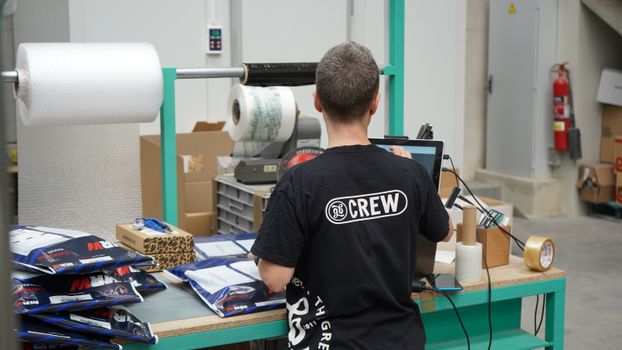
Mastering Your Supply Chain with Third Party Logistics Providers
third party logistics providers

Mastering Your Supply Chain with Third Party Logistics Providers

Unlock unparalleled efficiency and strategic growth by leveraging expert 3PL partnerships for your business operations.

Optimize Your Logistics Now

Key Takeaways

  • ✓ 3PLs offer specialized expertise in various logistics functions, from warehousing to transportation.
  • ✓ Partnering with a 3PL can significantly reduce operational costs and increase efficiency.
  • ✓ Scalability is a major benefit, allowing businesses to adapt quickly to market fluctuations.
  • ✓ Many 3PLs provide advanced technology, offering real-time visibility and data analytics.

How It Works

1
Assessment & Strategy

A 3PL begins by thoroughly analyzing your current supply chain, identifying inefficiencies and opportunities for improvement. They then develop a tailored strategy to meet your specific business goals.

2
Integration & Setup

Once a strategy is in place, the 3PL integrates its systems with yours, often including inventory management and order processing platforms. This ensures seamless data flow and operational alignment.

3
Execution & Operations

The 3PL takes over the agreed-upon logistics functions, such as warehousing, order fulfillment, transportation, and reverse logistics. They manage these operations daily, ensuring smooth execution.

4
Monitoring & Optimization

Continuous monitoring of performance metrics and regular reporting are crucial. 3PLs constantly seek ways to optimize processes, improve service levels, and drive further cost savings for your business.

Understanding the Core Value of Third Party Logistics Providers

In today's fast-paced global economy, businesses, regardless of their size, face immense pressure to deliver products efficiently, cost-effectively, and on time. The complexities of managing inventory, warehousing, transportation, and order fulfillment can quickly overwhelm even the most capable internal teams. This is where third party logistics providers (3PLs) step in, offering a strategic solution that allows companies to outsource these critical functions to specialized experts. At its core, a 3PL is a company that provides outsourced logistics services to businesses, ranging from warehousing and transportation to cross-docking, inventory management, packaging, and freight forwarding. They act as an extension of your business, managing the intricate dance of moving goods from point A to point B, or even from raw material to the end consumer's doorstep. The value proposition of 3PLs is multifaceted. Firstly, they bring unparalleled expertise. Logistics is their core business, meaning they possess deep industry knowledge, established networks, and a keen understanding of best practices and regulatory compliance that most individual businesses cannot match. This specialization translates into optimized processes, reduced errors, and improved overall supply chain performance. For example, a 3PL will have established relationships with multiple carriers, allowing them to negotiate better rates and secure capacity that a single company might struggle to obtain. They also invest heavily in cutting-edge technology, such as advanced warehouse management systems (WMS), transportation management systems (TMS), and sophisticated analytics platforms. These technologies provide real-time visibility into inventory, shipments, and performance metrics, empowering businesses with data-driven insights they might otherwise lack. This technological advantage not only enhances efficiency but also provides a competitive edge in a market where speed and transparency are paramount. Furthermore, partnering with third party logistics providers offers significant scalability and flexibility. Business demands are rarely constant; they fluctuate with seasonality, market trends, and economic shifts. A 3PL can quickly scale operations up or down to meet these changing requirements without the need for significant capital investment in infrastructure, equipment, or additional staff on your part. This agility is invaluable for businesses experiencing rapid growth, entering new markets, or dealing with unpredictable demand. Instead of being tied to fixed costs associated with owning and operating a warehouse or a fleet of trucks, businesses can convert these into variable costs, paying only for the services they use. This financial flexibility can free up capital that can be reinvested into core business activities like product development, marketing, or sales, driving further growth and innovation. The strategic decision to engage with a 3PL is not just about outsourcing tasks; it's about forming a partnership that enhances operational efficiency, reduces risk, and ultimately contributes to the long-term success and profitability of a business. It's about transforming logistics from a cost center into a strategic advantage.

Diverse Services Offered by Top Third Party Logistics Providers

The landscape of services offered by third party logistics providers is vast and continually evolving, reflecting the complex and dynamic nature of modern supply chains. While some 3PLs specialize in a niche area, many offer a comprehensive suite of services designed to cover every aspect of the logistics process, providing a one-stop solution for their clients. Understanding the breadth of these services is crucial for businesses looking to identify the right partner to meet their specific needs. At the foundational level, warehousing and distribution form a significant part of 3PL offerings. This includes not just the physical storage of goods but also sophisticated inventory management, order picking and packing, cross-docking, and even value-added services like kitting, assembly, and custom packaging. Modern warehouses managed by 3PLs are often highly automated, utilizing robotics and advanced software to maximize efficiency and accuracy. Transportation management is another cornerstone service. 3PLs manage the movement of goods across various modes – road, rail, air, and sea – optimizing routes, selecting carriers, negotiating rates, and ensuring timely delivery. They handle everything from full truckload (FTL) and less-than-truckload (LTL) shipments to parcel delivery, often leveraging their extensive networks to secure cost-effective and reliable transport solutions. Freight forwarding, particularly for international shipments, involves navigating complex customs regulations, documentation, and international trade laws, areas where 3PL expertise is invaluable. Beyond these core services, many third party logistics providers offer specialized solutions. Reverse logistics, for instance, focuses on the efficient management of returns, repairs, and recycling, a critical but often overlooked aspect of the supply chain that can significantly impact customer satisfaction and sustainability efforts. Supply chain consulting is another growing area, where 3PLs leverage their expertise to help businesses analyze and optimize their entire supply chain, identifying areas for improvement and implementing strategic changes. Technology integration is also paramount; many 3PLs provide advanced IT solutions, including robust Warehouse Management Systems (WMS), Transportation Management Systems (TMS), and Enterprise Resource Planning (ERP) integrations, offering real-time tracking, data analytics, and reporting capabilities that enhance visibility and control for their clients. Some even offer e-commerce fulfillment services, tailored specifically for online retailers, handling everything from order processing to direct-to-consumer shipping, which has become increasingly vital in the digital age. This diverse range of services allows businesses to tailor their outsourcing strategy, choosing only the functions they need assistance with or opting for a fully integrated, end-to-end logistics solution, all designed to streamline operations and enhance competitive advantage.

Strategic Advantages: Why Businesses Choose Third Party Logistics Providers

The decision to partner with third party logistics providers is not merely a tactical move to offload operational burdens; it's a strategic imperative that can unlock significant competitive advantages for businesses across various industries. The benefits extend far beyond simple cost savings, touching upon critical aspects of business growth, market responsiveness, and overall operational excellence. One of the most compelling strategic advantages is the ability to focus on core competencies. By entrusting logistics to experts, companies can reallocate their internal resources, time, and capital to their primary business activities—innovation, product development, marketing, and customer relationship management. This sharpened focus can lead to accelerated growth, enhanced product offerings, and a stronger market position, as the business is no longer distracted by the intricacies of supply chain management. Cost efficiency is another powerful driver. While the initial thought might be that outsourcing adds an extra layer of cost, 3PLs often achieve economies of scale that individual businesses cannot. They operate multiple client accounts, optimizing warehouse space, transportation routes, and labor resources across various operations. This allows them to negotiate favorable rates with carriers and suppliers, passing those savings on to their clients. Furthermore, businesses avoid the substantial capital expenditures associated with building and maintaining their own logistics infrastructure, such as warehouses, vehicles, and specialized equipment. Instead, these become variable operational costs, providing greater financial flexibility and predictability. The reduction in operational overheads and the elimination of fixed asset investments can significantly improve a company's balance sheet and profitability. Effective logistics management also minimizes common pain points like inventory obsolescence, warehousing costs, and shipping errors, all contributing to overall cost reduction. Market expansion and enhanced customer service are also key strategic benefits. 3PLs often have a global or national footprint, with strategically located distribution centers. This allows businesses to expand into new geographical markets quickly and efficiently, without the need to establish their own local logistics operations. Faster and more reliable delivery, often facilitated by a 3PL's extensive network and advanced technology, directly translates into improved customer satisfaction. In today's e-commerce driven world, customers expect rapid and accurate order fulfillment. A proficient 3PL can meet these expectations, offering services like expedited shipping, accurate order tracking, and efficient returns processing, all of which contribute to a superior customer experience and foster brand loyalty. Moreover, 3PLs stay abreast of the latest industry trends, regulations, and technological advancements, providing clients with access to cutting-edge solutions and ensuring compliance, thereby mitigating risks and keeping businesses competitive in an ever-evolving market. This strategic partnership transforms logistics from a potential bottleneck into a powerful engine for growth and customer delight.

Choosing the Right Third Party Logistics Providers: Tips & Common Mistakes

Selecting the right third party logistics providers is a critical decision that can profoundly impact a business's success. It's not a one-size-fits-all solution, and a thoughtful, thorough evaluation process is essential. Here are key tips for making an informed choice and common mistakes to avoid: **Tips for Choosing Wisely:** * **Clearly Define Your Needs:** Before even looking, meticulously outline your current logistics challenges, specific service requirements (warehousing, transportation, e-commerce fulfillment, reverse logistics, etc.), volume projections, geographical reach, and budget constraints. The clearer your needs, the better you can match them with a 3PL's capabilities. * **Assess Expertise and Experience:** Look for 3PLs with proven experience in your industry or with similar product types. Do they understand the nuances of handling your specific goods (e.g., temperature-controlled, fragile, high-value)? Check their track record and client testimonials. * **Technology Capabilities:** Investigate their technological infrastructure. Do they offer a robust WMS, TMS, and integration capabilities with your existing systems (ERP, e-commerce platforms)? Real-time visibility and data analytics are crucial for modern supply chain management. * **Scalability and Flexibility:** Ensure the 3PL can adapt to your business's growth and seasonal fluctuations. Can they scale services up or down without significant disruption or prohibitive costs? * **Geographic Reach:** Confirm that their network of warehouses and transportation routes aligns with your current and future market reach. * **Customer Service and Communication:** A strong partnership hinges on excellent communication. Evaluate their responsiveness, reporting capabilities, and how they handle issues or emergencies. A dedicated account manager is a good sign. * **Financial Stability:** Partner with a financially stable 3PL to avoid disruptions. Request financial statements or look for reputable industry recognition. **Common Mistakes to Avoid:** * **Focusing Solely on Price:** While cost is important, choosing the cheapest option without considering service quality, technology, or fit can lead to long-term issues, hidden fees, and customer dissatisfaction. Value should always outweigh just low cost. * **Ignoring Cultural Fit:** A 3PL becomes an extension of your business. Ensure their company culture, values, and work ethic align with yours for a smoother, more collaborative partnership. * **Lack of Clear KPIs and SLAs:** Failing to establish clear Key Performance Indicators (KPIs) and Service Level Agreements (SLAs) from the outset can lead to misunderstandings and difficulty in measuring performance. Define what success looks like. * **Underestimating Integration Efforts:** Integrating systems and processes with a new 3PL takes time and effort. Don't underestimate the resources required from your end during the onboarding phase. * **Not Checking References:** Always speak to current or past clients of the 3PL. Ask specific questions about their experiences, particularly regarding service reliability, problem resolution, and communication. * **Signing Restrictive Contracts:** Be wary of overly rigid or long-term contracts that don't allow for flexibility or easy exit if the partnership isn't working out. Ensure terms are clear regarding termination and performance clauses. By diligently following these tips and avoiding common pitfalls, businesses can forge a powerful and enduring partnership with third party logistics providers, transforming their supply chain into a competitive asset.

Comparison

FeatureIn-House LogisticsThird Party Logistics (3PL)Fourth Party Logistics (4PL)
Capital InvestmentHigh (warehouses, fleet)Low (variable costs)Low (variable costs)
Expertise & SpecializationLimited to internal staffHigh (industry specialists)Very High (strategic oversight)
ScalabilityDifficult & costlyHigh flexibilityVery high flexibility
Technology AccessRequires internal investmentAdvanced WMS/TMS includedIntegrated tech platforms
Focus for BusinessShared (logistics + core)Core competenciesCore competencies + strategy
Control & OversightFull internal controlShared control, strong reportingStrategic oversight, 3PLs managed
Risk ManagementInternal responsibilityShared, 3PL mitigatesComprehensive, strategic

What Readers Say

"Partnering with our 3PL was a game-changer for our e-commerce business. They seamlessly handle all our order fulfillment, allowing us to focus entirely on marketing and product development. Shipping times have drastically improved, and our customers are happier than ever."

Sarah Chen · Austin, TX

"As a growing manufacturing company, managing our own warehousing and distribution became a bottleneck. Our third party logistics provider streamlined our entire supply chain, reducing our transportation costs by 15% and improving inventory accuracy significantly. Their expertise is invaluable."

Mark Johnson · Chicago, IL

"We expanded into international markets, and our 3PL was instrumental in navigating the complexities of customs and global shipping. Their efficient freight forwarding services cut our international delivery times by a week, directly leading to a 20% increase in overseas sales within the first year."

Emily Rodriguez · Miami, FL

"While the initial integration with our new third party logistics provider had a few bumps, their dedicated support team worked tirelessly to resolve them. Now, our operations run smoothly, and the visibility we have into our inventory and shipments is exceptional. They've truly helped us scale."

David Lee · Seattle, WA

"Our small business needed a solution for efficient returns processing. Our 3PL set up a fantastic reverse logistics system that made returns hassle-free for our customers and manageable for us, transforming a pain point into a positive customer experience."

Jessica Kim · Denver, CO

Frequently Asked Questions

What exactly do third party logistics providers do?

Third party logistics providers (3PLs) are companies that offer outsourced logistics services to businesses. These services can include warehousing, transportation (freight, parcel), inventory management, order fulfillment, cross-docking, packaging, freight forwarding, and reverse logistics. Essentially, they manage the movement and storage of goods on behalf of another company.

Is it expensive to use a 3PL, especially for small businesses?

While there is a cost associated with 3PL services, it often results in overall cost savings for businesses of all sizes. 3PLs achieve economies of scale, negotiate better rates with carriers, and help reduce capital expenditures on infrastructure. For small businesses, it can provide access to professional logistics capabilities without the prohibitive upfront investment, making it a cost-effective solution for growth.

How do I integrate my existing systems with a third party logistics provider?

Most reputable third party logistics providers offer robust integration capabilities. They typically have APIs (Application Programming Interfaces) or pre-built connectors to integrate with common e-commerce platforms (Shopify, Magento), ERP systems (SAP, Oracle), and order management systems. The integration process usually involves data mapping and testing to ensure seamless communication and data flow between your systems and theirs.

How do third party logistics providers help reduce shipping costs?

3PLs reduce shipping costs through several mechanisms: leveraging their high shipping volumes to negotiate discounted rates with carriers, optimizing routes and modes of transport, consolidating shipments, and utilizing strategically located warehouses to reduce transit distances. Their expertise in freight management also minimizes costly errors and delays.

What is the difference between a 3PL and a 4PL?

A 3PL directly manages and executes specific logistics functions like warehousing and transportation. A 4PL (Fourth Party Logistics) provider, on the other hand, acts as a strategic logistics partner, overseeing the entire supply chain. A 4PL often manages multiple 3PLs, carriers, and other logistics service providers, providing a single point of contact and offering strategic oversight and optimization rather than direct operational execution.

Who should use third party logistics providers?

Third party logistics providers are beneficial for a wide range of businesses. E-commerce companies, manufacturers, retailers, and distributors often use them to scale operations, reduce costs, improve efficiency, and expand into new markets. Any business facing challenges with inventory management, shipping, warehousing, or needing to focus on core competencies can benefit.

What are the risks of outsourcing to a 3PL?

Potential risks include a temporary loss of direct control over logistics operations, dependency on the 3PL's performance, and potential data security concerns. However, these risks can be mitigated by choosing a reputable 3PL with strong contracts, clear SLAs, transparent communication, and robust security protocols. Thorough due diligence is key.

How will AI and automation impact third party logistics providers in the future?

AI and automation are poised to revolutionize 3PL operations by enhancing efficiency, accuracy, and decision-making. AI will optimize route planning, predictive inventory management, and demand forecasting. Automation, through robotics and autonomous vehicles, will streamline warehouse operations and potentially last-mile delivery, leading to faster service, reduced labor costs, and greater scalability for 3PLs.

Ready to transform your supply chain and unlock new levels of efficiency and growth? Partnering with expert third party logistics providers can be the strategic advantage your business needs. Don't let logistics complexities hold you back – explore how a tailored 3PL solution can propel your success.

Topics: third party logistics providers3PL servicessupply chain optimizationlogistics managementwarehouse fulfillment
Leo List
Brampton weed
Adultwork EstrelaBet Vai de Bet R7 Bet Betão Galera Bet Rainbet Bet9ja Shop SportyBet BetKing Sisal Loto Foot Hollywoodbets YesPlay Odibets RushBet Jugabet BetWarrior BetCity MSport betPawa Fortebet