Streamline Your Business: Top Logistics Services for Small Business
logistics services for small business

Streamline Your Business: Top Logistics Services for Small Business

Unlock efficiency, reduce costs, and enhance customer satisfaction with tailored logistics solutions designed for your growing enterprise.

Optimize Your Logistics Now

Key Takeaways

  • ✓ Small businesses often spend 10-15% of their revenue on logistics.
  • ✓ Efficient logistics can increase customer retention by 5-10%.
  • ✓ Third-Party Logistics (3PL) providers are used by over 80% of Fortune 500 companies, a strategy increasingly adopted by SMBs.
  • ✓ E-commerce growth has made robust fulfillment and shipping strategies critical for small business survival.

How It Works

1
Assess Your Current Needs

Evaluate your existing shipping volume, inventory management practices, and delivery requirements. Understand your pain points and growth projections.

2
Research & Compare Providers

Identify potential logistics partners offering services like warehousing, transportation, and fulfillment. Compare their pricing models, technology, and service level agreements.

3
Integrate & Onboard

Work with your chosen provider to integrate their systems with your sales channels and inventory. Ensure a smooth transition for order processing and tracking.

4
Monitor & Optimize

Continuously track key performance indicators like delivery times and costs. Use data to refine your logistics strategy and ensure ongoing efficiency and customer satisfaction.

Understanding the Landscape of Small Business Logistics

Two male workers loading packages into a delivery van, teamwork in logistics. Photo: Tiger Lily / Pexels
For a small business, managing logistics can feel like navigating a complex maze. From sourcing raw materials to delivering the final product to a customer's doorstep, every step involves intricate planning and execution. In the United States, the logistics industry is a behemoth, but its services are increasingly accessible and vital for even the smallest enterprises looking to compete effectively. What exactly does 'logistics' entail for a small business? It's far more than just shipping. It encompasses inventory management, warehousing, order fulfillment, transportation, packaging, and even reverse logistics (returns). The goal is always the same: get the right product, to the right place, at the right time, in the right condition, at the right cost. Many small businesses start by handling these tasks in-house, often out of necessity or a desire to control every aspect of their operation. This might involve storing products in a spare room, packing orders at the kitchen table, and making daily trips to the post office. While charming in its nascent stages, this approach quickly becomes unsustainable as a business grows. The time commitment alone can divert precious resources away from core business activities like product development, marketing, and sales. Moreover, without the economies of scale enjoyed by larger companies, small businesses often pay higher rates for shipping and struggle with efficient inventory practices. This is where specialized logistics services for small business become indispensable. These services are designed to offload the burden of supply chain management, allowing entrepreneurs to focus on what they do best. They provide access to professional warehousing, discounted shipping rates, advanced tracking technologies, and expert knowledge of customs and regulations for international shipping. The decision to outsource or invest in logistics infrastructure is a pivotal one, often marking a significant turning point in a small business's growth trajectory. Understanding the various components of logistics and how they apply to your specific business model is the first step towards optimizing your operations and achieving sustainable growth. Without a robust logistics strategy, even the most innovative products or services can fail to reach their full potential due to delays, damage, or excessive costs. The competitive landscape demands efficiency, and efficient logistics is the bedrock of a successful small business in today's market.

Key Logistics Services Tailored for Small Businesses
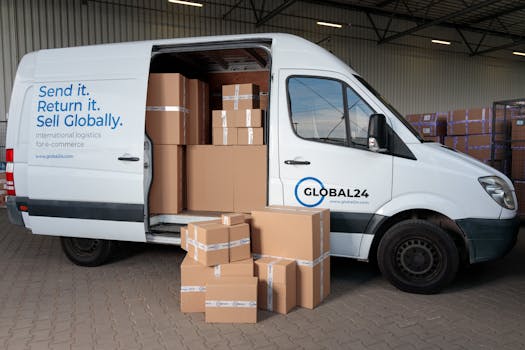
Delivery van loaded with cardboard boxes for global shipping logistics. Photo: Wojciech Kotlicki / Pexels
When evaluating logistics services for small business, it's crucial to understand the diverse offerings available. No single solution fits all, and the best strategy often involves a combination of services. One of the most common and impactful services is Third-Party Logistics (3PL). A 3PL provider acts as an outsourced logistics department, handling everything from warehousing and inventory management to order fulfillment and shipping. This can be a game-changer for small businesses, as it grants access to sophisticated infrastructure and expertise without the massive capital investment. 3PLs often have multiple fulfillment centers, allowing for faster shipping to customers across the country and helping to reduce shipping costs by leveraging their volume discounts with carriers. Beyond 3PLs, specific services address different pain points. For businesses with fluctuating inventory or seasonal demand, flexible warehousing solutions are invaluable. These can range from shared warehouse space to on-demand storage, preventing businesses from paying for unused capacity. Shipping and transportation services are, of course, at the core of logistics. Small businesses can benefit from freight forwarding for larger shipments, parcel shipping for individual orders, and even specialized services for temperature-sensitive or fragile goods. Many providers offer integrated shipping software that compares carrier rates, prints labels, and manages tracking, significantly streamlining the shipping process. E-commerce fulfillment is another critical area. As online sales continue to soar, small businesses need robust systems to pick, pack, and ship orders accurately and quickly. Fulfillment services often include kitting and assembly, custom packaging, and branded inserts, enhancing the customer experience. Reverse logistics, the process of handling returns and exchanges, is often overlooked but incredibly important for customer satisfaction and brand loyalty. Efficient reverse logistics can turn a potentially negative experience into a positive one, ensuring returned items are processed quickly and either restocked or disposed of appropriately. Lastly, technology plays an increasingly significant role. Logistics software, from inventory management systems (IMS) to transportation management systems (TMS), helps small businesses gain visibility into their supply chain, automate tasks, and make data-driven decisions. Choosing the right mix of these services can transform a small business's operational efficiency and customer reach.

Choosing the Right Logistics Partner and Technology for Growth

Courier driving van with packages, using GPS for efficient delivery route. Photo: Tima Miroshnichenko / Pexels
Selecting the appropriate logistics services for small business growth requires careful consideration. It’s not just about finding the cheapest option, but rather identifying a partner that aligns with your business values, growth trajectory, and specific operational needs. The first step involves a thorough assessment of your current and projected logistics requirements. How many orders do you process daily, weekly, monthly? What are your average product dimensions and weights? Where are your customers located? Do you have seasonal peaks? Answering these questions will help you define the scope of services you need, whether it's basic shipping support, comprehensive 3PL, or something in between. When evaluating potential logistics partners, consider their track record, industry experience, and technological capabilities. A reputable provider will offer transparent pricing, clear service level agreements (SLAs), and robust reporting tools. Look for partners who offer scalability, meaning they can grow with your business without requiring you to switch providers frequently. Customer support is also paramount; you need a partner who is responsive and proactive in addressing issues. Don't hesitate to ask for references and case studies from other small businesses they serve. Furthermore, integration capabilities are crucial. Can their systems seamlessly connect with your e-commerce platform (Shopify, WooCommerce, etc.), ERP, or inventory management software? This integration minimizes manual data entry, reduces errors, and provides real-time visibility into your orders and inventory. Beyond external partners, investing in internal logistics technology can also yield significant benefits. Inventory management software (IMS) can automate stock tracking, reorder points, and even forecast demand, preventing stockouts or overstocking. Shipping software helps compare carrier rates, print labels, and manage returns efficiently. For businesses managing their own local deliveries, route optimization software can save time and fuel costs. The right technology stack empowers small businesses to make informed decisions, streamline operations, and ultimately enhance the customer experience. Remember, a well-chosen logistics partner and integrated technology are not just expenses; they are strategic investments that fuel sustainable growth and allow your small business to compete effectively in a dynamic market. Effective logistics is a cornerstone of customer satisfaction and repeat business.

Avoiding Common Logistics Pitfalls and Maximizing Efficiency

Two male workers loading packages into a delivery van, teamwork in logistics. Photo: Tiger Lily / Pexels
Even with the best intentions, small businesses often encounter common pitfalls in their logistics operations. Recognizing these challenges and implementing strategies to mitigate them is crucial for maximizing efficiency and profitability. **Common Pitfalls:** * **Underestimating Shipping Costs:** Many small businesses fail to account for all shipping-related expenses, including packaging materials, insurance, and potential surcharges (fuel, residential delivery, remote area). This can significantly erode profit margins. * **Poor Inventory Management:** Both overstocking (tying up capital, increasing storage costs, risk of obsolescence) and understocking (lost sales, customer dissatisfaction) are detrimental. Without accurate inventory data, businesses operate blind. * **Inefficient Packaging:** Using oversized boxes, excessive void fill, or flimsy materials can lead to higher shipping costs, increased damage rates, and a negative customer experience. * **Ignoring Reverse Logistics:** A clunky returns process can deter repeat customers and create operational headaches. Returns are an inevitable part of e-commerce, and a smooth process is essential. * **Lack of Carrier Diversification:** Relying on a single shipping carrier can leave a business vulnerable to price hikes, service disruptions, and limited shipping options. **Maximizing Efficiency:** * **Negotiate Carrier Rates:** Even small businesses can negotiate better rates with carriers, especially as their volume grows. Consider working with a shipping consolidator or a 3PL who has pre-negotiated rates. * **Implement an Inventory Management System (IMS):** This software helps track stock levels in real-time, automate reordering, and provide insights into sales trends, preventing both stockouts and overstocking. * **Optimize Packaging:** Use appropriately sized packaging, lightweight and protective void fill, and consider eco-friendly options. Custom packaging can also enhance brand perception. * **Streamline Returns:** Develop a clear, easy-to-follow returns policy. Partner with a logistics provider that offers efficient reverse logistics services to handle returns, inspections, and restocking or disposal. * **Diversify Carriers:** Work with multiple carriers (e.g., USPS for small packages, FedEx/UPS for faster/larger shipments, regional carriers for specific areas) to leverage their strengths and mitigate risks. * **Leverage Technology:** Utilize shipping software for label printing, rate comparison, and tracking. Consider a Transportation Management System (TMS) for more complex freight needs. Automation reduces manual errors and saves time. * **Analyze Data Regularly:** Monitor key performance indicators (KPIs) like average shipping cost per order, delivery time, order accuracy, and return rates. Use this data to identify bottlenecks and areas for improvement. Proactive data analysis is key to continuous optimization and ensures your logistics services for small business are always evolving to meet market demands.

Comparison

FeatureIn-House Logistics3PL ProviderShipping Software Only
Initial InvestmentHigh (warehouse, staff, tech)Low (service fees)Moderate (software subscription)
ScalabilityLimited, requires expansionHigh, flexible capacityModerate, depends on carrier options
Expertise AccessInternal staff onlyHigh (industry specialists)Limited (software features)
Shipping RatesRetail or small business ratesBulk discounted ratesCompares available rates
Inventory ManagementManual or basic softwareAdvanced WMS integrationOften requires separate system
Focus on Core Business
CustomizationHigh controlModerate, depends on providerModerate, via settings

What Readers Say

"As a small e-commerce brand, managing shipping was a nightmare. This guide on logistics services for small business helped me understand 3PLs, and now my fulfillment is seamless. My customers are happier, and so am I!"

Sarah Chen · Austin, TX

"We were drowning in inventory issues. The detailed breakdown of inventory management in the context of logistics services for small business was incredibly insightful. We've implemented new software, and our stockouts are gone."

Mark Johnson · Miami, FL

"After reading this, I realized how much I was overpaying for shipping. The advice on negotiating carrier rates and diversifying carriers has already saved my small business hundreds of dollars a month. A real game-changer!"

Emily Rodriguez · Denver, CO

"Very comprehensive overview. While some of the advanced tech might be beyond my current budget, the foundational principles for efficient logistics services for small business are clearly explained and immediately actionable. Highly recommend for any growing enterprise."

David Lee · Seattle, WA

"Our biggest challenge was reverse logistics. This article provided practical solutions for streamlining returns, which has significantly improved our customer satisfaction and reduced our operational workload. Excellent resource for logistics services for small business."

Jessica Brown · Chicago, IL

Frequently Asked Questions

What are the most crucial logistics services for a small e-commerce business?

For an e-commerce small business, the most crucial logistics services are order fulfillment (picking, packing, shipping), inventory management, and reliable transportation. Many opt for a Third-Party Logistics (3PL) provider to handle these, as they offer economies of scale, faster shipping, and advanced tracking, allowing the business to focus on sales and marketing.

Is outsourcing logistics too expensive for a small business?

While there's an upfront cost, outsourcing logistics, particularly to a 3PL, can often be more cost-effective than handling it in-house as your business grows. 3PLs get bulk discounts on shipping and warehousing, have established infrastructure, and eliminate the need for you to hire staff, lease space, or invest in expensive equipment. The long-term savings and efficiency gains often outweigh the service fees.

How do I choose the right shipping carrier for my small business?

Choosing the right shipping carrier involves evaluating several factors: package size/weight, destination (domestic/international), required delivery speed, and cost. It's often best to diversify, using different carriers (e.g., USPS for small, lightweight items; FedEx/UPS for larger/faster deliveries) based on their strengths. Shipping software can help compare rates and services across multiple carriers.

What is the average cost percentage of logistics for a small business?

Logistics costs for small businesses can vary widely, but they typically range from 10% to 20% of the total product cost or even a percentage of revenue. This includes warehousing, transportation, packaging, and labor. Efficient logistics services for small business aim to minimize this percentage without compromising service quality, directly impacting profitability.

How does logistics technology benefit small businesses?

Logistics technology, such as inventory management systems (IMS), shipping software, and transportation management systems (TMS), offers numerous benefits. It automates tasks, reduces errors, provides real-time visibility into inventory and shipments, optimizes routes, and enables data-driven decision-making. This leads to increased efficiency, reduced costs, and improved customer satisfaction.

Who should use logistics services for small business?

Any small business that sells physical products, especially those with growing e-commerce operations, fluctuating order volumes, or limited space for inventory, should consider using dedicated logistics services. It's particularly beneficial for businesses looking to scale, reduce operational burden, and provide a professional shipping experience to their customers.

What are the risks of poor logistics management for a small business?

Poor logistics management can lead to significant risks for a small business, including delayed deliveries, damaged goods, high shipping costs, stockouts, overstocking, negative customer reviews, and ultimately, lost sales and reputation damage. These issues can severely impact profitability and long-term viability.

What are future trends in logistics that small businesses should monitor?

Small businesses should monitor trends like increased automation (robotics in warehouses), greater adoption of AI for demand forecasting and route optimization, the rise of sustainable logistics practices, and the continuous evolution of e-commerce fulfillment models (e.g., micro-fulfillment centers). Staying abreast of these trends can offer competitive advantages and new efficiency opportunities for logistics services for small business.

Ready to transform your operations and empower your growth? Explore how tailored logistics services for small business can streamline your supply chain, reduce costs, and elevate your customer experience. Don't let logistics hold you back – start building a more efficient and profitable future today.

Topics: logistics services for small businesssmall business shipping solutionsecommerce fulfillment for small businessessupply chain management small businessthird-party logistics small business
Leo List
Brampton weed
Adultwork EstrelaBet Vai de Bet R7 Bet Betão Galera Bet Rainbet Bet9ja Shop SportyBet BetKing Sisal Loto Foot Hollywoodbets YesPlay Odibets RushBet Jugabet BetWarrior BetCity MSport betPawa Fortebet