✓ Over 80% of Fortune 500 companies outsource some or all of their logistics functions.
✓ Outsourcing can reduce logistics costs by 10-20% for many businesses.
✓ Access to advanced technology and expertise is a primary driver for outsourcing logistics.
✓ Scalability and flexibility are critical benefits, especially for fluctuating demand.
How It Works
1
Assess Your Needs
Identify your current logistics challenges, pain points, and specific requirements for warehousing, transportation, and distribution. This foundational step ensures targeted solutions.
2
Select a 3PL Partner
Research and vet potential Third-Party Logistics (3PL) providers based on their expertise, technology, industry reputation, and alignment with your business goals. A strong partnership is key.
3
Integrate Systems & Processes
Collaborate with your chosen 3PL to integrate their systems (e.g., WMS, TMS) with yours, establishing clear communication channels and operational protocols. This ensures seamless data flow and execution.
4
Monitor & Optimize
Continuously track performance metrics, review service level agreements (SLAs), and work with your 3PL to identify areas for ongoing improvement and cost optimization. Logistics is an evolving function.
Unlocking Operational Efficiency and Cost Savings through Outsourcing
Photo: GB The Green Brand / Pexels
In today's fiercely competitive U.S. market, businesses are constantly seeking strategic advantages to optimize their operations and boost profitability. Among the most impactful strategies is the outsourcing of logistics functions. The logistics outsourcing benefits extend far beyond simply delegating tasks; they fundamentally transform how a company manages its supply chain, leading to significant operational efficiency gains and substantial cost reductions. By entrusting their warehousing, transportation, and distribution to specialized Third-Party Logistics (3PL) providers, companies can tap into economies of scale that would be unattainable on their own. These 3PLs often manage vast networks of warehouses, fleets of vehicles, and sophisticated IT infrastructure, spreading their fixed costs across multiple clients. This allows them to offer services at a lower unit cost than what an individual company could achieve, especially smaller to medium-sized enterprises (SMEs) that lack the capital for such extensive investments. For instance, a 3PL can negotiate better rates with carriers due to the sheer volume of freight they handle, passing these savings on to their clients. Effective logistics management is a cornerstone of modern commerce, and outsourcing provides a direct pathway to enhance it.
Beyond direct cost savings on transportation and warehousing, outsourcing also reduces indirect costs. Consider the capital expenditure required to build and maintain a warehouse, purchase and service a truck fleet, or invest in cutting-edge Warehouse Management Systems (WMS) and Transportation Management Systems (TMS). These are significant outlays that can strain a company's balance sheet and divert capital from core business activities. When logistics are outsourced, these capital investments are borne by the 3PL, freeing up a company's financial resources for product development, marketing, or other growth initiatives. Furthermore, outsourcing converts what would typically be fixed costs (like salaries for logistics staff, utility bills for a warehouse, or depreciation of equipment) into variable costs. This flexibility is invaluable, as businesses only pay for the logistics services they use, making it easier to scale operations up or down in response to market demand fluctuations. This agility is a critical advantage in dynamic markets, allowing businesses to adapt quickly without being saddled with underutilized assets or excess capacity. The administrative burden associated with managing a logistics department—from hiring and training staff to regulatory compliance and insurance—is also significantly reduced, allowing internal teams to focus on their core competencies and strategic objectives. The expertise of 3PLs in navigating complex customs regulations, optimizing routes, and implementing best practices directly contributes to a leaner, more efficient supply chain.
Enhancing Flexibility, Scalability, and Access to Advanced Technology
Photo: Artem Podrez / Pexels
One of the most compelling logistics outsourcing benefits is the unparalleled flexibility and scalability it offers, coupled with access to advanced technological capabilities. Businesses, particularly those experiencing rapid growth or facing seasonal demand fluctuations, often struggle to adapt their internal logistics infrastructure quickly and cost-effectively. Building new warehouses, expanding fleets, or hiring temporary staff to meet peak demand can be prohibitively expensive and time-consuming. Conversely, during periods of low demand, companies are left with underutilized assets and fixed costs, impacting profitability. Outsourcing solves this dilemma by providing inherent scalability. 3PL providers are designed to handle varying volumes of business, leveraging their extensive networks and resources to scale services up or down as needed. This means a company can seamlessly manage surges in orders during holiday seasons or promotional events without significant capital investment or operational headaches. This flexibility allows businesses to remain agile and responsive to market changes, a crucial competitive differentiator in today's fast-paced environment.
Furthermore, outsourcing grants businesses immediate access to cutting-edge logistics technology that might otherwise be out of reach. Investing in state-of-the-art Warehouse Management Systems (WMS), Transportation Management Systems (TMS), sophisticated inventory tracking software, and advanced analytics platforms requires substantial capital and specialized expertise. Many businesses, especially SMEs, simply cannot justify these investments. 3PLs, whose core business is logistics, continuously invest in the latest technologies to enhance efficiency, accuracy, and visibility across the supply chain. By partnering with a 3PL, companies can leverage these advanced tools without the direct investment, gaining benefits such as real-time tracking, optimized route planning, predictive analytics for inventory management, and improved order fulfillment accuracy. This technological advantage translates into better customer service, reduced errors, and a more streamlined operation. For example, a 3PL's WMS can optimize warehouse layouts and picking paths, dramatically increasing throughput, while their TMS can consolidate shipments and select the most cost-effective carriers. This technological edge not only improves current operations but also positions the business for future growth and innovation, allowing them to compete more effectively with larger industry players by adopting best-in-class solutions without the associated burden of ownership and maintenance.
Mitigating Risks and Focusing on Core Competencies
Photo: Ann H / Pexels
Beyond cost savings and operational efficiencies, the logistics outsourcing benefits extend significantly into risk mitigation and allowing businesses to sharpen their focus on core competencies. Operating a complex supply chain involves numerous inherent risks, from transportation delays and inventory damage to regulatory compliance issues and labor shortages. Each of these can have substantial financial and reputational consequences. When a business outsources its logistics to a reputable 3PL, it effectively transfers many of these risks to the specialist. 3PLs are experts in navigating the complexities of the logistics landscape, possessing deep knowledge of regulations, robust contingency plans for disruptions, and comprehensive insurance coverage. They are equipped to handle unexpected challenges like port congestion, fuel price volatility, or adverse weather conditions, often having multiple options and backup strategies to ensure continuity of service. This transfer of risk provides immense peace of mind and allows businesses to operate with greater stability and predictability. For instance, a 3PL's established network and relationships with multiple carriers mean they can quickly pivot to alternative routes or modes of transport if one option becomes unavailable, minimizing potential delays and customer dissatisfaction. Understanding supply chain resilience is key to long-term success.
Perhaps one of the most strategic advantages of outsourcing logistics is the ability it grants companies to reallocate internal resources and leadership attention to their core competencies. For many businesses, logistics is a necessary but not a core function; their true value proposition lies in product innovation, brand development, sales, or customer relationship management. When internal teams are bogged down with the day-to-day intricacies of warehousing, shipping, and distribution, they are diverted from activities that directly drive revenue and competitive advantage. By outsourcing, businesses can liberate their management and staff to focus on what they do best, fostering greater innovation, improving product quality, and enhancing customer engagement. This strategic shift can lead to significant improvements in overall business performance and market positioning. For example, a manufacturing company can dedicate more resources to R&D for new product lines, or a retail business can invest more in developing its e-commerce platform and customer experience. This specialization not only optimizes internal resource allocation but also contributes to greater organizational effectiveness and ultimately, sustained growth. The 3PL, in turn, focuses solely on logistics, constantly refining its processes and expertise, creating a symbiotic relationship where both parties excel in their respective domains.
Common Pitfalls to Avoid and Tips for Successful Logistics Outsourcing
Photo: Gustavo Fring / Pexels
While the logistics outsourcing benefits are compelling, realizing them fully requires careful planning and execution. There are several common pitfalls businesses encounter that can undermine the success of an outsourcing initiative. The first major pitfall is an unclear scope of work. Without a precise understanding of what services are required, what performance metrics will be used, and what expectations exist, both parties can quickly become frustrated. Another common mistake is choosing a 3PL solely on price, neglecting crucial factors like experience, technological capabilities, cultural fit, and customer service. A cheap provider might lead to long-term issues that outweigh initial cost savings. Furthermore, insufficient communication and a lack of proper integration between the company's systems and the 3PL's can lead to data discrepancies, delays, and operational inefficiencies. Lastly, failing to define clear Service Level Agreements (SLAs) and neglecting regular performance reviews can result in unmet expectations and a lack of accountability.
To ensure a successful outsourcing partnership and maximize the logistics outsourcing benefits, consider these essential tips:
* **Define Clear Objectives:** Before even engaging a 3PL, clearly articulate your goals for outsourcing – whether it's cost reduction, improved service, scalability, or market expansion.
* **Conduct Thorough Due Diligence:** Vet potential 3PLs rigorously. Check references, visit their facilities, and evaluate their technology, security protocols, and financial stability.
* **Develop a Detailed Scope of Work:** Create a comprehensive document outlining all services, volumes, reporting requirements, and key performance indicators (KPIs).
* **Establish Robust Communication Channels:** Implement a clear communication plan, including regular meetings, designated points of contact, and a system for issue resolution.
* **Integrate Technology Thoughtfully:** Plan for seamless integration of WMS/TMS with your ERP or e-commerce platforms. Data visibility is paramount.
* **Negotiate a Flexible Contract:** Ensure your contract includes clauses for scalability, performance incentives, and clear exit strategies.
* **Monitor Performance Continuously:** Regularly review KPIs against agreed-upon SLAs. Provide feedback and work collaboratively with your 3PL to address any issues and identify improvement opportunities.
* **Maintain Internal Expertise:** Even when outsourcing, retain some internal knowledge of logistics to effectively manage the 3PL relationship and understand your supply chain needs. This hybrid approach often yields the best results.
Comparison
Feature
Outsourced Logistics (3PL)
In-House Logistics
Hybrid Model
Capital Investment
Low (variable cost)
High (fixed cost)
Medium
Scalability & Flexibility
High
Low
Medium-High
Access to Technology
High (latest tools)
Low (internal investment needed)
Medium
Expertise & Specialization
High
Variable (internal development)
High (specialized areas)
Risk Mitigation
Transferred to 3PL
Internal responsibility
Shared responsibility
Focus on Core Business
✓
✗
✓
Operational Control
Shared/Managed by 3PL
Full internal control
Partial internal control
What Readers Say
★★★★★
"Outsourcing our warehousing and distribution was a game-changer. We saw a 15% reduction in shipping costs within the first year, and our order fulfillment accuracy has never been better. The logistics outsourcing benefits were clear immediately."
Sarah J. · Dallas, TX
★★★★★
"Our 3PL partner provides us with incredible scalability. During our peak season, they effortlessly handle triple the volume, allowing us to focus on sales and marketing without worrying about logistics bottlenecks. This flexibility is invaluable."
Mark D. · Chicago, IL
★★★★★
"Before outsourcing, our internal logistics team was overwhelmed. Now, with expert support, we've improved delivery times by 20% and significantly reduced inventory holding costs, directly boosting our bottom line."
Emily R. · Los Angeles, CA
★★★★★
"While the initial integration was a bit complex, the long-term logistics outsourcing benefits have been undeniable. We've gained access to advanced tracking and reporting, giving us much better visibility into our supply chain than before."
David L. · New York, NY
★★★★★
"As an e-commerce startup, we couldn't afford to build our own logistics infrastructure. Outsourcing allowed us to compete with larger players from day one, providing professional fulfillment and freeing us to grow our brand."
Jessica M. · Atlanta, GA
Frequently Asked Questions
What are the primary logistics outsourcing benefits for a U.S. business?
The primary benefits include significant cost savings through economies of scale and reduced capital expenditure, enhanced operational efficiency, greater flexibility and scalability to adapt to market demands, access to advanced logistics technology and expertise, and the ability to focus internal resources on core business competencies rather than logistical complexities. These advantages collectively drive competitive growth.
Is my data and inventory safe when I outsource logistics?
Reputable 3PLs prioritize data security and inventory protection. They invest in advanced WMS with robust security features, implement strict access controls, and carry comprehensive insurance for inventory. It's crucial to select a partner with a strong track record and clear security protocols outlined in your contract to ensure your assets are well-protected.
How do I choose the right 3PL provider for my business?
Choosing the right 3PL involves assessing your specific needs, evaluating potential partners based on their industry experience, technological capabilities, geographic reach, financial stability, and customer references. Consider their cultural fit and ensure they can scale with your business. A detailed Request for Proposal (RFP) process is highly recommended.
Will outsourcing logistics actually save my company money?
Yes, for most companies, outsourcing logistics leads to substantial cost savings. These savings come from lower transportation rates due to bulk purchasing, reduced warehousing costs, elimination of capital expenditures for logistics infrastructure, decreased labor costs, and improved efficiency that minimizes errors and waste. The conversion of fixed costs to variable costs also provides significant financial flexibility.
How does outsourcing logistics compare to managing it in-house?
Outsourcing typically offers greater flexibility, lower capital investment, access to specialized expertise and advanced technology, and allows businesses to focus on their core mission. In-house logistics provides more direct control but often comes with higher fixed costs, significant capital expenditure, and the challenge of maintaining specialized expertise and technology.
Who should consider leveraging logistics outsourcing benefits?
Any business facing challenges with rising logistics costs, struggling with scalability during peak seasons, lacking internal logistics expertise or technology, or wanting to reallocate capital and focus on core business growth, should consider leveraging logistics outsourcing benefits. It's particularly impactful for e-commerce companies, manufacturers, and retailers of all sizes.
What are the risks associated with logistics outsourcing?
Potential risks include a loss of direct control over certain operations, dependence on a third party, potential for communication breakdowns, and the need for careful contract management. However, these risks can be mitigated by thorough due diligence, clear communication protocols, robust SLAs, and choosing a reputable, experienced 3PL partner.
How will technology continue to impact logistics outsourcing benefits?
Technology will increasingly enhance logistics outsourcing benefits through advanced automation, AI-driven predictive analytics for demand forecasting and inventory optimization, blockchain for supply chain transparency, and IoT for real-time tracking. These innovations will lead to even greater efficiency, cost savings, and resilience in outsourced logistics operations.
Ready to transform your supply chain and unlock significant competitive advantages? Explore how leveraging the robust logistics outsourcing benefits can streamline your operations, reduce costs, and empower your business for unparalleled growth. Contact a logistics expert today to chart your path to a more efficient future.

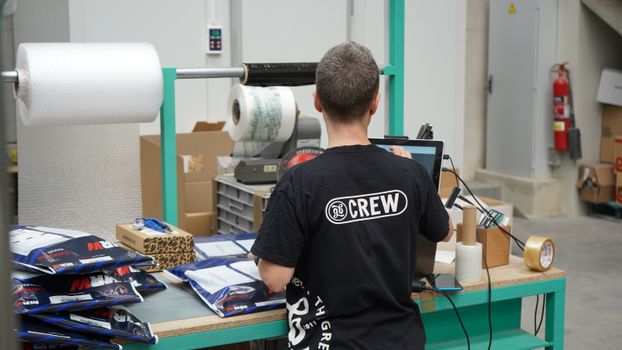 Photo: GB The Green Brand / Pexels
 Photo: Artem Podrez / Pexels
 Photo: Ann H / Pexels
 Photo: Gustavo Fring / Pexels