Boost Efficiency: Top Logistics Consulting Services
logistics consulting services

Boost Efficiency: Top Logistics Consulting Services

Transform your supply chain into a competitive advantage with strategic, data-driven logistics consulting.

Get a Free Consultation

Key Takeaways

  • ✓ Logistics consulting can reduce operational costs by 10-25%.
  • ✓ Improved supply chain visibility is a primary outcome of expert consulting.
  • ✓ Consultants help businesses navigate complex regulatory landscapes in logistics.
  • ✓ Strategic logistics planning enhances customer satisfaction and delivery speed.

How It Works

1
Initial Assessment & Discovery

Consultants conduct a deep dive into your current logistics operations, identifying pain points and opportunities for improvement. This phase involves data collection and stakeholder interviews.

2
Strategy Development & Planning

Based on the assessment, a tailored strategy is developed, outlining specific recommendations, technologies, and process changes. This includes a clear roadmap with measurable goals.

3
Implementation & Execution Support

The consulting firm assists in the practical application of the new strategy, providing guidance, training, and project management. This ensures smooth integration and minimal disruption.

4
Performance Monitoring & Optimization

Post-implementation, ongoing monitoring tracks key performance indicators to ensure sustained improvements. Adjustments are made as needed to continuously optimize the logistics network.

Understanding the Value of Logistics Consulting Services

Two workers handle a package in a spacious warehouse surrounded by shelves stocked with boxes and products. Photo: Tiger Lily / Pexels
In today's fast-paced global economy, an efficient and resilient supply chain is no longer just an operational necessity; it's a critical competitive advantage. Businesses across the United States are grappling with escalating transportation costs, labor shortages, geopolitical uncertainties, and the ever-increasing demands of e-commerce. Navigating this complex landscape requires more than just reactive problem-solving; it demands strategic foresight and specialized expertise. This is precisely where logistics consulting services become indispensable. These services offer a comprehensive, external perspective on your entire supply chain, from procurement and warehousing to transportation and last-mile delivery. A skilled logistics consultant acts as an extension of your team, bringing years of industry experience, advanced analytical tools, and best-practice methodologies to identify inefficiencies, mitigate risks, and unlock significant cost savings. Many companies, particularly small to medium-sized enterprises (SMEs), might initially hesitate to invest in external consulting, believing they can handle logistics internally. However, the sheer complexity and dynamic nature of modern supply chains often exceed the capabilities of in-house teams, who are typically focused on day-to-day operations. Consultants bring an objective viewpoint, free from internal biases, and are equipped to challenge existing paradigms that might be holding your business back. They perform deep-dive analyses into your current processes, technology stack, and vendor relationships, identifying bottlenecks and areas ripe for optimization. For instance, they might uncover hidden costs in your freight management, suggest more efficient warehouse layouts, or recommend cutting-edge inventory management systems that can drastically reduce carrying costs and prevent stockouts. The value isn't just in cost reduction; it's also in enhancing service levels, improving customer satisfaction through faster and more reliable deliveries, and building a more agile and responsive supply chain capable of adapting to future market shifts. Engaging with logistics consulting services is a strategic investment that pays dividends in long-term operational excellence and sustainable growth. They don't just tell you what's wrong; they provide actionable strategies and often assist in the implementation, ensuring the proposed solutions translate into tangible improvements. This partnership approach ensures that the insights gained are not theoretical but practical and directly applicable to your unique business challenges, paving the way for a more streamlined and profitable future.

Key Areas Addressed by Logistics Consulting Experts

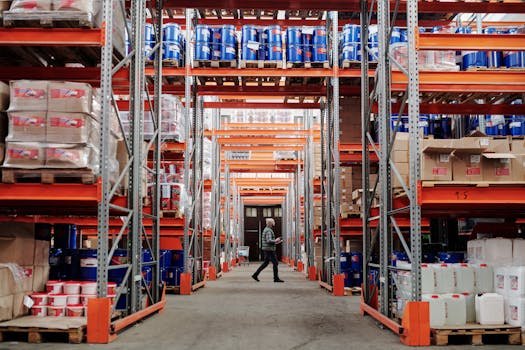
A man walking through a large industrial warehouse with stacked shelves filled with goods and products. Photo: Tiger Lily / Pexels
Logistics consulting services cover a broad spectrum of functionalities within the supply chain, each designed to optimize specific operational facets and contribute to overall efficiency. One of the primary areas of focus is supply chain strategy and design. This involves evaluating your entire network, from supplier sourcing to final customer delivery, and redesigning it for optimal flow, cost-effectiveness, and resilience. Consultants analyze factors like facility locations, transportation modes, and inventory placement to create a robust and future-proof supply chain architecture. This strategic overhaul can lead to significant reductions in transit times and operational costs, while simultaneously improving service levels. Another critical area is warehouse and distribution center optimization. Many businesses operate with outdated or inefficient warehouse processes, leading to wasted space, labor, and time. Consultants conduct detailed assessments of warehouse layouts, material handling equipment, picking strategies, and inventory management systems. They can recommend advanced technologies like automated storage and retrieval systems (AS/RS), robotics, and warehouse management systems (WMS) to streamline operations, increase throughput, and reduce errors. The goal is to maximize storage density, improve picking accuracy, and accelerate order fulfillment, directly impacting customer satisfaction. Transportation management is another cornerstone of logistics consulting. With fluctuating fuel prices, driver shortages, and complex regulatory requirements, managing freight efficiently is a monumental task. Consultants help businesses optimize their transportation networks by analyzing freight spend, negotiating better rates with carriers, consolidating shipments, and implementing advanced route optimization software. They can also advise on multimodal transportation solutions and the strategic use of third-party logistics (3PL) providers to achieve cost savings and improve delivery reliability. This includes everything from full truckload (FTL) and less-than-truckload (LTL) strategies to last-mile delivery innovations. Furthermore, logistics consulting delves into inventory management and forecasting. Holding too much inventory ties up capital and incurs carrying costs, while too little leads to stockouts and lost sales. Consultants employ sophisticated forecasting models and inventory optimization techniques to strike the perfect balance, ensuring product availability without excessive overhead. They also assist in technology selection and implementation, guiding businesses through the maze of logistics software solutions, including Enterprise Resource Planning (ERP), WMS, Transportation Management Systems (TMS), and advanced analytics platforms, ensuring the chosen technologies align with strategic goals and integrate seamlessly with existing systems. Each of these areas, when optimized by expert consultants, contributes to a more lean, agile, and cost-effective supply chain.

The Process of Engaging with Logistics Consulting Services

A bustling shipping port with colorful stacked containers and numerous cranes under a clear blue sky. Photo: Andrea Musto / Pexels
Engaging with logistics consulting services is a structured and collaborative journey designed to deliver measurable results. It typically begins with an initial consultation, where the consulting firm seeks to understand your business, its current challenges, and your strategic objectives. This discovery phase is crucial for both parties to determine if there's a good fit and to scope out the potential project. Once an agreement is reached, the consultant embarks on a comprehensive diagnostic assessment. This involves a deep dive into your existing logistics operations, which includes analyzing historical data, interviewing key personnel across various departments (e.g., procurement, operations, sales, IT), conducting site visits to warehouses and distribution centers, and reviewing current processes and technologies. The aim is to gather a holistic view of your supply chain's strengths, weaknesses, opportunities, and threats. Following the assessment, the consulting team leverages their expertise and analytical tools to identify specific areas for improvement. They will then develop a tailored strategy and a detailed set of recommendations. This strategy isn't just a list of suggestions; it's a comprehensive roadmap that outlines specific actions, anticipated outcomes, required resources, and a clear timeline for implementation. It will often include financial projections, demonstrating the potential return on investment (ROI) from the proposed changes. The recommendations might range from optimizing transportation routes and renegotiating carrier contracts to implementing new warehouse management systems or redesigning your entire distribution network. The focus is always on creating an agile and efficient logistics system. Once the strategy is approved, the implementation phase begins. This is where the theoretical plan transforms into practical execution. Consultants often provide project management support, helping to coordinate internal teams, manage vendor relationships, and oversee the rollout of new systems or processes. They may also offer training for your staff to ensure smooth adoption of new procedures and technologies. Crucially, their involvement doesn't end with implementation. A reputable logistics consulting firm will also establish key performance indicators (KPIs) and provide ongoing monitoring and evaluation to ensure the implemented solutions are delivering the expected results. This iterative process allows for continuous refinement and optimization, ensuring that your supply chain remains adaptable and competitive in the long run. The partnership approach throughout this process ensures that your internal team gains valuable knowledge and capabilities, fostering a culture of continuous improvement long after the consultants have completed their primary engagement.

Choosing the Right Logistics Consulting Partner: Key Considerations

Three professionals engaged in a collaborative office meeting with laptops and notes. Photo: Tima Miroshnichenko / Pexels
Selecting the appropriate logistics consulting service can significantly impact the success of your supply chain optimization efforts. It's not merely about finding a firm; it's about identifying a strategic partner whose expertise aligns with your specific needs and corporate culture. Here are critical factors to consider: * **Industry-Specific Expertise:** Does the consulting firm have a proven track record in your specific industry (e.g., retail, manufacturing, healthcare, e-commerce)? Logistics challenges vary greatly between sectors. A firm with relevant industry experience will understand your unique regulatory environment, customer expectations, and competitive landscape, leading to more targeted and effective solutions. * **Proven Methodologies and Tools:** Inquire about their diagnostic processes, analytical tools, and project management methodologies. Do they use data-driven approaches? Are their recommendations based on robust analysis or generic advice? A strong consultant will leverage advanced analytics, simulation software, and proprietary frameworks to deliver precise insights. * **Implementation Support:** A strategic plan is only as good as its execution. Does the firm offer hands-on support during the implementation phase? This can include project management, change management, training, and integration assistance. A partner who stays with you through the rollout ensures that recommendations translate into tangible operational improvements. * **Technology Agnostic Approach:** Be wary of consultants who exclusively push specific software vendors or solutions. The best firms offer technology-agnostic advice, recommending solutions that genuinely fit your needs and integrate with your existing infrastructure, rather than promoting a particular product for commission. * **References and Case Studies:** Request references from past clients and review detailed case studies. Look for examples where they've achieved measurable results, such as cost reductions, efficiency gains, or improved service levels, for businesses similar to yours. This provides concrete evidence of their capabilities. * **Team Composition and Chemistry:** Who will be working on your project? Assess the experience and qualifications of the proposed team members. A good working relationship and clear communication are vital for a successful engagement. Ensure there's a cultural fit between your organization and the consulting team. * **Clear Deliverables and Pricing:** Ensure that the scope of work, deliverables, timeline, and fee structure are clearly defined in the contract. Avoid open-ended engagements that can lead to cost overruns. Transparency in pricing and clear milestones are essential for managing expectations and budgeting effectively. By carefully evaluating these aspects, you can forge a partnership with a logistics consulting service that not only understands your challenges but also possesses the capabilities to guide your business towards a more optimized and resilient supply chain.

Comparison

FeatureDedicated Logistics ConsultantIn-House TeamGeneric Business Consultant3PL Provider (Limited Scope)
Specialized ExpertiseDeep, focused logistics knowledgeGeneral business knowledge, limited logistics focusBroad business knowledge, superficial logisticsOperational expertise in their services
Objectivity & External ViewHigh, unbiased analysisLow, internal biases possibleModerate, broader business viewLow, focused on their own offerings
Cost Reduction PotentialHigh, strategic and operational savingsModerate, limited by internal capacityModerate, often overlooks specificsModerate, limited to their service offering
Implementation Support✓ (often limited)✓ (for their services)
Technology Agnostic AdviceHighLow, often tied to existing systemsModerateLow, tied to their own tech stack
Holistic Supply Chain ViewComprehensive, end-to-endFragmented, department-specificBroad, but less granularLimited to outsourced functions
Risk MitigationProactive, strategic identificationReactive, operational focusGeneral business risk, less logistics specificOperational risks related to their services

What Readers Say

"Our experience with their logistics consulting services was transformative. They helped us identify inefficiencies in our warehousing operations that were costing us hundreds of thousands annually. The team was incredibly knowledgeable and supportive."

Sarah Chen · Dallas, TX

"We engaged them to optimize our last-mile delivery network. Their recommendations led to a 15% reduction in delivery times and a noticeable boost in customer satisfaction. Truly expert-level guidance."

Mark Johnson · Chicago, IL

"Their logistics consultants redesigned our entire supply chain strategy, resulting in a 20% reduction in overall transportation costs within the first year. The ROI was almost immediate, and their team was a pleasure to work with."

Emily Rodriguez · Atlanta, GA

"While the initial phase took a bit longer than expected, the strategic insights provided were invaluable. They helped us streamline our inventory management, and we've seen a definite improvement in stock accuracy. A solid investment for long-term growth."

David Lee · Seattle, WA

"As an e-commerce startup, we were struggling with scaling our fulfillment. Their logistics consulting services provided us with a scalable solution, integrating new technologies and vendor relationships that have allowed us to grow exponentially without service disruptions."

Jessica White · Miami, FL

Frequently Asked Questions

What specifically do logistics consulting services do?

Logistics consulting services analyze, design, and implement optimized supply chain strategies. This includes areas like transportation management, warehouse optimization, inventory control, network design, and technology integration, all aimed at improving efficiency, reducing costs, and enhancing customer service for businesses.

Is logistics consulting only for large corporations?

No, logistics consulting benefits businesses of all sizes. While large corporations often have complex global supply chains, small to medium-sized enterprises (SMEs) can also achieve significant improvements in cost reduction and operational efficiency, often with a greater percentage impact on their bottom line.

How long does a typical logistics consulting engagement last?

The duration varies greatly depending on the scope and complexity of the project. A targeted optimization might take a few weeks or months, while a complete supply chain redesign could span six months to over a year, often involving phased implementation.

How much do logistics consulting services cost?

Costs can range widely based on the firm's reputation, project scope, duration, and the seniority of the consultants involved. Fees might be project-based, retainer-based, or hourly. It's crucial to get a detailed proposal outlining deliverables and pricing for an accurate estimate.

How do logistics consulting services differ from a 3PL (Third-Party Logistics) provider?

A 3PL provider primarily executes specific logistics functions (e.g., warehousing, transportation) on your behalf. Logistics consulting services, conversely, offer strategic advice, analysis, and recommendations across your entire supply chain, often helping you choose the right 3PLs or optimize your internal operations.

Who within an organization should engage with logistics consulting services?

Typically, supply chain directors, operations managers, CFOs, or even CEOs are the primary stakeholders. Any leader responsible for operational efficiency, cost management, or strategic growth can benefit from engaging with logistics consulting to enhance their supply chain capabilities.

What are the risks of NOT using logistics consulting services?

Without expert guidance, businesses risk accumulating inefficiencies, incurring unnecessary costs, experiencing supply chain disruptions, failing to meet customer demands, and falling behind competitors. This can lead to decreased profitability, reduced market share, and reputational damage.

What future trends are logistics consulting services helping businesses prepare for?

Consultants help businesses prepare for trends like increasing supply chain digitization (AI, IoT, blockchain), greater emphasis on sustainability and circular economy principles, the rise of autonomous vehicles in logistics, and the need for hyper-personalization in last-mile delivery.

Ready to transform your supply chain into a lean, efficient, and competitive advantage? Explore our expert logistics consulting services today and discover how tailored strategies can drive significant cost savings, enhance operational resilience, and boost customer satisfaction for your business.

Topics: logistics consulting servicessupply chain optimizationlogistics strategyfreight management consultingwarehouse optimization
Leo List
Brampton weed
Adultwork EstrelaBet Vai de Bet R7 Bet Betão Galera Bet Rainbet Bet9ja Shop SportyBet BetKing Sisal Loto Foot Hollywoodbets YesPlay Odibets RushBet Jugabet BetWarrior BetCity MSport betPawa Fortebet