How to Optimize Logistics Operations for Peak Efficiency
how to optimize logistics operations

How to Optimize Logistics Operations for Peak Efficiency

Unlock unparalleled efficiency, reduce operational costs, and elevate customer satisfaction across your entire supply chain.

Boost Your Logistics Now

Key Takeaways

  • ✓ Optimized logistics can reduce operational costs by up to 30%.
  • ✓ Real-time data analytics is crucial for proactive decision-making.
  • ✓ Customer satisfaction directly correlates with efficient delivery.
  • ✓ Technology adoption, like AI and IoT, is transforming logistics.

How It Works

1
Assess Current Performance

Begin by conducting a comprehensive audit of your existing logistics processes. Identify bottlenecks, inefficiencies, and areas of high cost to establish a baseline.

2
Implement Technology Solutions

Integrate advanced logistics software, such as TMS, WMS, and predictive analytics tools. These systems automate tasks, provide real-time visibility, and optimize routes.

3
Refine Processes & Training

Streamline workflows based on data insights and best practices. Provide continuous training to your team to ensure they are proficient with new systems and optimized procedures.

4
Monitor, Analyze, & Adapt

Continuously track key performance indicators (KPIs) and analyze data to identify further improvement opportunities. Be agile and adapt your strategies to evolving market conditions and technological advancements.

Understanding the Fundamentals of Logistics Optimization
Yellow letter tiles spelling 'logistics' on a vibrant blue background, ideal for business and logistics themes. Photo: Ann H / Pexels
In today's fast-paced global economy, the ability to effectively manage and optimize logistics operations is no longer just a competitive advantage—it's a fundamental requirement for survival and growth. For businesses operating in the US, where consumer expectations for speed and reliability are at an all-time high, mastering the intricacies of their supply chain is paramount. Optimizing logistics operations involves a holistic approach to improving every stage of the product journey, from procurement and warehousing to transportation and last-mile delivery. It's about finding the perfect balance between cost-efficiency, speed, and service quality. At its core, logistics optimization seeks to eliminate waste, reduce lead times, minimize errors, and enhance customer satisfaction. This isn't merely about cutting costs; it's about smart cost reduction that doesn't compromise service quality. For instance, an optimized warehouse layout can significantly reduce picking times, leading to faster order fulfillment without necessarily requiring more staff. Similarly, intelligent route planning can cut fuel consumption and delivery times, directly impacting both the bottom line and customer experience. The complexity of modern supply chains, often spanning multiple continents and involving numerous stakeholders, necessitates a strategic and data-driven approach to optimization. Without a clear understanding of current performance metrics and future goals, any attempt at optimization will be akin to navigating without a compass. Effective logistics management begins with a thorough assessment of existing processes, identifying bottlenecks, and setting clear, measurable objectives. This foundational step is critical for building a robust optimization strategy that delivers tangible results and sustains long-term improvements. Neglecting this initial phase can lead to misdirected efforts and missed opportunities for significant gains. Understanding the intricate relationships between inventory levels, transportation modes, and distribution networks is key to unlocking the full potential of your logistics operations. Embracing a continuous improvement mindset is also vital, as the logistics landscape is constantly evolving with new technologies, regulations, and market demands. Businesses must be prepared to adapt and innovate to stay ahead of the curve. This continuous cycle of assessment, implementation, and refinement ensures that your logistics operations remain agile, resilient, and highly efficient, ready to meet the demands of a dynamic marketplace.

Leveraging Technology for Enhanced Supply Chain Efficiency
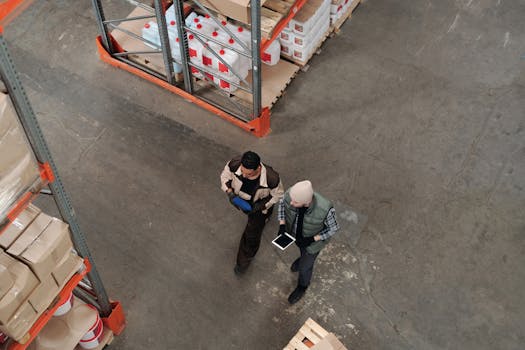
Two workers discussing inventory in a warehouse, using a digital tablet for coordination. Photo: Tiger Lily / Pexels
The digital revolution has fundamentally reshaped the landscape of logistics, offering unprecedented tools and capabilities for optimization. Embracing cutting-edge technology is no longer an option but a necessity for businesses aiming to enhance their supply chain efficiency. Key technological advancements, such as Transportation Management Systems (TMS), Warehouse Management Systems (WMS), and the Internet of Things (IoT), are transforming how goods are moved, stored, and tracked. A TMS, for example, provides comprehensive visibility over all transportation activities, enabling businesses to plan and execute shipments more efficiently, select optimal routes, consolidate loads, and track deliveries in real-time. This not only reduces transit times and fuel costs but also improves the reliability of deliveries, a critical factor for customer satisfaction. WMS solutions, on the other hand, optimize warehouse operations by automating inventory management, guiding picking and packing processes, and optimizing storage space utilization. By minimizing human error and maximizing operational throughput, a WMS can significantly reduce labor costs and increase order fulfillment accuracy. Beyond these core systems, emerging technologies like Artificial Intelligence (AI) and Machine Learning (ML) are taking logistics optimization to new heights. AI-powered analytics can predict demand fluctuations, identify potential disruptions, and recommend proactive strategies, allowing businesses to make more informed decisions about inventory levels and resource allocation. For instance, predictive analytics can help anticipate maintenance needs for vehicles, preventing costly breakdowns and delays. IoT devices, such as smart sensors on pallets or vehicles, provide real-time data on location, temperature, and humidity, ensuring product integrity and offering unparalleled traceability throughout the supply chain. Blockchain technology is also gaining traction, promising enhanced transparency and security in transactions and data sharing across the logistics network. Integrating these technologies creates a seamless, interconnected logistics ecosystem that is highly responsive, resilient, and efficient. The initial investment in these systems can be substantial, but the long-term benefits—including significant cost savings, improved operational efficiency, and enhanced customer loyalty—far outweigh the upfront expenses. Businesses that fail to adopt these technological innovations risk falling behind competitors who are leveraging them to gain a decisive edge in the market. The strategic deployment of technology is thus a cornerstone of any successful effort to optimize logistics operations, driving both immediate improvements and sustainable growth in the long run.

Optimizing Warehouse Operations and Inventory Management

Two men maneuver a trolley in a large warehouse filled with boxes and shelves. Photo: Alexander Isreb / Pexels
The warehouse is often considered the heart of logistics operations, and its efficient management is crucial for overall supply chain performance. Optimizing warehouse operations goes beyond simply storing goods; it involves strategic layout design, efficient material handling, and precise inventory control. A well-designed warehouse minimizes travel time for personnel and equipment, reduces the risk of damage, and maximizes storage density. This can be achieved through intelligent slotting strategies, where frequently accessed items are placed in easily reachable locations, and through the use of vertical space with appropriate racking systems. Automation, such as automated guided vehicles (AGVs) or robotic picking systems, can further enhance efficiency, especially in high-volume operations, by reducing manual labor and increasing processing speed. However, even without significant automation, re-evaluating existing layouts and workflows can yield substantial improvements. Inventory management is inextricably linked to warehouse efficiency. Holding too much inventory ties up capital and incurs storage costs, while holding too little can lead to stockouts and lost sales. The goal is to strike an optimal balance, ensuring products are available when needed without excessive carrying costs. Advanced inventory management techniques, such as Just-In-Time (JIT) inventory, ABC analysis, and demand forecasting, play a critical role here. JIT aims to receive goods only as they are needed for production or sale, minimizing storage requirements and waste. ABC analysis categorizes inventory items based on their value and importance, allowing businesses to focus their control efforts on the most critical items. Demand forecasting, powered by historical data and predictive analytics, helps anticipate future sales patterns, enabling more accurate inventory planning. Integrating warehouse management systems (WMS) with enterprise resource planning (ERP) systems provides a unified view of inventory across the entire supply chain, facilitating better decision-making and preventing discrepancies. Regular cycle counting and physical audits are also essential to maintain inventory accuracy, which is fundamental for effective planning and order fulfillment. By focusing on these aspects of warehouse and inventory management, businesses can significantly reduce operational costs, improve order accuracy, and accelerate delivery times, ultimately contributing to a more robust and responsive supply chain. Efficient warehousing practices are a cornerstone of modern logistics.

Key Strategies for Reducing Logistics Costs and Improving Customer Satisfaction

An outdoor scene of a package being delivered and a receipt being signed. Photo: Artem Podrez / Pexels
Reducing logistics costs and simultaneously improving customer satisfaction might seem like conflicting goals, but they are, in fact, two sides of the same coin in optimized logistics. By implementing smart strategies, businesses can achieve both. Here are some key approaches: * **Consolidate Shipments:** Instead of sending multiple small shipments, consolidate them into larger, less frequent ones. This reduces transportation costs per unit and minimizes administrative overhead. Utilize freight brokers or third-party logistics (3PL) providers to find opportunities for consolidation with other businesses if your volumes are insufficient. * **Optimize Transportation Routes:** Employ route optimization software to find the most efficient paths, considering factors like traffic, delivery windows, and fuel costs. This cuts down on fuel consumption, driver hours, and vehicle wear and tear, directly impacting the bottom line. Real-time data feeds allow for dynamic adjustments to routes, avoiding delays. * **Negotiate Better Carrier Rates:** Regularly review and renegotiate contracts with your carriers. Leverage your shipping volume and consider multi-carrier strategies to secure competitive rates. Don't just focus on price; evaluate service levels, reliability, and technology integration. * **Improve Packaging Efficiency:** Optimize packaging to reduce dimensions and weight without compromising product protection. This can lead to lower shipping costs, especially for dimensional weight pricing, and reduced material waste. Sustainable packaging also appeals to environmentally conscious customers. * **Implement a Reverse Logistics Strategy:** Efficiently managing returns can turn a costly process into a value-added service. A well-defined reverse logistics process minimizes processing costs, speeds up refunds or exchanges, and can even facilitate refurbishment or recycling, enhancing customer trust and sustainability efforts. * **Enhance Communication and Transparency:** Provide customers with real-time tracking information and proactive updates on their orders. This transparency builds trust and reduces customer service inquiries, even in the event of unforeseen delays. Clear communication is a powerful tool for managing expectations and improving the overall customer experience. * **Invest in Employee Training:** A well-trained workforce is more efficient and less prone to errors. Investing in continuous education for your logistics team on new technologies, safety protocols, and best practices directly contributes to operational excellence and customer satisfaction. Empowering employees with the right skills leads to better decision-making and problem-solving at every level of the supply chain. By focusing on these strategies, businesses can create a lean, efficient, and customer-centric logistics operation that not only reduces costs but also builds a strong reputation for reliability and service excellence.

Comparison

FeatureAdvanced TMSBasic TMSManual Planning
Route OptimizationLimited
Real-time TrackingLimited
Cost Savings PotentialHighMediumLow
ScalabilityExcellentModeratePoor
Integration CapabilitiesExtensiveBasicNone
Predictive Analytics

What Readers Say

"Implementing the strategies for how to optimize logistics operations outlined here transformed our delivery times. We saw a 15% reduction in transit time and happier customers almost instantly."

Sarah J. · Dallas, TX

"This article provided actionable insights on how to optimize logistics operations. Our warehouse efficiency improved by 20% after adopting several of the suggested techniques, particularly around inventory management."

Mark D. · Chicago, IL

"We were struggling with spiraling shipping costs. Following the advice on how to optimize logistics operations helped us renegotiate carrier rates and consolidate shipments, saving us over $50,000 annually."

Emily R. · Atlanta, GA

"While the technology section was a bit overwhelming for our small business, the practical tips on route optimization and packaging have made a noticeable difference in our daily operations and customer feedback."

David L. · Los Angeles, CA

"As a fulfillment center manager, understanding how to optimize logistics operations is crucial. This piece gave me fresh perspectives on integrating AI for demand forecasting, which has been incredibly valuable."

Jessica M. · New York, NY

Frequently Asked Questions

What are the primary benefits of learning how to optimize logistics operations?

Optimizing logistics operations leads to significant cost reductions through increased efficiency in transportation and warehousing, improved customer satisfaction due to faster and more reliable deliveries, enhanced supply chain visibility, and increased resilience against disruptions. It also contributes to better resource utilization and reduced environmental impact.

Is it expensive to implement new technologies for logistics optimization?

While there can be an initial investment in new logistics technologies (like TMS or WMS), the long-term cost savings and efficiency gains often provide a substantial return on investment. Many solutions offer scalable options, allowing businesses to start small and expand as their needs and budget grow, making it accessible even for smaller operations.

How can I start to optimize logistics operations in my small business?

Begin by analyzing your current processes to identify key pain points and areas of waste. Focus on low-cost, high-impact changes first, such as optimizing delivery routes using free tools, improving warehouse layout, or negotiating better rates with existing carriers. Gradually explore scalable technology solutions as your business grows.

How does optimizing logistics operations impact customer satisfaction?

Optimized logistics directly enhances customer satisfaction by ensuring faster, more accurate, and more reliable deliveries. It reduces delays, minimizes errors, and allows for better communication regarding order status, all of which contribute to a positive customer experience and build brand loyalty.

How does 3PL (Third-Party Logistics) compare to in-house logistics optimization?

3PL providers offer specialized expertise, economies of scale, and advanced technology that might be costly for individual businesses to acquire. They can often optimize logistics more efficiently. In-house optimization provides greater control and customization but requires significant internal resources and expertise. The best choice depends on your specific business needs, resources, and strategic goals.

Who should prioritize learning how to optimize logistics operations?

Any business involved in the movement, storage, or distribution of goods can benefit from optimizing logistics operations. This includes manufacturers, retailers (both brick-and-mortar and e-commerce), distributors, and even service-based businesses with physical assets. Supply chain managers, operations directors, and business owners will find this particularly relevant.

What are the risks of not optimizing logistics operations?

Failing to optimize logistics operations can lead to higher operational costs, increased delivery times, frequent errors, and ultimately, dissatisfied customers. It can also result in inefficient use of resources, limited scalability, and a competitive disadvantage, potentially hindering business growth and profitability.

What future trends will impact how to optimize logistics operations?

Future trends impacting logistics optimization include the increasing adoption of AI and machine learning for predictive analytics and automation, the expansion of IoT for real-time visibility, the growth of sustainable logistics practices (e.g., electric vehicles, green warehousing), and the continued rise of last-mile delivery innovations like drone and autonomous vehicle delivery.

Ready to transform your supply chain? Learn how to optimize logistics operations to drive efficiency, reduce costs, and delight your customers. Start implementing these strategies today for a future-proof logistics network.

Topics: how to optimize logistics operationssupply chain efficiencylogistics cost reductionwarehouse optimizationtransportation management
Leo List
Brampton weed
Adultwork EstrelaBet Vai de Bet R7 Bet Betão Galera Bet Rainbet Bet9ja Shop SportyBet BetKing Sisal Loto Foot Hollywoodbets YesPlay Odibets RushBet Jugabet BetWarrior BetCity MSport betPawa Fortebet